
 English
 简体中文
简体中文 Русский
 Français
 Português
 لالعربية

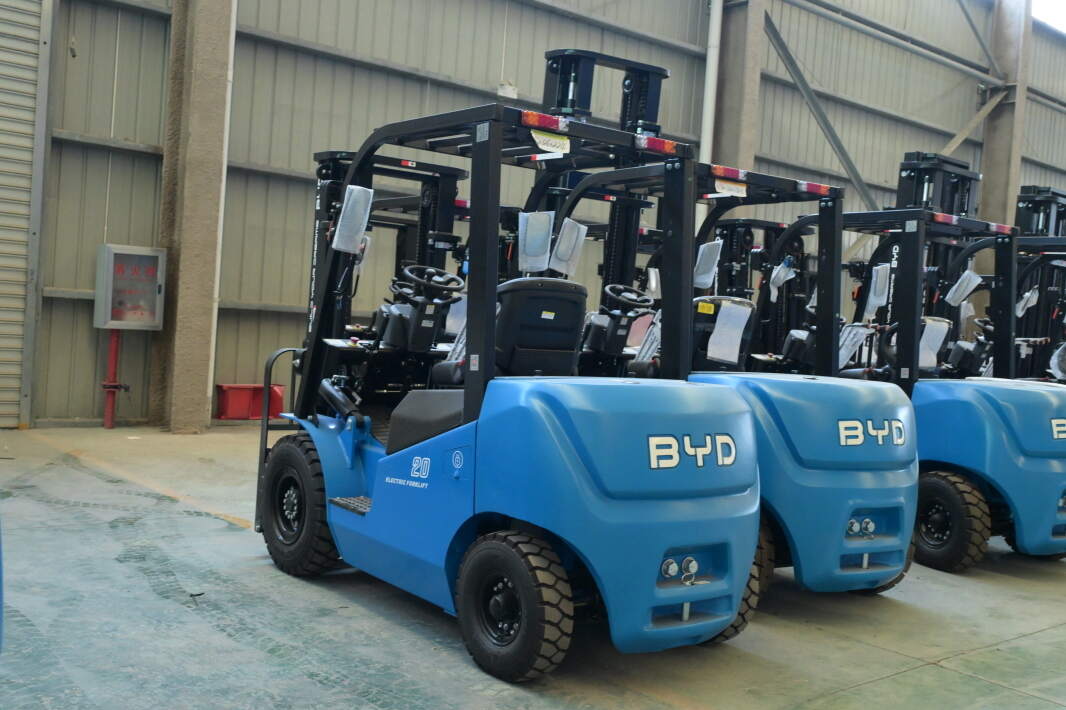
Electric forklifts have become one of the most widely used material handling equipment in modern warehousing, manufacturing and logistics scenarios, with advantages of low noise, zero local emissions and relatively low long-term operating costs. Mastering scientific operation and management rules can help enterprises give full play to the equipment’s performance, reduce unnecessary downtime, and control overall operating expenditures.
Core Pre-operation Inspection Protocols
Before starting any shift operation, operators need to complete a series of basic inspection steps to avoid hidden risks caused by unnoticeable minor faults. First, check the remaining power level of the power system, confirm that the tire pressure is within the standard range, and observe whether there are obvious cracks or deformation on the surface of load forks, lifting gantry and other load-bearing components. Operators also need to test the flexibility of the braking system, steering system and lighting prompt function, and check whether the surrounding operation area has obstacles that may affect the driving path, to eliminate potential safety hazards before formal operation.
Standardized Daily Operation Practices
During the operation process, operators should follow the corresponding load limit parameters of the equipment, not carry out overloading operation for a long time, and avoid sharp acceleration, sharp braking and frequent sharp steering when the equipment is running at no-load or full-load state. When the equipment is working on the ramp, keep the load side facing the uphill direction, and do not carry out lifting or tilting adjustment of the goods on the slope. After the daily operation is completed, the equipment should be parked in the designated special area, the lifting gantry should be placed in the low-level resting position, the operating handle should be reset, and the power supply should be cut off completely.
Routine Maintenance and Power System Management
Regular maintenance work can effectively extend the stable service cycle of electric forklifts, and most of the daily maintenance contents can be completed by trained on-site management personnel without relying on professional after-sales teams. For the most critical power system, operators should follow the manufacturer’s recommended charging rules, avoid long-term full power storage or long-term power depletion state, and clean the dust and sundries on the surface of the power module and heat dissipation structure regularly. For transmission, lubrication and other components, arrange lubrication and state inspection according to the specified cycle, and replace the corresponding aging accessories in time when abnormal wear is found.
Long-term Efficiency Optimization Suggestions
Enterprises can arrange regular skill training for operators, so that personnel can master the correct operation logic of different function modules of the equipment, reduce the operation error rate, and avoid excessive loss of equipment components caused by unstandardized operation behaviors. According to the actual scene of material handling, reasonably plan the driving path and operation scheduling of multiple electric forklifts, reduce the no-load driving time, and further improve the overall operation efficiency of the whole material handling link.


