
 English
 简体中文
简体中文 Русский
 Français
 Português
 لالعربية

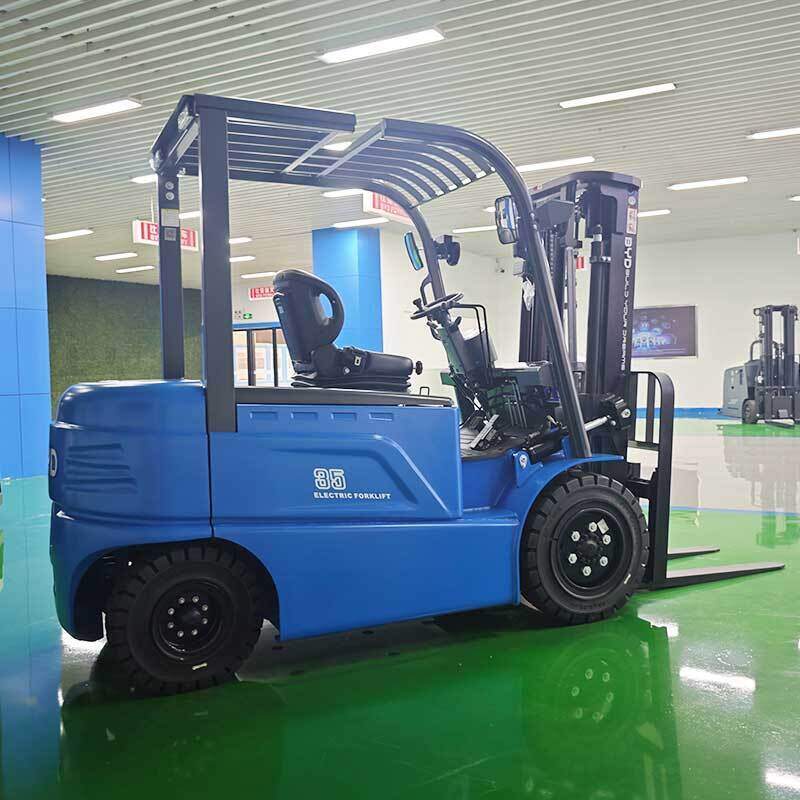
With the continuous promotion of low-carbon logistics concepts, electric forklifts have been widely applied in various warehousing, manufacturing and distribution scenarios in recent years. Different from traditional internal combustion handling equipment, electric forklifts have unique requirements in operation logic, maintenance rhythm and scenario adaptation. Mastering corresponding professional knowledge can help operators give full play to the inherent advantages of such equipment, and reduce unnecessary operating costs in the long term.
Core Daily Operation Specifications
Before starting the equipment every day, operators need to complete a series of pre-inspection work first, including checking the remaining battery power, the flexibility of the brake and steering system, the normal operation of the warning light and reversing prompt device, and the surface integrity of the load fork. During the operation process, users should avoid exceeding the rated load of the equipment for a long time, keep a safe distance from surrounding goods and shelf bodies, decelerate in advance when turning and passing at intersections, and avoid sharp turns at high speed to prevent the goods from falling. When driving on a sloped passage, keep the load facing the upper slope, and do not turn or slide down in neutral on the slope at will.
Routine Maintenance Methods
Regular scientific maintenance is the core basis to prolong the service life of electric forklifts. For the power battery part, users should avoid overcharging and deep discharge for a long time, arrange the charging work in a well-ventilated environment with suitable ambient temperature, and do not expose the battery to a high temperature environment above 40 degrees Celsius for a long time. Operators also need to regularly check whether the connection terminals of the drive motor are loose, whether there is oil leakage in the hydraulic lifting system, and the wear degree of the solid tires, so as to replace the severely worn parts in time. Clean up the dust and debris accumulated on the surface of the equipment and around the heat dissipation holes every week, to avoid affecting the normal heat dissipation of the core circuit components.
Scenario Adaptation and Safety Guidelines
When operating in narrow warehouse aisles, operators should honk the horn in advance when turning, pay real-time attention to the passing pedestrians around, and do not drive too fast that the vehicle cannot stop in an emergency. When using the equipment in low temperature environment in winter, properly preheat the power system before full load operation, to avoid damage to the battery activity caused by instantaneous high current. When the equipment needs to be used in a humid outdoor temporary scene, take necessary waterproof measures for the core circuit area, and do not wade through deep water accumulated areas to avoid potential safety hazards. Following these standardized operation and maintenance rules can help the electric forklift maintain a stable working state for a long time, bring higher comprehensive efficiency for enterprise material handling work.


