
 English
 简体中文
简体中文 Русский
 Français
 Português
 لالعربية

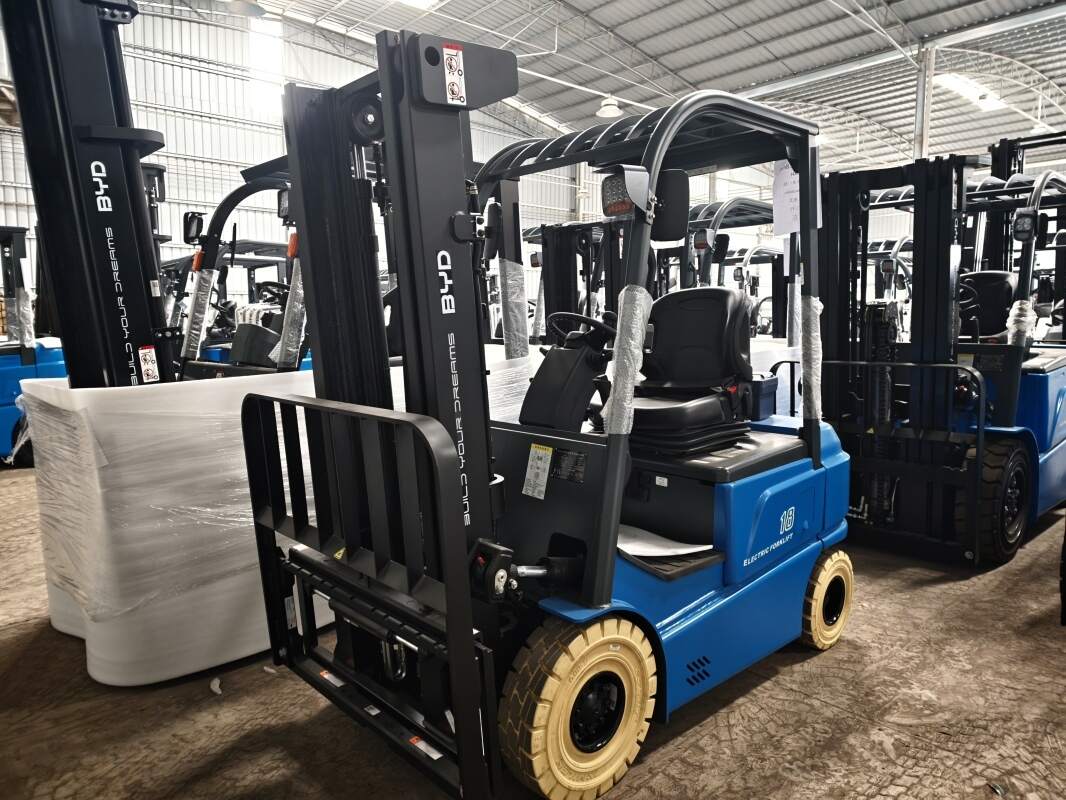
Against the background of accelerating low-carbon transformation in logistics and manufacturing sectors, electric forklifts have gradually become one of the most widely used core equipment for indoor and enclosed site material handling. Compared with traditional internal combustion forklifts, they feature lower noise emission, no tail gas pollution and relatively lower long-term operating cost. For most frontline operators and warehouse managers, mastering systematic professional knowledge of electric forklifts can effectively reduce unnecessary operation risks, lower equipment loss, and create higher practical value for daily production activities.
Core Operation Specifications for Electric Forklifts
Different from internal combustion equipment, electric forklifts are driven by power battery and motor components, so operators need to complete pre-start inspection before each shift, including checking the remaining power status of the battery, the flexibility of the lifting and tilting mechanism, the sensitivity of the brake system and the integrity of the lighting and warning components. During operation, staff should avoid frequent sharp acceleration and sharp deceleration on smooth ground, do not operate the equipment beyond the rated load weight, and do not lift or unload goods on the inclined non-specified working surface, which can effectively avoid sudden failures or potential safety hazards.
Routine Maintenance Points to Extend Service Life
Daily maintenance of electric forklifts does not require overly complex professional tools, most regular inspection items can be completed by on-site management personnel. The battery part, as the core energy component, needs to keep the surface dry and clean during daily use, avoid long-term full load discharge and overcharge state, and carry out regular depth discharge maintenance according to the manufacturer’s recommended cycle. The walking and transmission components need to remove accumulated dust and sundries every two weeks, check the tightness of fasteners, and timely add professional lubricating oil to the rotating parts according to the operation frequency, so as to reduce the wear rate of mechanical parts.
Energy Efficiency Optimization for Long Term Usage
Reasonable usage habits can effectively improve the overall energy efficiency performance of electric forklifts, and reduce the total power consumption in the whole life cycle. For the goods sorting and handling scene in the narrow channel of the warehouse, operators can plan a reasonable handling path in advance to reduce the empty driving mileage, avoid long-time idling of the equipment in the starting state. When the equipment is not in use for a long time, it is necessary to turn off the main power switch in time, and place it in the designated ventilated and dry storage area, to avoid the accelerated aging of internal circuit components caused by long-term exposure to humid high temperature environment, to maintain stable operation performance for a longer period.


