English
 简体中文
 Русский
 Français
 Português
 لالعربية


Against the background of low-carbon transformation in the logistics and manufacturing industries, electric lift trucks have gradually become the preferred material handling equipment for most operation scenarios, replacing part of traditional internal combustion vehicles for their zero local emission, low noise and stable operation performance. When enterprises plan to introduce or update their electric lift truck fleets, they need to make comprehensive assessment from multiple dimensions to make the configuration match their actual operation demands to the maximum extent.
The first key consideration is the matching degree between vehicle parameters and actual operation scenarios. Before selecting a specific model, enterprises need to sort out the conventional maximum load weight of daily handling goods, the maximum lifting height required for shelf operation, the average passage width of operation areas, and whether there are special operation demands such as outdoor ramp passing or special cold storage environment adaptation. Proper parameter matching can avoid unnecessary cost waste caused by excess performance, and also prevent operation efficiency restriction caused by insufficient parameter configuration.
The second key consideration is the coordination of battery life and supporting energy replenishment conditions. According to the actual shift arrangement of on-site operation, enterprises can select the corresponding battery capacity configuration, and match the suitable charging or replacing scheme combined with the existing power distribution facilities in the factory area, to ensure that the vehicle can maintain stable operation during the peak working hours of the whole day without unexpected downtime caused by insufficient power.
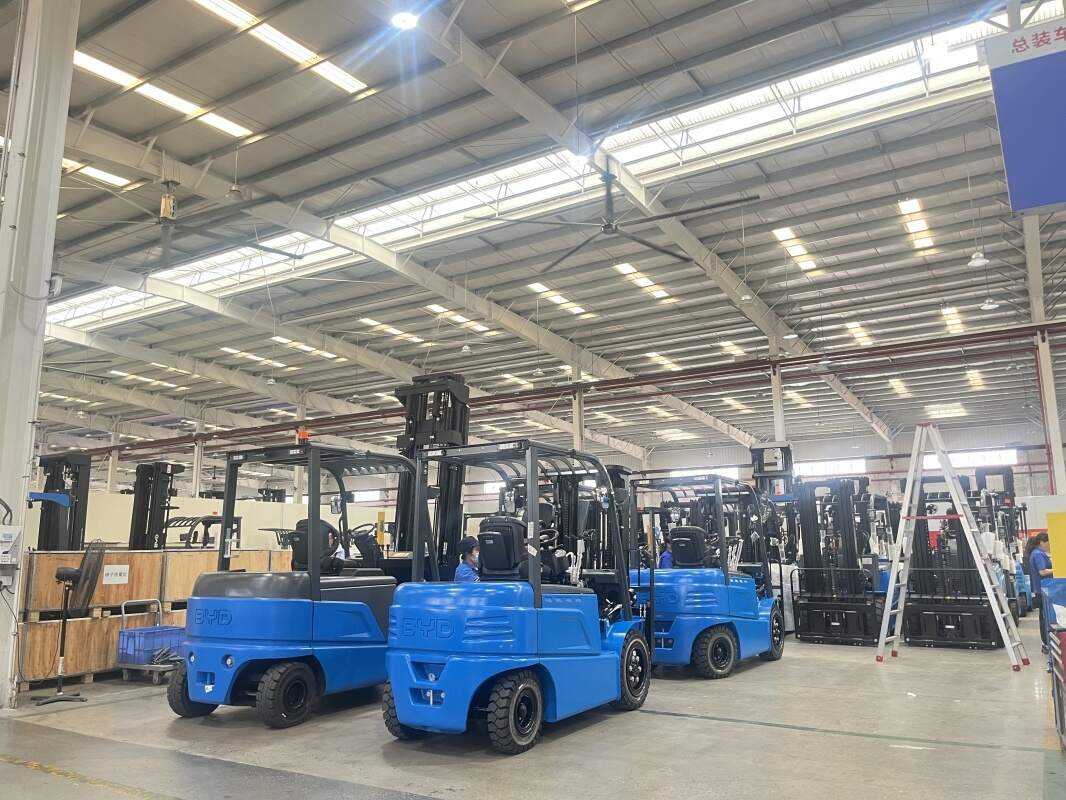
The third key consideration covers operation safety and human-computer interaction experience. Enterprises are suggested to check the standard safety configuration of the vehicle, including stable emergency response mechanism, wide operation view design, and humanized operation control structure, which can effectively reduce the fatigue strength of operators after long-time continuous work, and further reduce the hidden safety risks in daily operation.
The fourth key consideration is the overall operation cost in the full life cycle. In addition to the initial procurement cost, enterprises also need to investigate the convenience of daily routine maintenance, the sufficiency of spare parts supply and the unit energy consumption level in long-term use, so as to obtain more stable cost control effect in the subsequent long-term operation process.
We are Jianshu New Energy, focusing on BYD electric forklift related services. We can provide professional customized selection suggestions and supporting operation guidance for different types of enterprise users. If you have relevant demands or consultation needs, you can send an email to [email protected] for further communication.