
 English
 简体中文
简体中文 Русский
 Français
 Português
 لالعربية

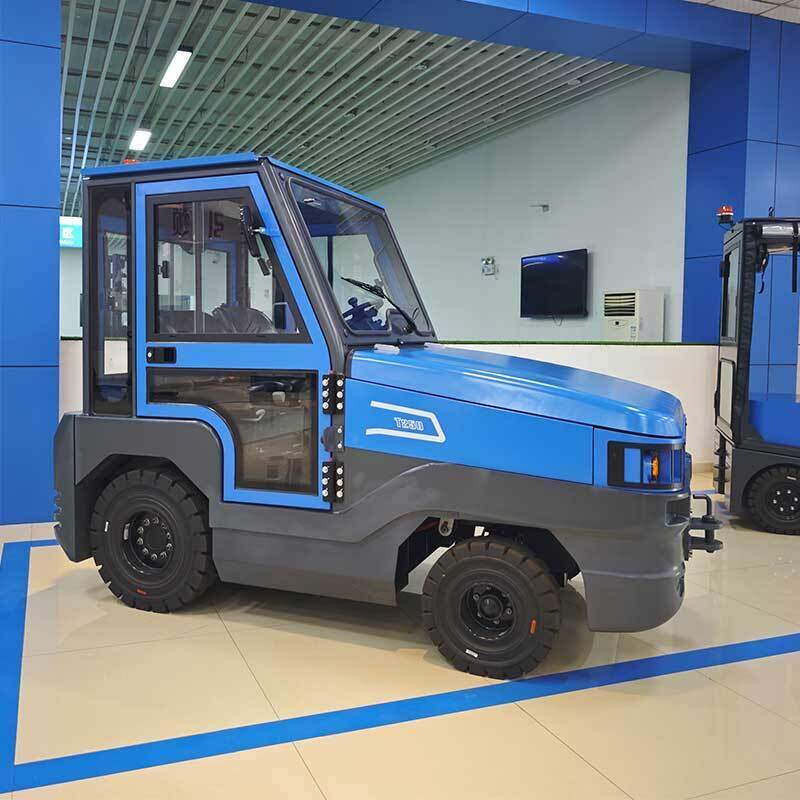
With the continuous promotion of low-carbon logistics concepts across industrial and warehouse scenarios, electric forklifts have gradually become one of the most widely used material handling equipment in the industry, thanks to their relatively low noise output, zero on-site emission and flexible operation characteristics. This guide sorts out core practical knowledge of electric forklift application for frontline operators, warehouse managers and industry practitioners, to help users give full play to the performance of such equipment in daily work.
Core Application Scenario Matching Principles
When selecting electric forklift models for specific operation scenarios, users need to comprehensively evaluate multiple core indicators instead of only referring to the maximum load parameter. For enclosed low-altitude warehouse scenarios, users can prioritize equipment with compact body size and low mast height to adapt to the narrow passage and low clearance limit inside the building. For outdoor port or loading yard scenarios, users can choose products equipped with anti-slip solid tires and rainproof protection components, to adapt to complex ground conditions and occasional sudden weather changes. It is also suggested to arrange the matching of operation routes and equipment parameters in advance, to avoid unnecessary performance waste or potential operation risks caused by mismatching scenarios.
Standard Operation Norms to Guarantee Working Safety
Standard operation habits are the core premise to extend the service life of electric forklifts and reduce accident probability. Before each startup, operators need to complete a series of pre-inspection work, including checking the remaining power of the power system, the flexibility of the braking and steering mechanism, and the integrity of the warning light components. During the operation process, operators should avoid sudden acceleration, sharp turning and overload lifting behaviors, keep a proper safe distance from surrounding personnel and stacked goods, and never carry people on the cargo forks. After the daily operation is finished, operators need to park the equipment at the designated position, lower the cargo fork to the horizontal position close to the ground, cut off the main power supply, and complete the necessary cleaning work of the equipment body.
Daily Maintenance Tips to Reduce Operating Costs
Scientific and regular daily maintenance can effectively reduce the long-term comprehensive operating cost of electric forklifts. For the power battery system, users should follow the corresponding charging specifications in the use process, avoid deep discharge and long-term overcharging, and regularly clean the dust and sundries on the surface of the battery and the connecting terminals to keep the heat dissipation channel unobstructed. For the walking and lifting transmission system, users should check the wear degree of key transmission components regularly, add lubricating oil according to the specified cycle, and timely remove the sundries stuck in the wheel gap to keep the equipment running smoothly. Regular maintenance work can also help users find potential small faults in time, avoid greater component damage caused by long-term neglect.


