
 English
 Русский
 Français
 Português
 Español
 لالعربية

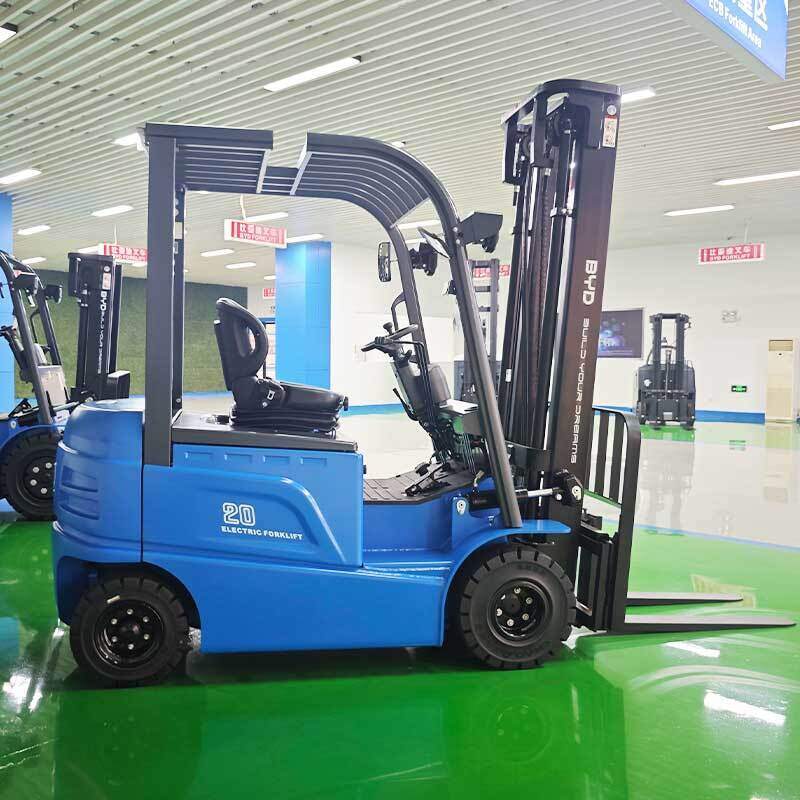
As a professional practitioner with years of experience in electric forklift application and scenario matching, we often receive consultation from warehouse operation teams about equipment selection for high-stack operations that have high requirements for front visibility. For most scenarios that need to stack goods above 4 meters or operate in narrow aisles with dense high racks, the difference between wide-view mast electric forklift and standard mast will directly affect the overall operation fluency, safety performance and long-term operation cost of the team.
First of all, it is necessary to clarify the basic design differences between the two types of masts under the same load and lifting height specification. The standard mast follows the classic structural layout, with hydraulic cylinders arranged in the middle area of the mast and multiple reinforcing beams distributed at different height positions to support the load. The wide-view mast adjusts the arrangement of hydraulic cylinders to the two sides of the mast, reduces the number of intermediate blocking structural parts, and optimizes the distribution position of reinforcing beams on the premise of ensuring the same load-bearing performance, so as to reserve more visible space for the operator's front field of view.
In visibility-sensitive high-stack operation scenarios, such as high-position fragile goods storage, accurate pallet picking at high rack positions, and frequent cross-operation between multiple narrow aisles, the wide-view mast electric forklift can effectively reduce the frequency of operators adjusting their sitting posture or leaning out to observe the alignment state of forks and goods. This optimization can appropriately reduce the physical fatigue of operators during long shifts, lower the probability of accidental collision between forks and rack beams, and reduce the possibility of goods dropping caused by inaccurate fork positioning. For teams that carry out such operations for more than 6 hours a day, the actual operation efficiency can get a noticeable improvement after using the wide-view mast model.
It is worth noting that the standard mast forklift still has very high application value in corresponding scenarios. For operation scenarios where the average stacking height is below 3 meters, the demand for high-position vision is low, and the main operation objects are bulk heavy goods, the standard mast electric forklift can fully meet the daily operation requirements, and the purchase and later maintenance cost is more controllable. When selecting equipment, the operation team does not need to blindly pursue the wide-view mast configuration. It is recommended to combine the actual data of the site, such as the maximum stacking height, average daily operation time, types of goods, and aisle width, to conduct small-scale trial operation, record the actual use effect of different mast types of equipment, and then make a final decision that matches the operation demand.


