
 English
 Русский
 Français
 Português
 Español
 لالعربية

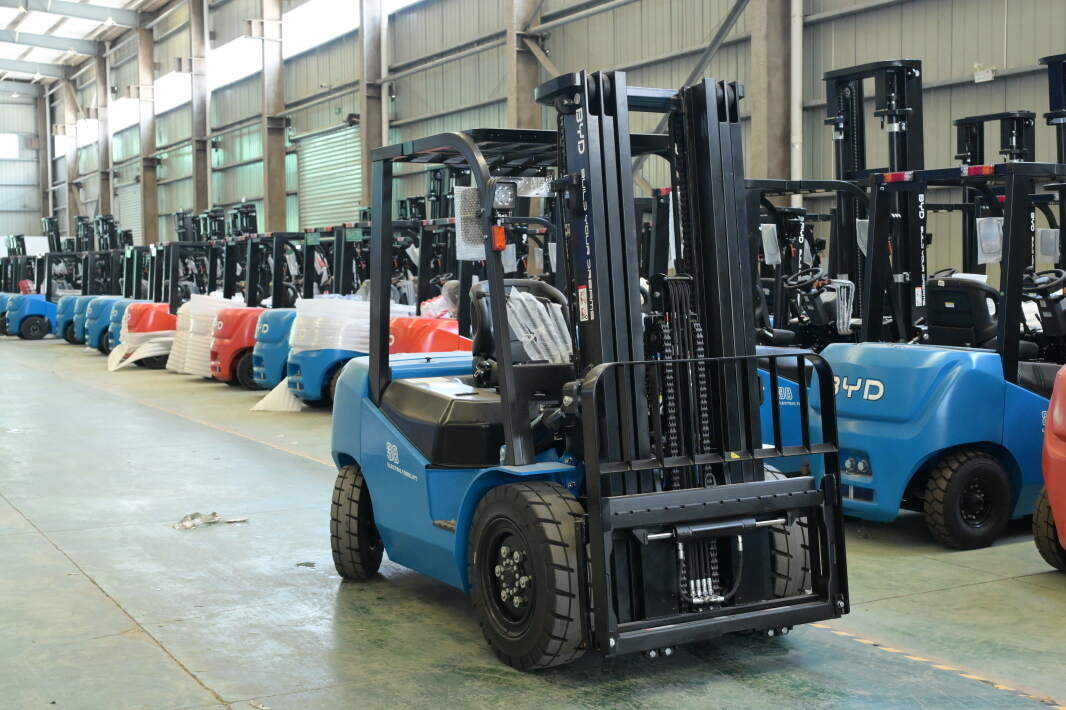
Pallet handling is the core daily operation of electric forklifts in logistics, manufacturing and distribution warehouse scenarios. Improper operation during this process is the leading cause of load-shift accidents, which may lead to cargo damage, equipment wear and even personal injury. Mastering standardized safe pallet-handling techniques can effectively eliminate most hidden safety risks without extra high cost.
Before engaging the pallet, operators need to complete full pre-operation checks first. Inspect the target pallet for obvious structural damage, cracked boards or loose support blocks that may cause partial collapse under load. Confirm that the goods stacked on the pallet are evenly distributed, without overhanging edges beyond the pallet outline, and the total weight of the load does not exceed the rated load capacity of the electric forklift. Make sure the center of gravity of the whole load falls within the standard load center distance range marked on the equipment nameplate, do not handle unbalanced loads with heavy weight concentrated on one side alone.
During fork engagement and initial lifting, keep the forklift body aligned with the pallet access direction, insert two forks fully into the pallet jack holes until the fork root touches the edge of the pallet, to ensure the force bearing area of the forks is fully covered. After full engagement, lift the load slowly to a height of 10 to 15 centimeters above the ground, pause for 2 to 3 seconds to check if the pallet and the load keep stable, no tilting or sliding trend, then start the subsequent traveling process. Never lift the load rapidly with sudden acceleration, which will generate huge inertial force to push the load to slide out of the pallet.
In the traveling phase, always keep the lifted load at a low height of less than 20 centimeters above the ground, do not travel with the pallet and load raised to a high position. Slow down in advance when approaching turning sections, ramp areas, uneven pavement or pedestrian gathering areas, avoid sharp steering and sudden braking that may generate lateral or forward inertial force to cause load shift. Do not tilt the fork frame forward when traveling, keep it slightly tilted back to fasten the pallet on the fork surface.
When unloading the pallet at the designated position, confirm the placement ground is flat, firm and free of sundries that may tilt the pallet. Lower the load slowly until the pallet fully contacts the supporting surface, then tilt the fork frame to a vertical state, pull out the forks slowly and smoothly until the forks are completely separated from the pallet. Do not pull the forklift body forcibly to drag the forks out from the pallet gap, which may drive the whole pallet to turn over and cause the load to shift.
Regular practice of these standardized techniques can help operators form good operation habits, and continuously reduce the occurrence probability of electric forklift load-shift accidents in daily work.


