
 English
 Русский
 Français
 Português
 Español
 لالعربية

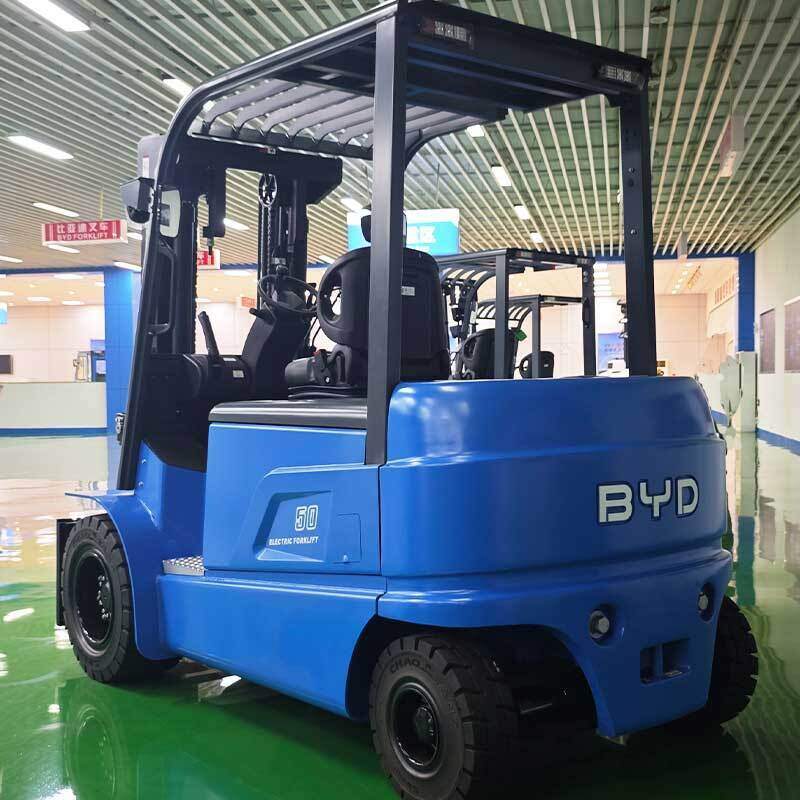
During daily high-intensity material handling operations in warehouses, docks and manufacturing workshops, electric forklifts may encounter unexpected control system malfunctions for various reasons. Improper handling of such sudden issues is very likely to cause cargo drop, vehicle sideslip or other unnecessary safety risks, so every certified operator should master the standard disposal process strictly.
The first step for emergent fault response is to complete safe parking steadily. Once you notice abnormal responses from the control system, such as unresponsive joysticks, irregular prompt tones or sudden out-of-sync of walking and lifting functions, do not panic, and do not forcefully pull the operation levers or step on the brake pedal sharply. You need to release all operating parts immediately, steer the forklift slowly to the nearest open area far from pedestrian passages, stack racks and cargo piles, pull up the hand brake, lower the loaded fork to the ground steadily, and press the emergency power-off button to cut off the main power output of the whole vehicle.
After confirming no personnel or hidden dangerous obstacles around the parked vehicle, you can carry out simple and standardized preliminary checks. You need to record all relevant details of the fault, including the real-time load weight, road condition at the fault moment, abnormal phenomena found before the fault, and the fault code displayed on the vehicle’s dashboard clearly for subsequent maintenance reference. Please do not dismantle the outer shell of the control system privately, or pull out the wiring harness connected to the main control board randomly, to avoid causing secondary circuit damage.
If the fault is judged as a temporary signal interference, you can try to reset the emergency power-off switch after all operating levers are fully returned to the neutral position, wait for 30 to 60 seconds and then re-power on the whole vehicle. If the control function returns to normal after multiple verification under no-load state, you can return to normal operation, otherwise you must stop using the forklift completely, place obvious fault warning signs around the vehicle, and notify professional maintenance personnel to handle the follow-up troubleshooting work. After the fault is completely repaired, you need to conduct multiple no-load test runs to confirm all control functions work stably, then the forklift can be put back into formal operation. Daily regular maintenance of the control system is also necessary to reduce the occurrence probability of similar malfunctions in the long run.


