
 English
 Русский
 Français
 Português
 Español
 لالعربية

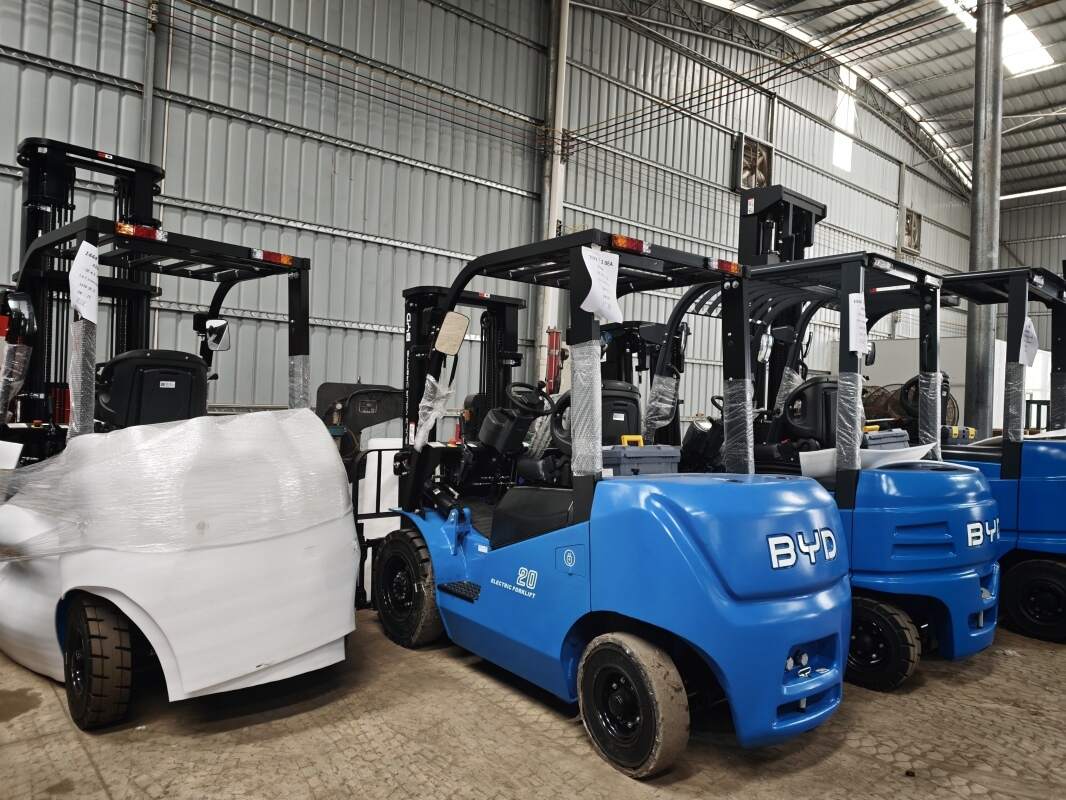
First, the formulation of incoming acceptance testing standards for electric pallet trucks should take the actual operation scenario demands of the using party as the core starting point, instead of directly copying irrelevant public general specifications without targeted adjustment. Before drafting specific standard clauses, the inspection team should sort out the core demands of the equipment in daily warehouse operations, including frequent operation load, average daily working hours, common operation site ground condition, and special environment demands such as low temperature or high humidity in partial storage areas.
The first core module of the testing standard is basic attribute verification. The testing items in this part include appearance integrity check, to confirm there is no obvious deformation, crack or paint peeling on the frame, fork, operating handle and protective shell of the equipment, and no damage on the connecting wiring harness surface. The team also needs to verify the consistency between the actual technical parameters of the equipment and the clauses specified in the procurement contract, including rated load, maximum lifting height, battery rated capacity, no-load and full-load walking speed range, to rule out non-conforming products that deviate from the ordered specification at the initial inspection stage.
The second core module is safety performance testing, which is the non-omittable key part of the whole acceptance standard. The items in this part cover the response sensitivity test of emergency stop function under static and dynamic operation states, the braking performance verification under no-load and full-load conditions at different operating speeds, to confirm the equipment can stop stably within the safe distance. The team also needs to test the parking brake performance, to ensure the equipment can stay fixed stably on the standard test slope without slipping. Besides, the electrical system protection function check should be carried out, to confirm the trigger logic of overload protection, overheating protection and short circuit protection is normal, and there is no hidden electric leakage risk.
The third module is working performance verification. The team can carry out 1 to 2 hours of simulated continuous operation test under no-load and half-load conditions, to check the walking, lifting and steering actions are smooth without abnormal jamming or obvious abnormal noise. The actual discharge duration of the battery under standard rated load should be tested to make sure it meets the specified index. All operation feedback components including control handle, status display and sound-light warning device should be checked to confirm their response is sensitive and accurate.
Finally, the testing standard should also be equipped with complete test record and judgment rule clauses. All test results should be recorded in traceable documents, and non-conforming items should be classified as minor defects or serious safety hidden dangers with corresponding handling procedures. The re-inspection process after rectification of unqualified products should be clearly stipulated, and the final acceptance judgment result should be confirmed by representatives of both inspection party and supplier. The formulated standard should balance inspection quality and acceptance efficiency, to avoid redundant test links that waste manpower, as well as prevent missing core test items that leave hidden risks for subsequent long-term operation.


