English
 Русский
 Français
 Português
 Español
 لالعربية


Forklift handling is a core daily operation in warehouse, logistics and manufacturing scenarios. Standardized operation not only guarantees on-site personnel safety, but also improves overall operation efficiency and extends the service life of handling equipment. This practical checklist sorts out all key links of forklift operation for all frontline operators and equipment management personnel to refer to.
First part: Pre-operation preparation check
Before starting any formal handling task, you need to complete a series of inspection work first. Check the overall appearance of the vehicle, confirm that there is no obvious deformation or damage to the body, the tire pressure is kept in the normal range, and no foreign matter is stuck around the wheel hub. Then check the power system status, confirm that the remaining power of the equipment meets the expected working duration of the day, and no abnormal leakage or overheating phenomenon is found on the battery surface. Next, test the flexible operation of all control components, including the lifting lever, steering wheel, brake system and warning horn, to make sure all functions respond sensitively. Finally, confirm that the working site is flat and free of barriers, the load weight does not exceed the rated load of the forklift, and the goods are placed stably on the pallet without the risk of slipping.
Second part: In-operation standard verification
During the whole handling process, you need to follow the operation specifications at all times. Keep the driving speed within the safe range adjusted according to site condition, slow down and honk when turning, passing the crossing or encountering passing personnel. Keep the fork 10 to 20 cm above the ground when driving, do not lift the goods to an excessive height to block the sight of the operator. When lifting and stacking goods, keep the vehicle body stable, do not tilt the cargo fork sharply, and no personnel are allowed to stand under the lifting frame at any time. When you need to leave the forklift temporarily, you must lower the fork to the ground, turn off the power switch, and pull up the hand brake. Do not carry extra people on the forklift, and do not operate the equipment with wet hands or under unfit physical state.
Third part: Post-operation finishing check
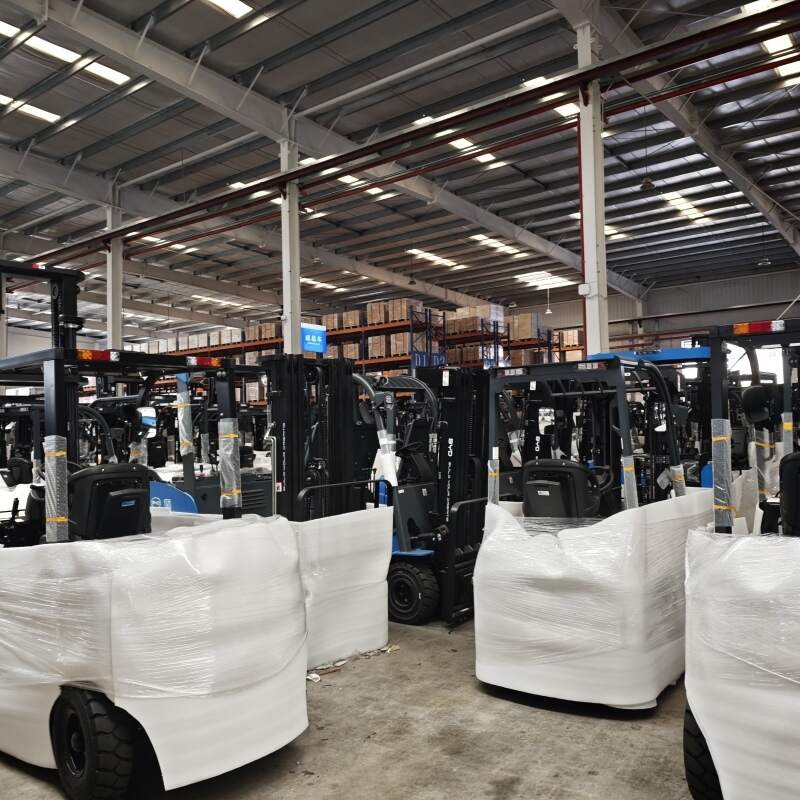
After completing all daily handling tasks, you should finish the finishing work as required. Park the forklift at the designated fixed parking position, lower the fork completely to the ground, turn off the power supply, and pull the hand brake to the locked state. Then do simple cleaning of the vehicle surface, wipe off the dust, goods residue and sundries attached to the body, and check if there is any abnormal damage or hidden trouble left in the operation process of the day, record the abnormal situation in time and feedback to the equipment management personnel. Finally, connect the charging equipment as required, arrange the charging work reasonably according to the remaining power, to ensure that the equipment can meet the use demand of the next working day.
We are Jian Shu New Energy, focusing on high-quality electric forklift products and supporting professional operation guidance services. If you have relevant demands for electric forklift products or usage consultation, you are welcome to contact us via [email protected] for further communication.