
 English
 Русский
 Français
 Português
 Español
 لالعربية

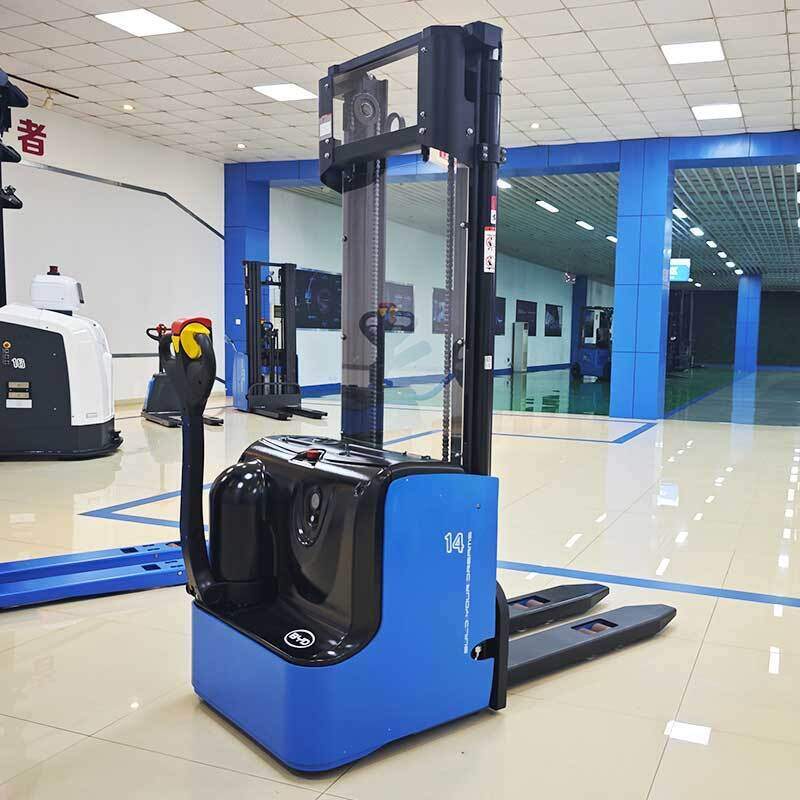
As e-commerce order volumes keep growing, long-pick fulfillment runs that cover multiple storage zones across large warehouse spaces have become a core scenario that directly impacts overall order processing efficiency. Many warehouse operators struggle to pick the right pallet handling equipment to fit their actual operation flows, and the comparison between walk-behind pallet jack and stand-on pallet rider has stood out as a core reference for reasonable equipment selection.
For walk-behind pallet jacks, the most prominent features lie in high maneuverability and low operation threshold. This type of equipment fits well with narrow aisle layouts, new staff can master operation procedures within a very short training period, and no extra special operation certification is required in most regular scenarios. For small and medium-sized e-commerce fulfillment sites where most long-pick runs are no more than 40 meters, and the average load of each transport is below 1 ton, walk-behind pallet jacks can deliver steady operation performance, with relatively low upfront procurement and daily maintenance costs. But for longer runs that stretch over 60 meters, continuous walking for hours will bring extra physical burden to operators, which may lead to gradual drop of per-hour operation output after long time working.
As for stand-on pallet riders, the integrated standing platform offers effective support for operators during long-distance moving sections of long-pick runs. The stable moving speed cuts down the total travel time of each full pick route, and operators can finish multi-zone pick tasks with much less physical fatigue even after 3 to 4 hours of continuous operation. This type of equipment is more suitable for large e-commerce fulfillment centers where a single long-pick run can cover over 100 meters across different storage zones. It is worth noting that stand-on pallet riders require slightly wider passage space to turn around smoothly, and the total upfront input is higher than that of common walk-behind pallet jacks.
When making final selection decisions, operation teams can count core indicators including average length of each long-pick route, daily long-pick order volume, on-site aisle width and total annual equipment budget to make comprehensive judgment. There is no one-size-fits-all solution for all scenarios, some sites even deploy two types of equipment in different functional zones to match differentiated operation demands, so as to achieve balanced operation cost and steady efficiency output.


