
 English
 Русский
 Français
 Português
 Español
 لالعربية

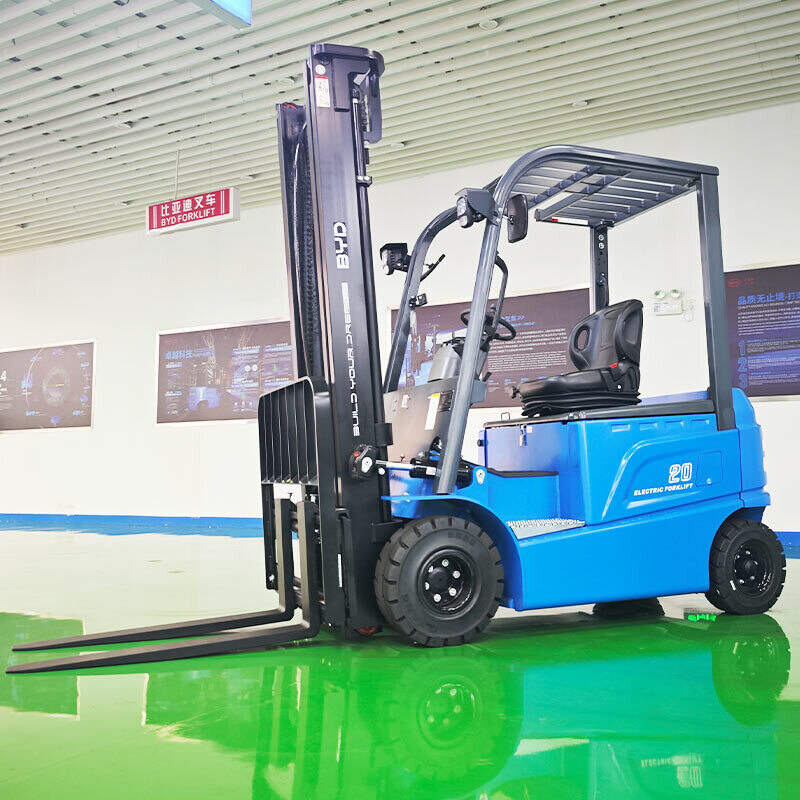
With the rapid development of modern logistics and low-carbon warehousing, electric forklifts have become one of the most widely used material handling equipment for indoor and semi-outdoor operation scenarios, featuring low noise, zero local emission and relatively low long-term operating cost. Many industry practitioners still lack systematic cognition of correct operation and maintenance specifications, which may cause unnecessary equipment loss and reduce daily operation efficiency.
Core Operation Best Practices for Daily Use
When operating the electric forklift, operators should strictly follow the load capacity label of the equipment, avoid long-term overloading that may cause extra burden to the driving motor and hydraulic lifting system. It is recommended to keep smooth acceleration and deceleration rhythm during moving, reduce frequent sudden braking and sharp steering operation, which can effectively cut the wear of transmission components. When the equipment is left unused for more than 2 hours, it is better to turn off the main power switch to avoid unnecessary power consumption of standby circuits. Operators should not drive the forklift in areas with accumulated water higher than the bottom protection height of the equipment, to prevent moisture from invading the internal circuit system and causing potential safety risks.
Routine Maintenance Points for Long-term Stable Operation
Daily pre-shift inspection is an essential part to keep electric forklift in good condition. Operators can check the battery appearance and connection status before starting work, wipe the dust on the heat dissipation vents of the motor and electric control panel to avoid overheating caused by poor heat dissipation. For lead-acid battery models, users can check the electrolyte level regularly according to the operation manual, and clean the oxide layer on the electrode contacts with professional tools to keep stable power transmission. It is not recommended to dismantle or modify the original circuit structure of the equipment without professional guidance, and all fault troubleshooting work should be completed by trained technical personnel to avoid accidental damage to core components.
Efficiency Optimization Strategies for Different Application Scenarios
For different working scenarios, users can adjust the operation mode of electric forklift properly to get better using effect. In narrow aisle warehousing scenarios, operators can control the moving speed at a relatively low level to ensure the safety of goods and personnel, and reduce the collision risk with shelf structures. For low-temperature cold chain storage scenarios, relevant personnel can activate the battery pre-heating function according to the equipment specification to keep the power output stable. When electric forklifts are used in semi-outdoor open areas, avoid exposing the battery pack to strong direct sunlight for a long time, to prevent the battery activity from being affected by excessively high temperature. Arranging reasonable charging breaks according to the daily operation schedule can also avoid deep power depletion of the battery, so as to keep the equipment in good operation state for a longer time.


