
 English
 Русский
 Français
 Português
 Español
 لالعربية

Repetitive internal material transfer serves as a core routine operation across manufacturing workshops, distribution centers and cold storage facilities, which often accounts for 30% to 40% of total intralogistics workload. For operational teams looking to optimize these regular tasks, the choice between electric forklifts and automated guided vehicles (AGVs) has become a common decision point that requires full consideration of actual operational conditions.
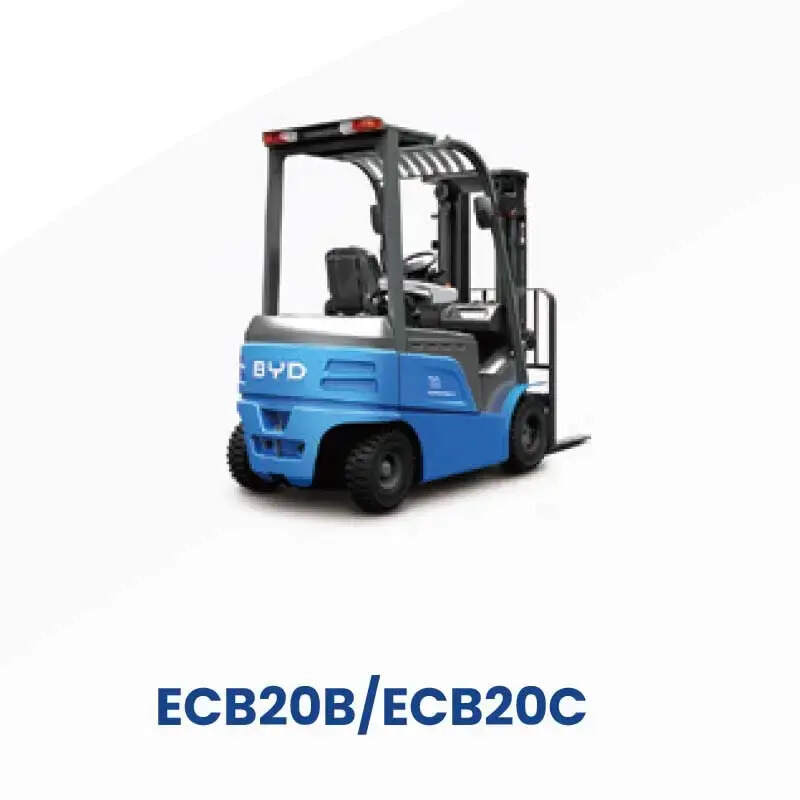
The traditional electric forklift is powered by rechargeable battery, with zero local emission, low noise level and high operation flexibility. Operators with valid operation certificates can adjust travel paths, adjust stacking heights and respond to temporary handling demands freely within the working zone, no pre-installed navigation markers or large-scale site transformation is required for regular use. The deployment cycle of electric forklifts is short, and teams can arrange formal operations within days after receiving the equipment and finishing basic operation training for staff.
As for automated guided vehicles, they run along pre-set planned paths via embedded navigation modules, with no requirement for on-site manual driving during normal operation. These devices can keep running stably for long hours under non-stop operation mode, and complete fixed-point loading and unloading, repeated route cruising without deviation, which effectively reduces operation errors caused by human fatigue or negligence in high-frequency repeated transfer scenarios.
In actual application, no single type of equipment can fit all operational demands perfectly. For teams that have frequent adjustment on material transfer points, irregular temporary handling demands and limited budget for site transformation, electric forklifts usually bring better cost-effectiveness in mid and short term operation. For large scale facilities that have highly standardized fixed transfer routes, 24-hour continuous operation demands and high requirement for operation consistency, automated guided vehicles can deliver stable long-term efficiency, and release frontline operators for higher value-added work such as abnormal order processing and goods inspection.
Many facilities also adopt a mixed allocation of two types of equipment according to their own operational features, assigning AGVs to finish the most repeated long-distance fixed route transfer tasks, and arranging electric forklifts to handle flexible temporary handling, stacking of scattered goods and other non-standard tasks. Such collocation can balance operation flexibility and long-term stable efficiency, help teams lower comprehensive intralogistics cost step by step.


