
 English
 Русский
 Français
 Português
 Español
 لالعربية

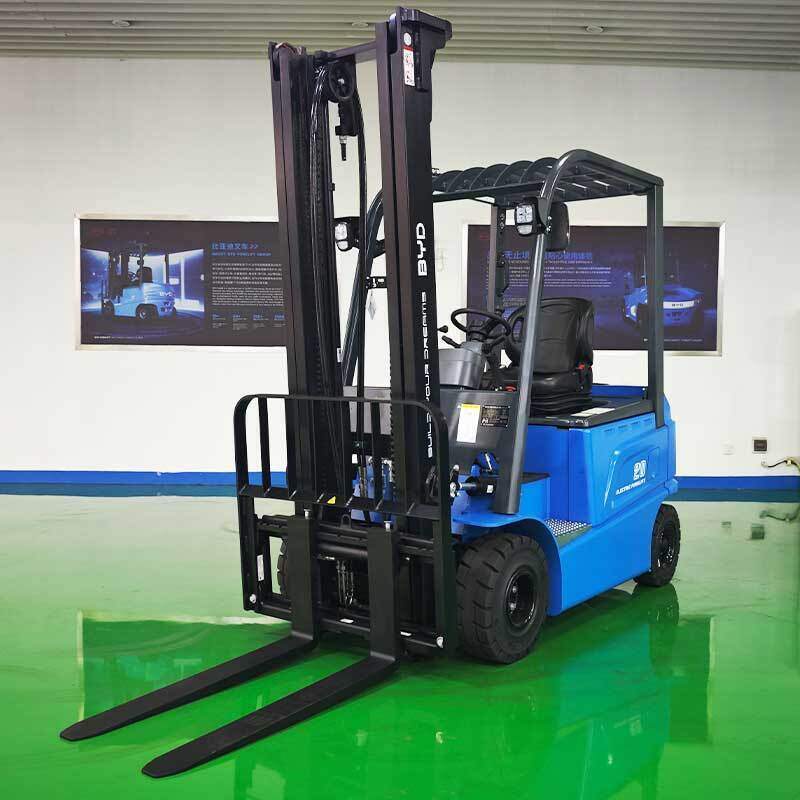
Electric counterbalance forklift serves as a core piece of material handling equipment widely used in modern warehouses, distribution centers and manufacturing facilities. When sourcing this type of forklift, many operators focus only on load capacity and battery life, while ignoring the critical influence of mast structure on daily operating experience.
The duplex mast, composed of two sets of nested steel frames, is the common basic mast configuration. Its maximum lifting height usually ranges from 3 meters to 5 meters, which can meet the demands of most ground cargo transfer, vehicle loading and unloading, and low-level shelf stacking work. Thanks to its relatively simplified structural layout, the number of transverse and longitudinal blocking parts in the front area of the mast is smaller, so operators can get clearer forward visibility when driving at low speed and handling low-position goods. This feature effectively reduces visual fatigue during long-hour shifts, and lowers the risk of accidental collision with surrounding goods or facility structures.
The triplex mast, which adopts three sets of nested steel frames, can support higher maximum lifting height, usually covering the range from 6 meters to 8 meters. This configuration helps warehouses make full use of vertical storage space, increase the total storage capacity per unit area, and is very suitable for intensive high-level shelf operation scenarios. As it adds one more layer of movable steel frame structure on the basis of duplex mast, a small part of the forward view will be slightly blocked by the middle mast component when the fork is at the low position. Most skilled operators can get used to this viewing feature after a short period of adaptive training, and will not produce obvious negative impact on work efficiency.
There is no absolute superior option between the two mast configurations. Operators can make selection based on their actual work scenarios: if most of the daily tasks are concentrated on outdoor cargo handling, low-position transfer and stacking height demand never exceeds 5 meters, the duplex mast model with better visibility can bring smoother operation experience. If the core demand is to make full use of high shelf space to expand storage capacity, the triplex mast model that meets higher lifting height requirements is a more cost-effective choice. You can also combine the actual conditions of aisle width, common cargo specifications and operator habits to find the most balanced solution between lifting height and visibility.


