
 English
 Русский
 Français
 Português
 Español
 لالعربية

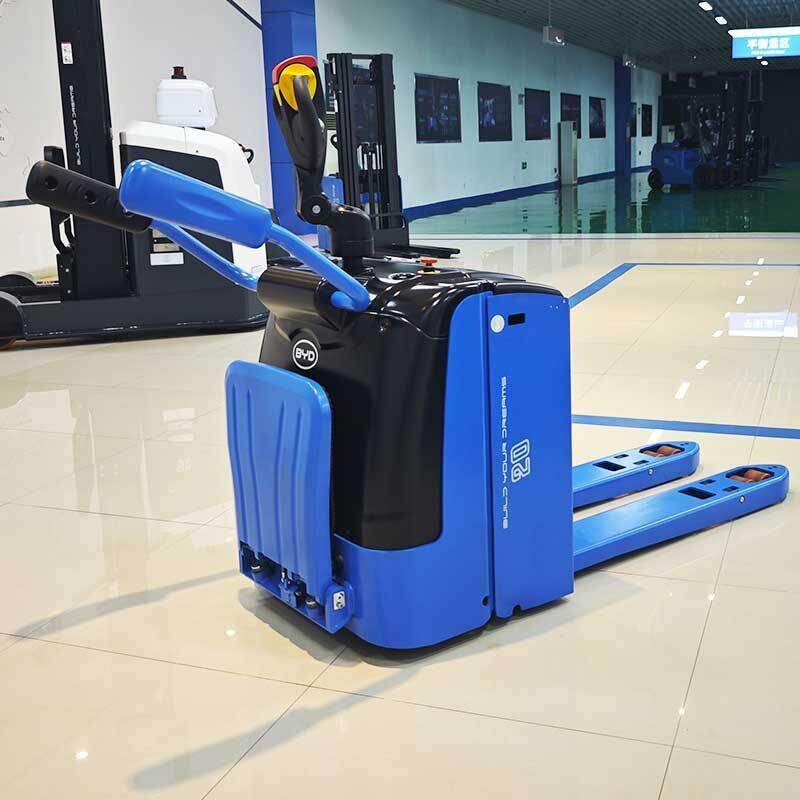
Modern warehouse operators are consistently looking for ways to maximize limited storage space, and customized racking layout based on actual land and building conditions has become a common practice across different industries. As core equipment for narrow-aisle high-position material handling, the BYD reach truck’s mast configuration directly determines its adaptability to different racking height requirements, as well as the overall operation safety and efficiency of daily storage and retrieval tasks.
For small and medium-sized distribution warehouses with racking height ranging from 3 meters to 5 meters, where most daily operations focus on low-level order picking and batch replenishment, the two-stage wide-view mast is a proper matching option. This configuration keeps the moving parts of the mast at a reasonable weight range, delivers stable lifting speed, and reserves broad visible field for operators to clearly observe the status of forks and surrounding goods, effectively reducing accidental cargo damage during operation. The optimized weight distribution also helps keep the energy consumption of the whole vehicle at a satisfying level for long shift continuous operation.
For general e-commerce fulfillment centers and industrial parts storage warehouses with racking height between 5 meters and 9 meters, the three-stage full-free mast is a suitable solution. This design allows partial lifting movement without changing the overall height of the truck, so the vehicle can smoothly pass through standard height-limit passages and fire exits in regular warehouses, no extra building reconstruction is required for entrance or access renovation. The lateral rigidity of the mast is precisely calibrated to keep stable posture during high-position loading and unloading, avoiding unnecessary sway that may cause cargo misalignment.
For high-density storage scenarios with racking height from 9 meters to 12 meters that pursue maximum storage per unit area, the multi-stage reinforced mast with lateral limit buffer structure is recommended. This configuration keeps the mast’s deflection within a reasonable range even at the maximum lifting height, operators can cooperate with the optional high-position auxiliary camera system to complete accurate fork alignment at heights above 10 meters, without extra auxiliary climbing equipment to guarantee the full safety of storage and retrieval process.
When selecting proper mast configurations, enterprises do not need to pursue the maximum lifting height blindly. Combining actual racking height data, aisle width conditions and daily handled cargo types can help choose the most cost-effective setup, balancing upfront equipment investment and long-term operation efficiency.


