English
 Русский
 Français
 Português
 Español
 لالعربية


For most construction projects, material handling takes up a large proportion of daily operation cost and human resources, and the selection of suitable forklift equipment directly affects the overall operation efficiency of the whole site. Traditional fuel forklifts once occupied a large share in construction scenarios, but they gradually expose obvious limitations in actual use: high tail gas emission is not friendly for operation in enclosed spaces such as underground foundation pits and semi-finished indoor floors, excessive noise will interfere with surrounding residents when the construction site is close to residential areas, and the refueling process is also very inconvenient for construction sites far from urban service supporting facilities.
In recent years, electric forklifts have been widely applied in various building sites, and their practical performance has been verified by a large number of operation cases. For the common handling scenarios on construction sites, such as transfer of precast cement parts, steel bars, formwork and packaging building decoration materials, the power output of qualified electric forklifts can fully meet the load demand of 2 to 5 tons, and the flexible body design can smoothly pass through the narrow temporary access passages paved on the site, which greatly improves the turnover efficiency of materials between different operation areas. With zero emission design, electric forklifts will not produce harmful exhaust gas when working in enclosed construction spaces, which effectively reduces the hidden danger of occupational health for on-site operators. The low-noise operation feature also helps construction teams meet the environmental protection requirements of noise control in urban areas. The matching battery configuration can support continuous operation for more than 8 hours under normal load, which can cover the working cycle of most construction sites.
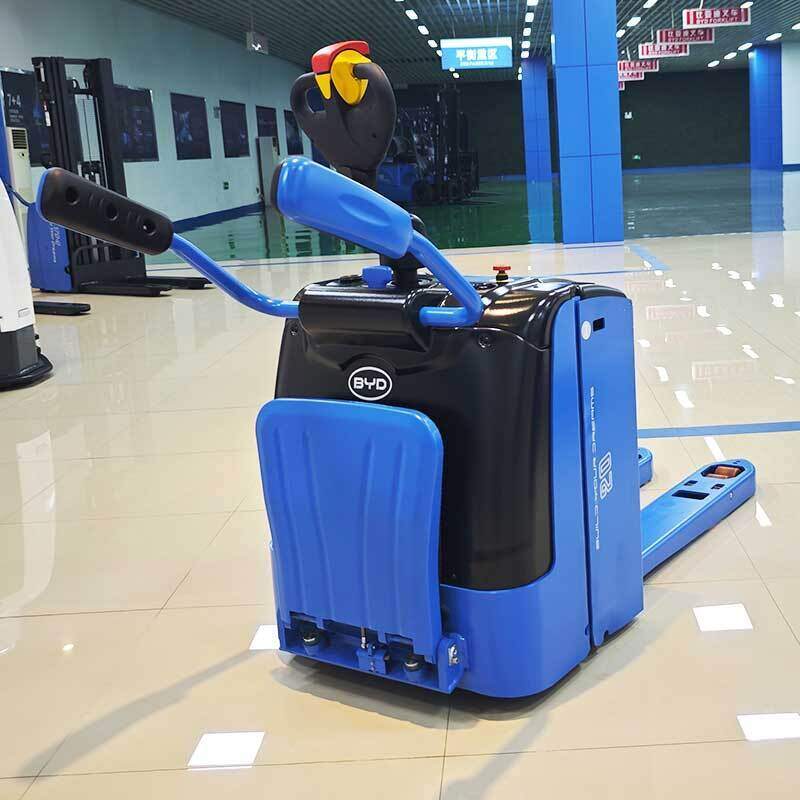
There are also some practical operation points that need to be noticed in daily use of building site forklifts. Before each shift, operators need to check the wear degree of forklift tires in advance, because there are often broken stones, scrap iron and sundries on the unpaved road of the construction site, which may cause tire damage if ignored. After the daily operation, the forklift should be parked in the designated ventilation and waterproof charging area, and do not expose the equipment to the open air for a long time in thunderstorm weather. It is also necessary to arrange regular professional inspection of the power system and operation parts to eliminate hidden troubles in time.
Jianshu New Energy, the professional team focused on BYD electric forklifts, has rich experience in matching applicable forklift solutions for different construction site scenarios, we can provide targeted configuration suggestions according to your actual load demand, site channel width and daily working hours. If you have relevant consultation demands, please send email to [email protected].