
 English
 Русский
 Français
 Português
 Español
 لالعربية

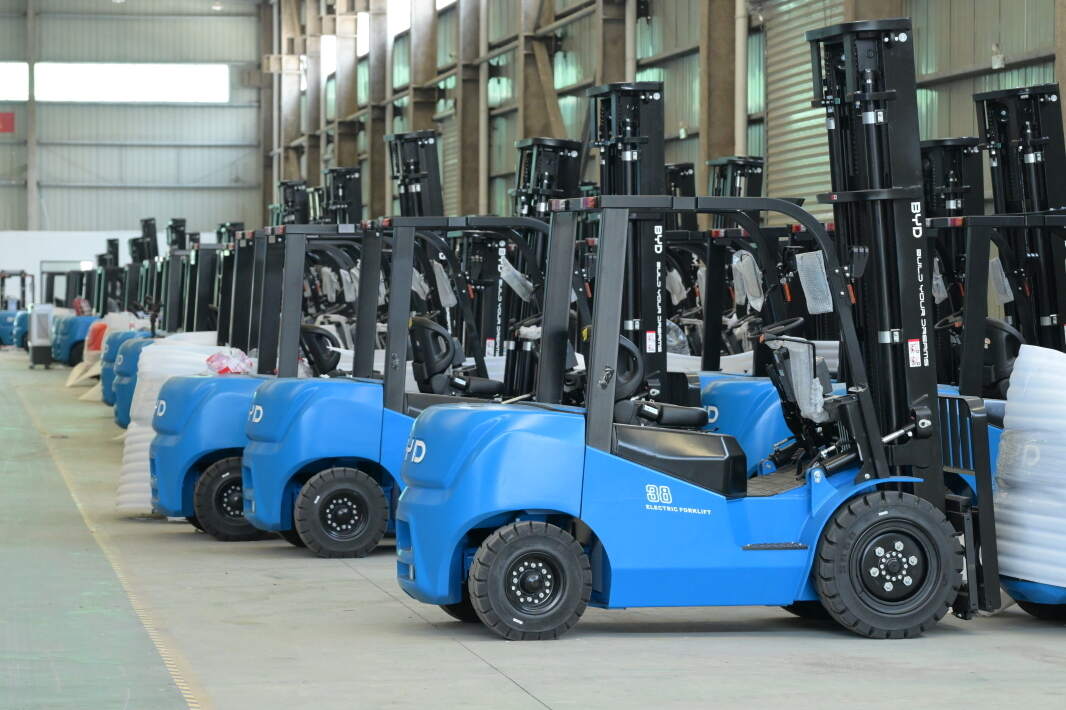
As low-carbon logistics becomes the mainstream trend across industrial sectors, electric forklifts have gradually become the widely adopted material handling equipment for most indoor and semi-outdoor operation scenarios, bringing notable positive changes to daily warehouse, manufacturing plant and logistics park operation processes.
Core Advantages of Modern Electric Forklifts
Compared with internal combustion counterparts, electric forklifts produce no exhaust emission during operation, which can effectively reduce air pollution in enclosed working spaces and lower the health burden of frontline operators. Their overall operation noise level is also kept at a relatively low range, which can avoid disturbance to surrounding office areas or storage areas with strict noise control requirements. Most current models adopt modular power system design, which reduces the number of vulnerable moving parts to a certain extent and cuts the potential failure risk in long-term continuous use.
Standard Daily Operation Specifications
To ensure stable operation state, operators need to complete pre-shift inspection work before each use, covering the check of power remaining, brake sensitivity, steering flexibility and fork surface integrity. When the equipment is running, operators should avoid sharp acceleration, sharp turn and sudden brake on slippery ground, and keep the load center within the rated allowable range to prevent side tilting risk. After finishing each shift, operators should park the equipment at the designated position, lower the fork to contact the ground, cut off the main power supply and do not leave the key in the switch slot to avoid misoperation by irrelevant personnel.
Routine Maintenance Points to Extend Service Life
The power battery component is the core part that needs regular maintenance for electric forklifts. Operators should follow the specified charging process, avoid over-discharging the battery to extremely low power level, and keep the surface of battery pack clean and dry during daily use. For the lubrication points of transmission and steering system, professional operators can add suitable type of lubricant on a fixed cycle to reduce wear of friction parts. The cleaning of body surface can be carried out with soft dry cloth or mild neutral detergent, and high pressure water gun should not be used to flush the electrical component compartment directly to prevent short circuit risk.
Practical Tips to Boost Operational Efficiency
Enterprises can arrange the charging schedule reasonably according to the daily operation peak-valley rule, to avoid sudden power outage of equipment during busy operation periods. Matching different load weight and operation scenarios with corresponding parameter setting of electric forklifts can also help reduce unnecessary energy consumption. Regularly organizing operation skill training for frontline operators can help them master correct operation habits, further bring the performance of the equipment into full play and reduce long-term comprehensive operation cost.


