English
 Русский
 Français
 Português
 Español
 لالعربية


Retail warehouses usually face unique operation challenges including frequent inbound and outbound turnover, narrow passage layout, limited storage space, and high demand for continuous operation during peak shopping seasons. For warehouse managers, the choice of handling equipment directly affects overall operation efficiency, space utilization and operation cost, and lithium-ion forklifts have become a widely recognized suitable option for such scenarios in recent years.
First, it is necessary to clarify the scenario adaptability of lithium-ion forklifts for retail warehouses. Different from traditional lead-acid powered counterparts, lithium-ion forklifts do not need regular fluid replenishment, electrode cleaning and other daily battery maintenance work, which can save a lot of manual management hours for warehouse teams that have no extra staff assigned to special battery maintenance posts. The opportunity charging feature allows operators to plug the equipment into the power supply for 10 to 15 minutes of supplementary charging during shift breaks or staff meal breaks, which can effectively extend the working duration, to meet the high load handling demand during large promotion periods without arranging additional spare batteries. Retail warehouses do not need to set up independent, large-scale special charging and battery replacement rooms, the saved space can be used to place more retail SKUs, which effectively improves the space utilization rate of the whole warehouse.
Second, managers need to understand the safety and compliance advantages of lithium-ion forklifts in retail scenarios. Most retail warehouses store packaged food, daily consumer goods and other commodities that have strict requirements for clean operation environment. Lithium-ion power systems do not have the risk of electrolyte leakage, and the operation noise is far lower than that of internal combustion forklifts, which will not cause noise interference for night shift operation teams. Zero exhaust emission also avoids additional ventilation transformation cost for the enclosed warehouse space, which meets the relevant health and safety operation specifications of retail storage links.
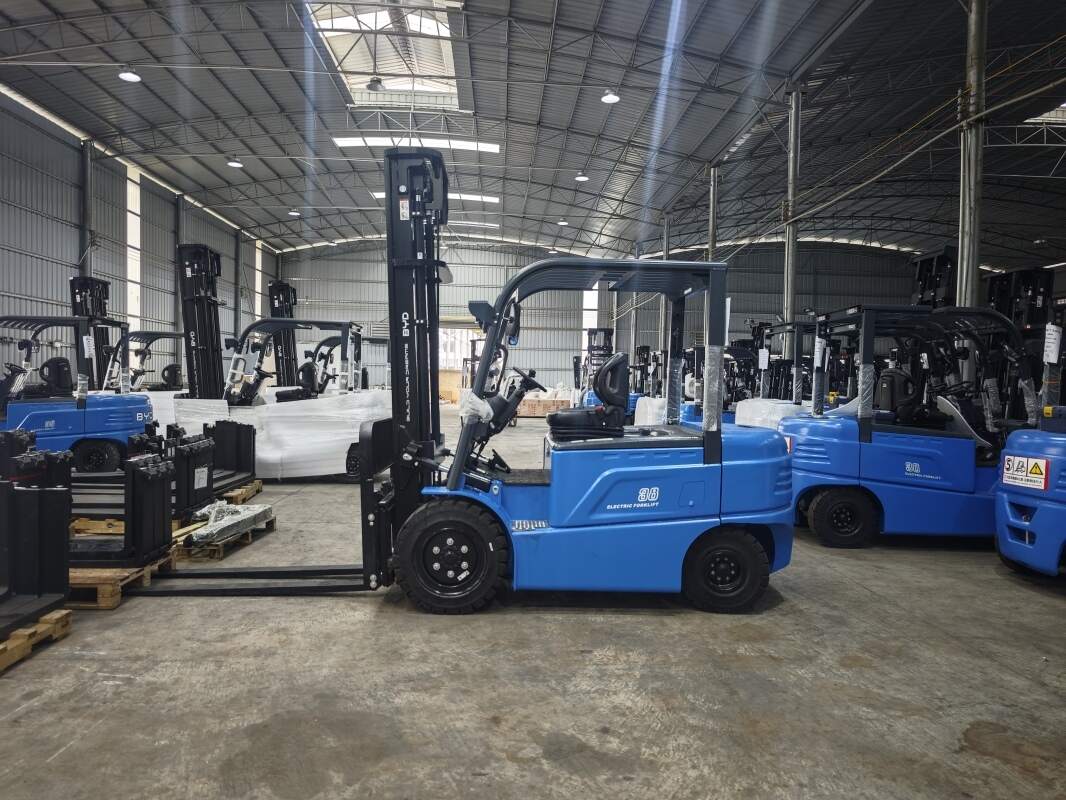
Third, managers can make a reasonable life cycle cost accounting for lithium-ion forklifts. In the long term use cycle, the reduced maintenance manpower input, no spare battery purchase cost and high operation efficiency can bring considerable cost optimization effect for the warehouse. It is suggested that managers can combine their own daily operation shifts, single handling volume, passage width and other actual conditions to select the appropriate model specification, to maximize the matching degree between equipment and operation demand.
For daily management, the routine inspection of lithium-ion forklifts only needs to cover the appearance of the equipment, remaining power status, brake sensitivity and other basic items, and the regular professional performance detection can be arranged according to the actual use frequency. If you have further demand for lithium-ion forklift consultation and matching scheme, we are Jianshu New Energy, focusing on BYD electric forklifts, you can contact us via [email protected] for more professional support.