English
 Русский
 Français
 Português
 Español
 لالعربية


In recent years, the logistics and warehousing industry in Rabat has maintained steady growth, driven by the expansion of e-commerce, port supporting services and urban retail distribution. More and more local operation teams are choosing electric stackers as core handling equipment for indoor and outdoor storage scenarios, while quite a number of enterprise decision-makers only focus on the initial procurement price when making purchasing decisions, and ignore the total cost of ownership throughout the whole service cycle of the equipment.
The total cost of ownership of electric stackers in Rabat consists of multiple dimensions. The first part is the upfront procurement cost. Compared with traditional internal combustion handling equipment with the same load capacity, the initial input of electric stackers shows a certain difference, while local supportive policies for new energy logistics equipment and emission reduction incentives can offset part of the upfront expenditure for eligible enterprises, effectively reducing the threshold of equipment replacement.
The second part is the daily operation cost. The local industrial and commercial electricity price in Rabat stays at a relatively stable level for a long time, and the energy consumption cost per unit operation time of electric stackers is far lower than the fuel cost required by internal combustion equipment. In the long-term continuous operation scenario, the accumulated energy saving effect can bring considerable cost reduction space for warehousing enterprises. In addition, the operation process of electric stackers will not produce exhaust emissions, which can meet the increasingly strict environmental protection management requirements of indoor storage sites in Rabat, and no extra cost for waste gas treatment is needed.
The third part is the subsequent maintenance cost. The structure of electric stackers is simpler than that of internal combustion equipment, and there is no complex oil circuit and transmission system related to fuel power. The regular maintenance items are far less than traditional internal combustion equipment, and the related maintenance consumables and labor cost input are correspondingly reduced. The average service life of qualified electric stackers is longer, which can further amortize the total equipment input in the longer operation cycle.
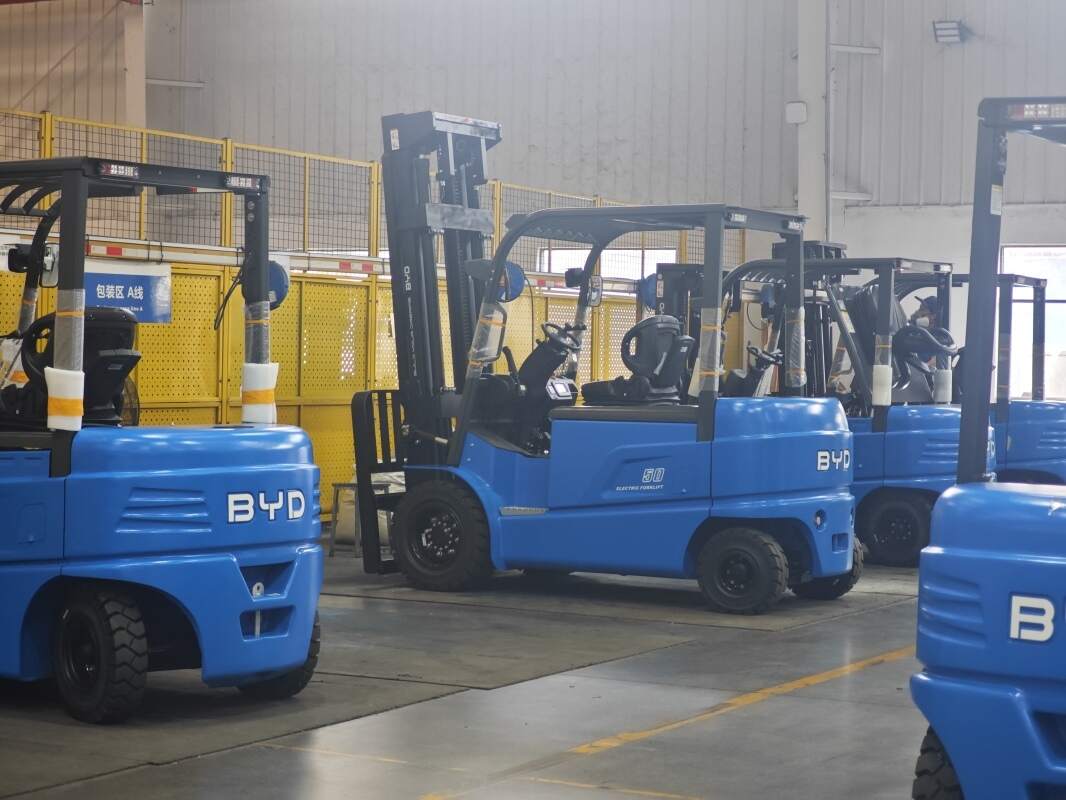
Many enterprises that use electric stackers for a long time in Rabat have verified that the total cost of ownership of electric stackers shows obvious advantages compared with traditional internal combustion equipment within the full service cycle. As Jian Shu New Energy, we focus on BYD electric forklifts, and can provide targeted total cost of ownership calculation services for local customer scenarios. For any related inquiry, you are welcome to send email to [email protected] for more detailed information.