English
 Русский
 Français
 Português
 Español
 لالعربية


In recent years, the global logistics and manufacturing sectors have been steadily shifting toward low-carbon, high-efficiency operation modes, and lithium-ion forklifts are playing an increasingly important role in on-site material handling scenarios due to their distinct practical attributes. Unlike traditional internal combustion forklifts or lead-acid forklifts that have long dominated the market, the design of lithium-ion forklifts is fully oriented to the actual operational demands of frontline users, bringing tangible optimization effects for daily operation management.
For frontline operation teams, the most prominent practical advantage of lithium-ion forklifts lies in its low maintenance requirement. Users do not need to arrange dedicated personnel to regularly complete the procedures of watering the battery, adjusting the electrolyte density and cleaning the accumulated acid mist, which saves a large amount of labor and time cost in daily management. The supporting fast charging function also allows operators to complete short-term power replenishment during the 10-15 minute rest gap between shifts, without reserving several hours of dedicated charging time, which can well adapt to the continuous operation demands of two-shift or three-shift production and warehousing sites.
From the perspective of full life cycle operation cost, lithium-ion forklifts also show considerable practical value. Its higher energy conversion efficiency can reduce the overall power consumption for completing the same handling workload, and the longer cycle life of the on-board power battery can extend the effective service cycle of the whole vehicle under standard use conditions. Meanwhile, zero exhaust emission of the vehicle itself can meet the access requirements of enclosed indoor warehouses, food processing workshops, pharmaceutical production sites and other places with strict requirements for environmental cleanliness, no additional exhaust gas treatment device is needed to meet the relevant environmental compliance standards.
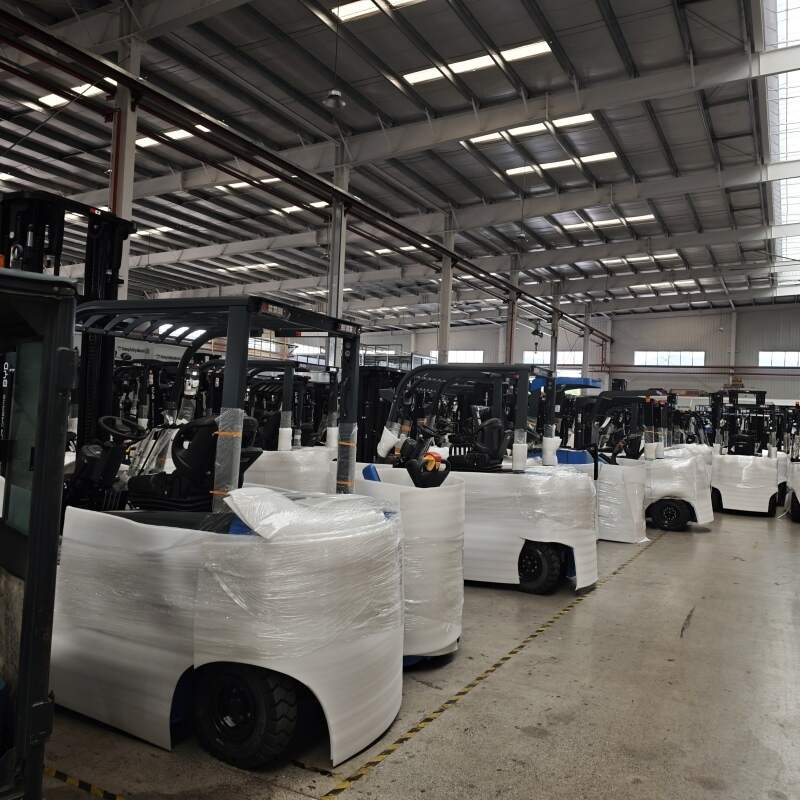
In terms of actual operation performance, the output voltage of lithium-ion power battery remains stable in most of its power range, so the vehicle can maintain consistent power output even after several hours of continuous high-intensity operation, and there will be no obvious power attenuation phenomenon that affects handling efficiency. This feature allows the equipment to adapt to a variety of special scenarios including narrow aisle storage, low temperature cold storage and medium-heavy load handling, and it can also be connected to the intelligent warehouse scheduling system to fit the operation logic of modern smart logistics systems.
As a professional provider focused on high quality electric forklift solutions, we are Jianxin New Energy, we focus on BYD electric forklifts, and you can send consultation emails to [email protected] for customized scheme matching according to your actual operation scenarios.