
 English
 Русский
 Français
 Português
 Español
 لالعربية

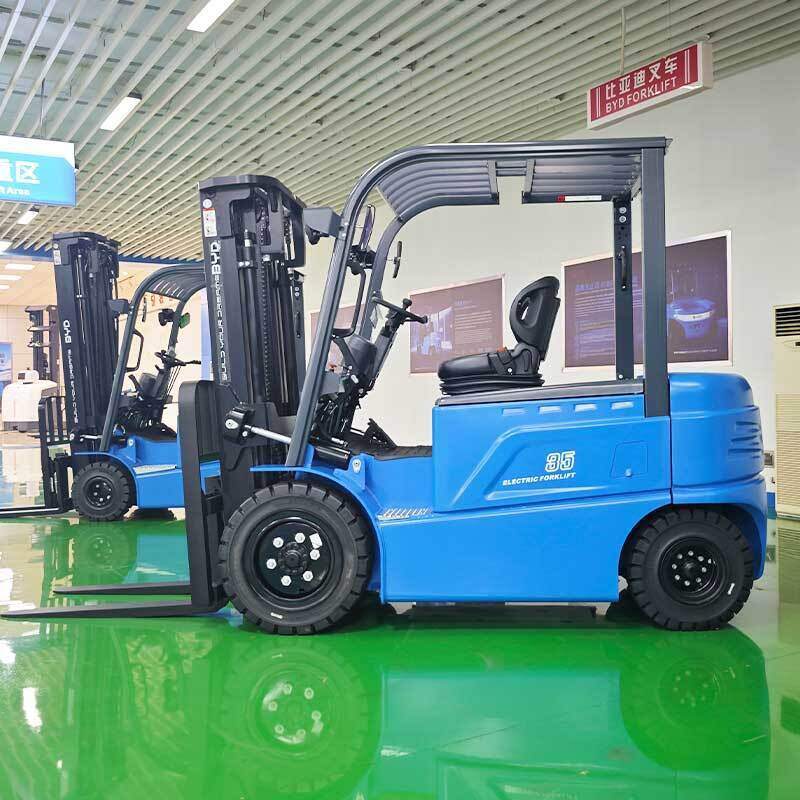
As the low-carbon transformation of industrial logistics accelerates, electric forklifts have become a mainstream choice for most material handling scenarios in warehouses, distribution centers and manufacturing workshops. Proper mastering of relevant operation, maintenance and optimization knowledge can help operators give full play to the equipment’s inherent performance, reduce unnecessary operating costs and lower potential safety risks in daily work.
Core Operation Specifications for Standard Electric Forklift Use
Before starting the equipment, operators need to check the surrounding working environment, confirm that there are no obstacles or unrelated personnel in the operating range, and adjust the seat position and operation lever sensitivity to a suitable state before starting the power system. During the driving process, it is not recommended to accelerate or brake sharply under full load state, keep a safe distance from surrounding shelves, personnel and other logistics equipment, and adjust the driving speed reasonably according to the site pavement condition. When picking and placing goods, the fork inclination angle should be adjusted in advance according to the weight and packaging state of the materials, to avoid the risk of goods slipping or the body tilting.
Routine Daily Maintenance Points to Extend Service Life
After each shift, operators should wipe off the dust and residual goods on the body surface, check the wear degree of tires, hydraulic sealing parts and fork structure, and record the abnormal performance of the equipment during operation in time. For the power system, it is necessary to follow the corresponding charging specifications, avoid over discharging the power storage component, and keep the heat dissipation channel unobstructed during the charging process. Regularly check the tightness of each connecting component of the walking and hoisting system, add appropriate amount of lubricating oil to the movable parts according to the specified cycle, to reduce unnecessary mechanical wear caused by long-term high-frequency operation.
Efficiency Improvement Strategies for Daily Material Handling Tasks
Before the peak period of material handling, operators can plan the driving route in advance according to the distribution of goods and the layout of the site, reduce the number of repeated turns and long-distance empty driving, and reasonably match the carrying amount according to the rated load of the equipment. For the goods that need to be transported in batches, pre-classification and stacking can be carried out at the designated staging area in advance, which can effectively shorten the waiting time for loading and unloading. Regularly conduct operation skill training for relevant personnel, to help them form a more stable and smooth operation habit, avoiding the extra time consumption caused by unskilled operation.
Common Misoperations to Avoid During Long-term Use
Operators should not carry out overload operation for a long time, or use the fork to push or pull heavy goods horizontally, which may cause damage to the hydraulic system and the body structure. It is not recommended to park the equipment on a ramp for a long time without adding anti-slip measures, and do not leave the equipment with the power on when no one is on the driving position. Do not modify the core power or hoisting parameters of the equipment without professional technical support, to avoid breaking the original safety balance of the equipment and bringing hidden risks to subsequent use.


