
 English
 Русский
 Français
 Português
 Español
 لالعربية

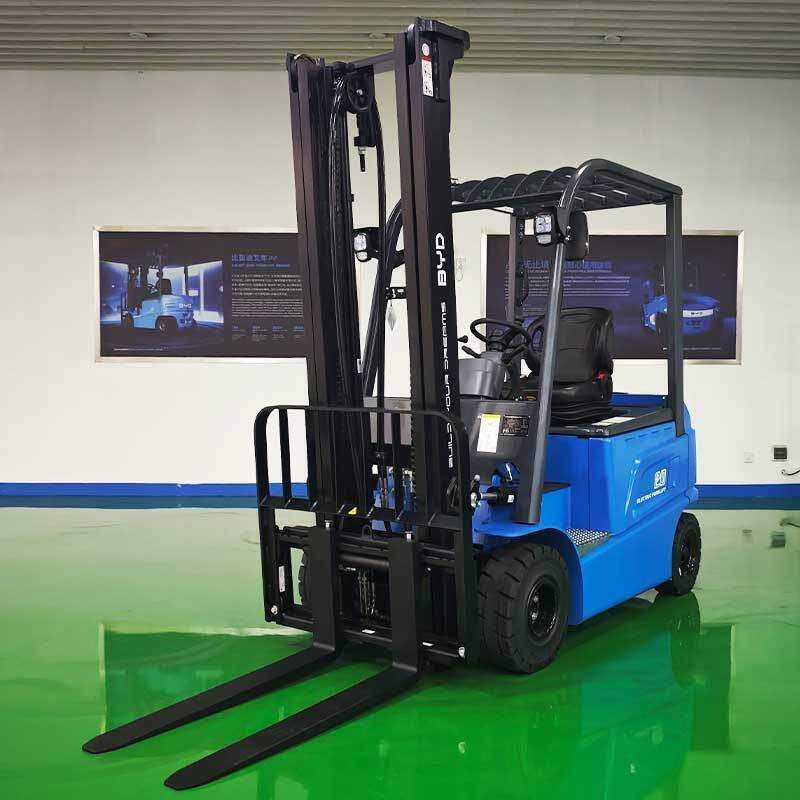
Against the background of global low-carbon transformation of industrial logistics, electric forklifts have become a mainstream material handling tool for warehouses, distribution centers, manufacturing factories and port operation areas, bringing higher requirements for standard operation and scientific management of frontline operators. The following content sorts out targeted practical suggestions for electric forklift users from multiple core dimensions of daily application.
Basic Operation Standardization Requirements
Before starting each shift, operators need to complete pre-operation checks including brake system sensitivity, power display accuracy, fork deformation status, and surrounding operation area obstacle confirmation, to eliminate hidden risks before formal operation. During the driving process, operators should keep stable acceleration and deceleration, avoid sudden sharp steering at high speed, keep the load at a low proper height during driving, and do not lift goods to a high position for long-distance movement. It is not allowed to stand on the fork for lifting operation of personnel, and the hand brake should be pulled up and the fork should be lowered to the lowest position once the operator leaves the driving position.
Routine Maintenance Guidelines
Regular standardized maintenance can effectively extend the service life of electric forklifts and reduce unexpected failure rate. After finishing daily operation, operators can wipe the dust and material residue on the surface of the equipment, clean the dust accumulated on the battery interface, and check whether there is oil leakage on the surface of the hydraulic system. Users should avoid completely consuming the battery power before charging, arrange the charging process in the temperature range specified by the product manual, and avoid exposing the equipment to extremely humid or high temperature environment for a long time. It is also necessary to regularly check the wear degree of solid tires and the aging status of the circuit insulating layer, to avoid hidden troubles such as poor contact or short circuit.
Energy Efficiency Promotion Suggestions
Reasonable operation habits can help reduce the overall energy consumption of electric forklifts in daily work. The operation team can plan reasonable driving routes in advance to reduce unnecessary no-load round trips, select matching power operation modes according to different operation intensity scenarios, and turn off the motor in time during long pauses to avoid ineffective no-load power consumption. Matching the charging period with local peak-valley power price rules can also help reduce the comprehensive operation cost of the whole fleet.
Necessary Safety Protection Notes
All electric forklift operators need to complete corresponding systematic skill training before taking up the job. The operation area should be marked with obvious warning lines to prevent unrelated personnel from accidentally entering the working path. When driving on the ramp, the load side should face the upper direction of the slope, and sharp steering operation is not allowed on the ramp. After the daily operation is completed, the equipment should be parked in the designated flat area, and the main power supply should be cut off completely.


