
 English
 Русский
 Français
 Português
 Español
 لالعربية


Thiès, as a core industrial and logistics hub in the regional layout, gathers a large number of warehousing, manufacturing, port transit and agricultural product processing enterprises, and the demand for material handling equipment has maintained steady growth in recent years. More and more local enterprise operators begin to pay close attention to the actual operating cost of equipment, among which the hourly energy cost of electric forklifts is one of the core indicators that affect the long-term input of enterprises.
According to the statistical data of local commercial power consumption in Thiès, the conventional industrial electricity price for industrial parks and logistics zones is in a relatively stable fluctuation range, which provides a predictable basis for enterprises to calculate the energy cost of electric forklifts. For standard 2-3 ton electric forklifts that are most widely used in local scenarios, under the conventional comprehensive working conditions of alternating full-load driving, low-frequency lifting and no-load transition, the average power consumption per hour is about 4 to 6 kWh. After converting according to the local electricity price level, the hourly energy cost of this type of electric forklift is much lower than the fuel cost of the internal combustion forklift of the same tonnage, which has obvious long-term cost performance.
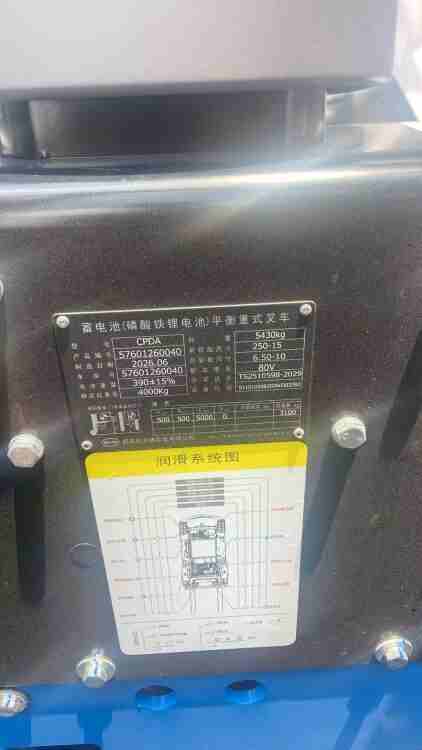
There are three main factors that will cause the fluctuation of hourly energy cost of electric forklifts. The first is the actual working condition intensity. If the equipment operates in the scene of frequent lifting over 3 meters, long-time full-load climbing or high-frequency loading and unloading of heavy goods, the hourly power consumption will rise slightly. The second is the daily maintenance state of the power battery. The equipment that regularly completes the battery balance maintenance and cleans the dust on the surface of the power module can maintain a stable energy conversion efficiency, and avoid extra power loss caused by aging or poor heat dissipation. The third is the operation habit of the operator. The operation mode of smooth acceleration and deceleration, avoiding long-time no-load power consumption and reasonably arranging the walking route can further reduce the hourly energy consumption level.
For local enterprises with daily operation time of more than 8 hours, after replacing the old internal combustion forklift with electric forklift, the annual comprehensive energy expenditure can be reduced by more than 50% in most scenarios, and the saved operating cost can cover the initial procurement difference of the equipment within 2 to 3 years under normal operation rhythm.
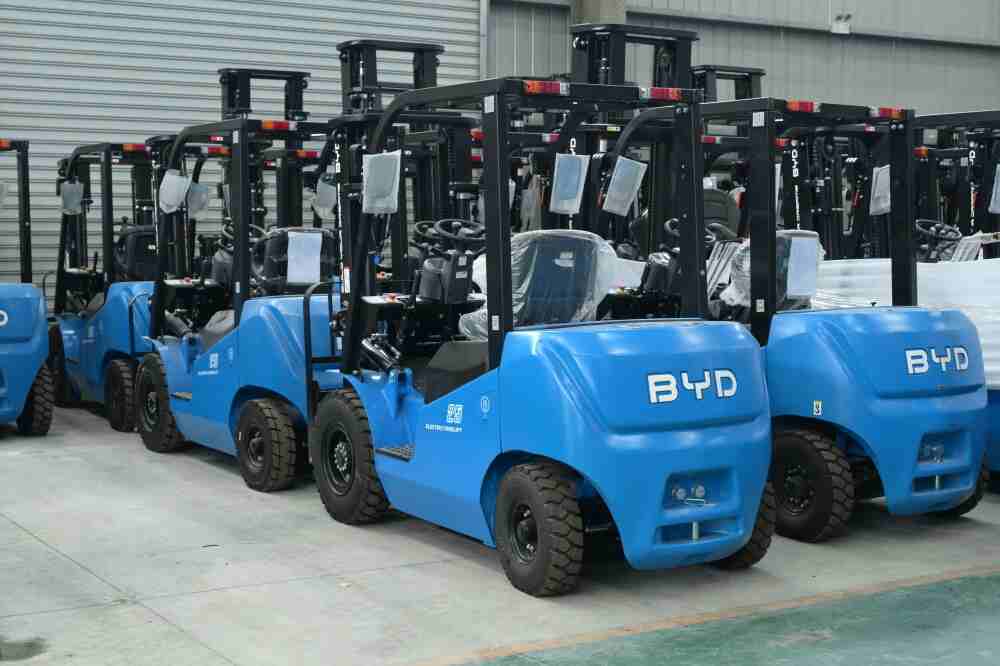
We are Jianshu New Energy, focusing on BYD electric forklifts. We can provide targeted energy consumption measurement and operation optimization schemes for different operation scenarios of customers in Thiès, helping local customers give full play to the cost advantage of electric forklifts. If you have relevant consultation demands, you can send an email to [email protected] to get professional response.


