
 English
 Русский
 Français
 Português
 Español
 لالعربية


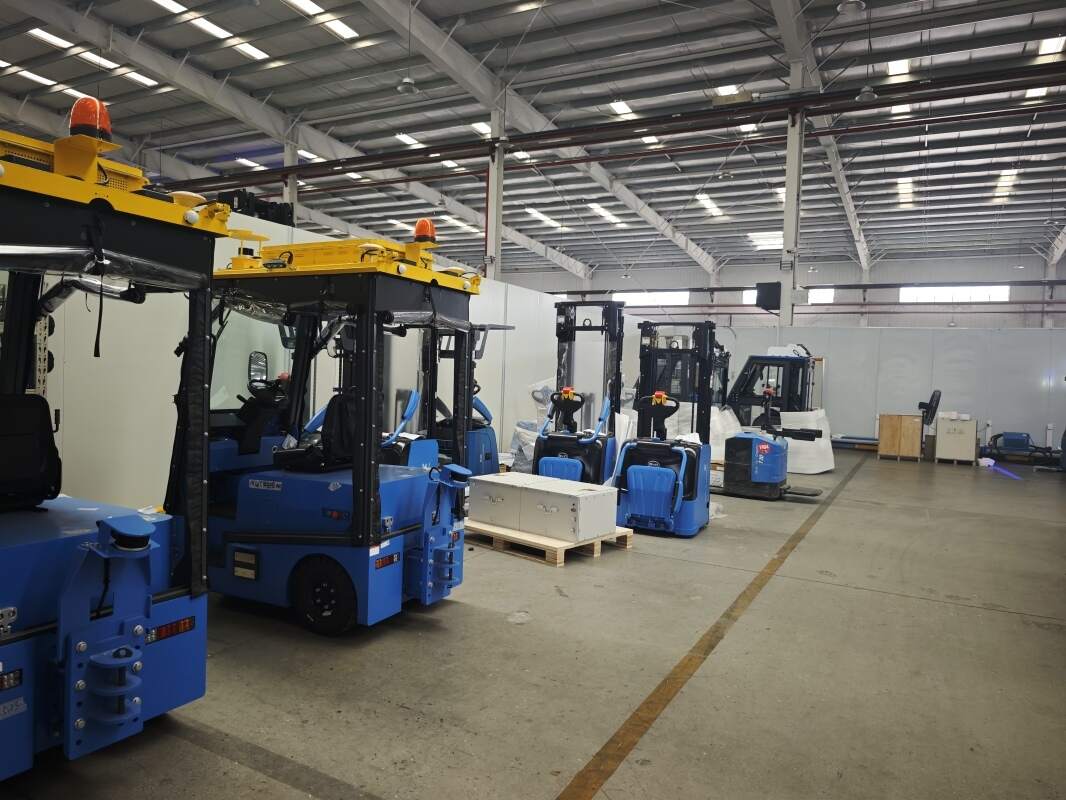
As low-carbon industrial logistics develops rapidly, electric forklifts have become one of the most widely used material handling equipment in indoor warehouses, manufacturing workshops and light cargo distribution scenarios. Different from traditional internal combustion forklifts, electric forklifts rely on battery power output, with lower noise emission and no exhaust pollution, but operators need to master targeted operation and maintenance rules to give full play to its performance advantages.
Basic Operation Specifications for Novice Operators
Before starting the equipment, operators need to check the remaining power level, brake flexibility and fork deformation condition first, confirm there is no obstacle in the running route before igniting the power system. When carrying cargo, the center of the goods should be kept in the middle of the two forks, avoid overloading or lifting the cargo to an excessive height during moving, to prevent the equipment from losing balance and tilting. It is not allowed to use the fork to carry people or pull other unrelated equipment in daily operation, which will effectively reduce hidden safety risks in the working scenario. Operators should also keep a clear view of the forward route, turn on the warning light when working in low-visibility areas to remind surrounding staff to keep a safe distance.
Routine Maintenance to Extend Service Life
The core power component of electric forklift is the battery pack, operators should follow the official charging specification to complete appropriate full charge and discharge cycles, avoid long-term power loss storage or overcharging for more than 12 hours, which will damage the internal activity of the battery plate. After daily use, operators should wipe the dust and cargo residue on the body surface, check the wear condition of walking wheels and transmission parts regularly, add a small amount of lubricating oil to the lifting connection structure every 300 working hours, to reduce the friction loss of mechanical parts. Regular inspection of the wiring interface can also prevent loose wiring caused by long-term vibration, and avoid unexpected power failure in the middle of operation.
Energy Efficiency Optimization for Long Time Use
Reasonable operation habits can effectively reduce power consumption per working cycle, operators can plan the handling route in advance before starting work, avoid repeated steering or no-load long distance driving, adjust the running speed according to the site road condition instead of frequent sudden acceleration and sudden braking. For enterprises that run electric forklifts in two shifts, configuring a matching charging management area can arrange peak-valley power charging properly, reduce the operation cost while keeping the equipment in good standby state. These small operational adjustments can bring considerable long-term benefits for logistics teams of all sizes.


