English
 Русский
 Français
 Português
 Español
 لالعربية


For most warehouse and logistics operation managers, selecting the right material handling equipment directly impacts operation efficiency, space utilization and long-term use cost. Two of the most widely used electric forklift types in the industry are counterbalance forklift and reach forklift, and many practitioners often get confused about their applicable scenarios and functional differences.
First, let’s look at the core design features of the counterbalance forklift. This type of forklift is equipped with a heavy counterweight at the rear of the vehicle body, which can fully offset the torque generated by the cargo loaded on the front fork, so it can keep stable during operation without extra support structures. Its solid chassis and mature power system can adapt to both flat indoor ground and general outdoor working conditions, including gentle slope operation and lorry loading and unloading work. The rated load capacity of this type of forklift usually ranges from 1 ton to 5 tons, which can meet the demand for heavy cargo handling in most scenarios. Due to its structural design, the counterbalance forklift needs a wider operation channel to complete turning and stacking actions, and the maximum lifting height of its standard mast usually stays around 3 to 6 meters.
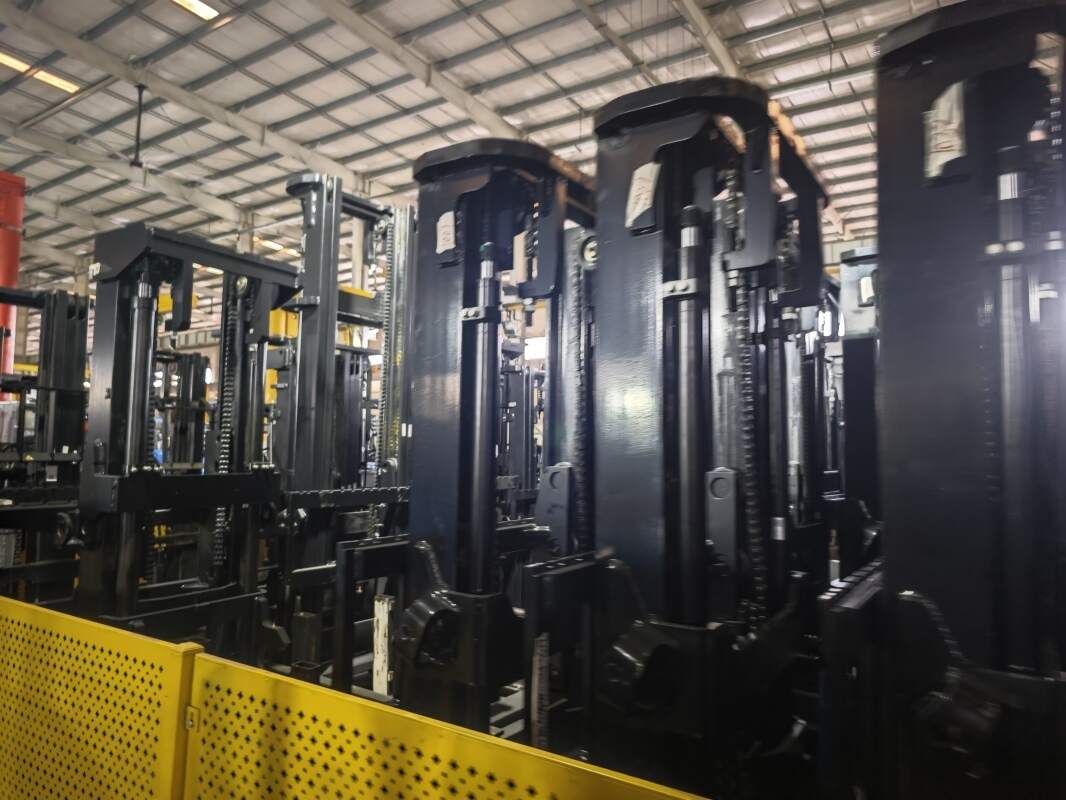
Next is the reach forklift, which is specially designed for high-density storage scenarios. This type of forklift cancels the large rear counterweight, and adopts a telescopic mast or extensible fork structure to offset the load torque through the forward extension of the mast. The whole vehicle is more compact, with a much smaller turning radius than the counterbalance forklift of the same load level, so it can normally run in narrow channels with width less than 2.8 meters, which greatly improves the utilization rate of warehouse storage space. Its lifting height can usually reach 8 to 12 meters, which is very suitable for accessing high-level rack cargoes. Limited by its structural characteristics, the reach forklift is more suitable for working on flat and hard indoor ground, and its maximum load capacity at the maximum lifting height will decrease correspondingly.
When choosing between these two types of forklifts, operation managers can make judgments based on their actual operation demands. If the work scenario involves mixed indoor and outdoor operations, frequent heavy cargo handling and no strict restriction on channel width, the counterbalance forklift will be a more cost-effective choice. If the core demand is to improve the storage density of the limited warehouse space and realize high-position cargo access, the reach forklift can bring better use effect.
As a professional electric forklift service provider, Jianshu New Energy focuses on BYD electric forklift, and we can provide targeted equipment selection suggestions and supporting service solutions according to the specific operation scenario of each customer. If you have relevant consultation demands, you can send an email to [email protected] to obtain professional and customized support.