
 English
 Русский
 Français
 Português
 Español
 لالعربية

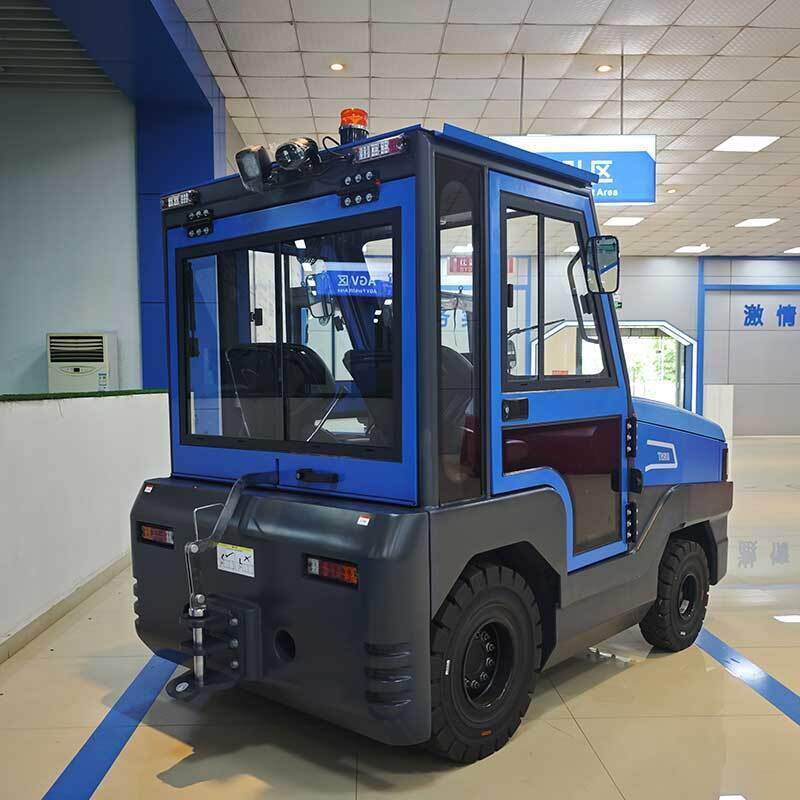
Against the background of accelerating low-carbon transformation of the logistics industry, electric forklifts have become one of the most widely used handling equipment in various industrial and storage scenarios in recent years. This guide sorts out systematic practical knowledge from multiple dimensions to help relevant practitioners grasp correct using methods.
Core Functional Characteristics of Electric Forklifts
Compared with traditional internal combustion forklifts, electric forklifts produce no exhaust emission at the operation site, and the overall operation noise is controlled at a relatively low level, which can adapt to closed, ventilated limited working scenarios such as indoor warehouses, food processing workshops and pharmaceutical storage areas. Its power output is smooth and continuous, and the vibration generated during operation is relatively small, which can reduce the damage to fragile goods being transported to a certain extent. The overall operation cost in daily use is also at a moderate level suitable for long-term continuous investment.
Standardized Daily Operation Specifications
Before each shift of operation, operators need to complete necessary pre-use inspection work, including checking remaining battery level, flexibility of brake and steering system, surface wear condition of forks and normal operation status of lighting and warning lights. In the process of operation, staff should strictly follow the load parameter range specified by the equipment, avoid overloading operation, slow down in narrow channels and areas with blocked sight, and do not turn sharply on sloped surfaces or carry irrelevant personnel with the equipment. For special large cargo handling work, staff can set up necessary prompt signs around the operation area to avoid potential safety risks.
Scientific Routine Maintenance Strategies
Rational daily maintenance can effectively extend the service life of electric forklifts and reduce unexpected failure rate. For the power battery part, users should avoid overcharging or deep discharging as much as possible, and carry out regular supplementary charging when the equipment is idle for a long time. Operators should clean up the dust accumulation on the surface of motor and heat dissipation components regularly, add lubricant to the transmission connection parts according to the specified cycle, and stop using the equipment for troubleshooting in time when abnormal noise or response lag is found.
Scenario Matching Suggestions for Better Efficiency
When selecting and using electric forklifts, users can match corresponding configuration parameters according to actual working scenarios. For high-level shelf storage scenarios, equipment with matching lifting height can be selected to meet the demand of high-position goods access. For outdoor open-air operation scenarios, products with corresponding dustproof and waterproof grade can be selected to reduce the erosion of equipment by external environmental factors, so as to give full play to the performance advantages of the equipment.


