
 English
 Русский
 Français
 Português
 Español
 لالعربية


Counterbalance forklift is one of the most widely used material handling equipment in modern industrial and logistics scenarios. Before you select, operate or maintain this type of equipment, mastering the following 8 practical points will help you improve operation safety, extend equipment service life and match your actual use demand better.
First, it gets its name from the unique rear counterweight design. Unlike other types of warehouse forklifts, it does not need extra extended legs to support the load, the built-in heavy counterweight at the rear can offset the weight of the goods lifted at the front end, which guarantees operation stability when carrying heavy loads.
Second, it has a wide coverage of rated load capacity. Conventional models can meet the demand from 1 ton light goods handling to more than 10 tons heavy cargo transportation, so it can adapt to diverse load requirements of different industries.
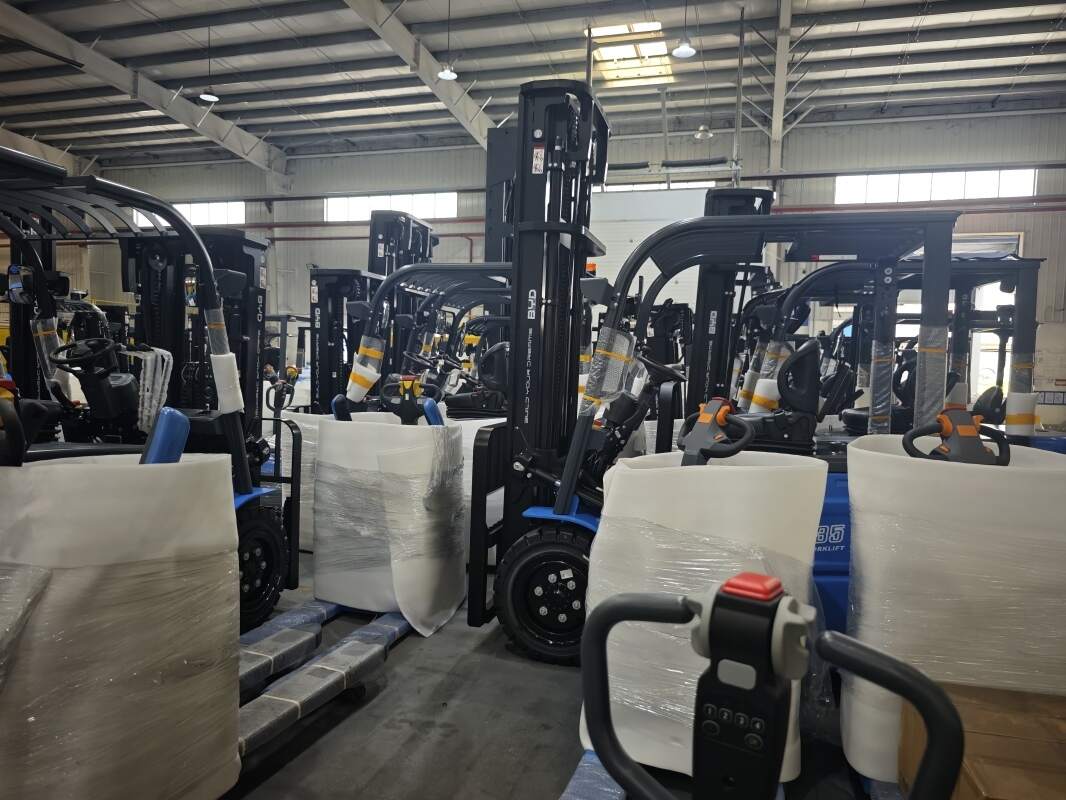
Third, the electric counterbalance forklift has become the mainstream choice for modern low-carbon workshops. It produces no exhaust emission during operation, runs with low noise, and will not cause pollution to indoor closed working environments such as food processing workshops and pharmaceutical storage centers.
Fourth, it has extremely high scenario adaptability. It can work smoothly on flat warehouse floors, and also can be used in outdoor yards, cargo ports, manufacturing production lines and large distribution centers, completing functions such as goods stacking, high-position access and short-distance transshipment.
Fifth, operators must receive formal professional training before driving this type of forklift. Relevant safety operation regulations require that personnel must master the operation logic, risk avoidance skills and load limit standards of the equipment, to avoid safety accidents caused by misoperation.
Sixth, regular standardized maintenance is a key link to guarantee long-term stable operation. For electric counterbalance forklifts, you need to check the battery health status, braking system sensitivity, lifting component flexibility and the fastening degree of rear counterweight on a regular basis, to eliminate hidden troubles in time.
Seventh, there are clear limitations for operation on inclined surfaces. This type of forklift is not suitable for driving on slopes that exceed the rated gradient specified in the product manual, and operators should avoid sharp turning and sudden braking under full load status to keep operation safe.
Eighth, it supports rich personalized configuration expansion. Users can install different types of attachments such as side shifters, drum clamps and fork positioners according to actual handling demands, to expand the application range of the equipment and meet special operation requirements.
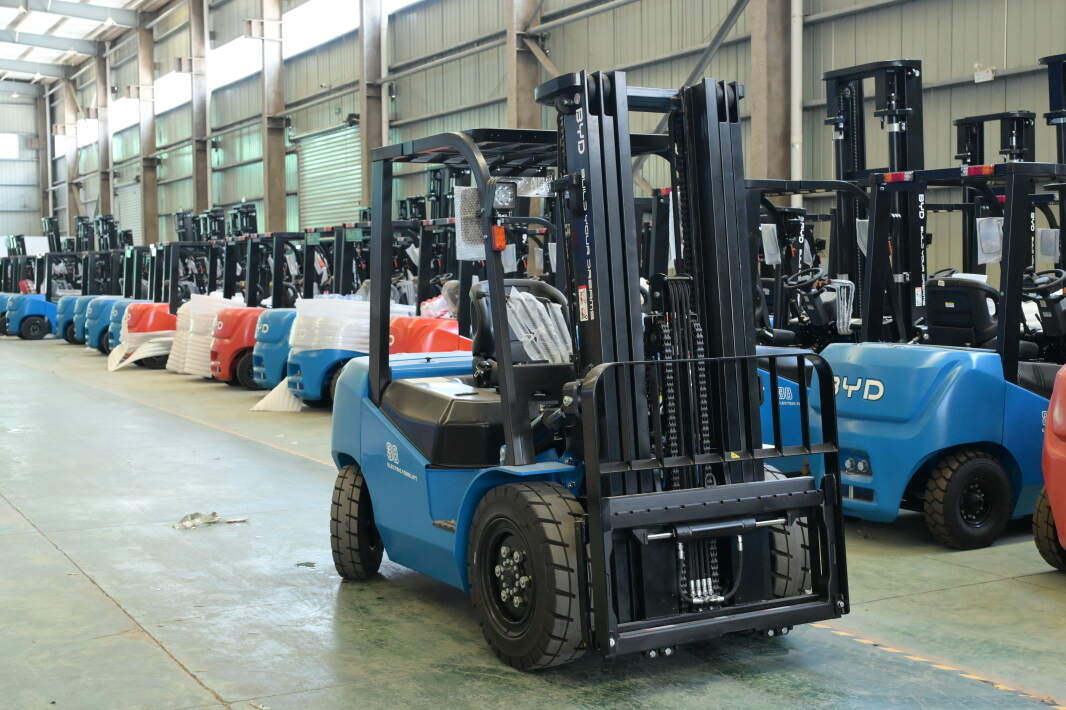
As a professional new energy industrial equipment service provider, Jianshu New Energy focuses on BYD electric forklifts. If you have demands for model selection, after-sales consultation or solution customization, you are welcome to contact us via [email protected] for further communication.


