English
 Русский
 Français
 Português
 Español
 لالعربية


First, it features zero-emission operation. Unlike traditional internal combustion forklifts, lithium-ion forklifts produce no exhaust fumes during operation, which meets environmental protection requirements of indoor warehouses, food processing workshops and closed working scenarios, and will not cause extra air pollution to the working environment.
Second, it supports simplified charging workflow. Most lithium-ion forklift models support opportunity charging, you can plug in the device during regular break time without waiting for full charge from zero, no need to replace the whole battery pack during daily use, which saves extra labor cost for battery replacement.
Third, it brings lower long-term operation cost. Though the upfront purchase cost of lithium-ion forklift is relatively higher than old lead-acid counterparts, its energy conversion efficiency is much better, the daily electricity consumption for the same working hour is far lower, no frequent maintenance for battery components will cut long-term running expenditure obviously.
Fourth, it delivers steady power output performance. The power output of lithium-ion forklift will not drop obviously even when the remaining battery capacity is lower than 20%, the lifting speed and moving speed keep consistent during the whole discharge cycle, which avoids inefficient working situation caused by insufficient power in the late stage of use.
Fifth, it has no special ventilation requirement for battery storage. Lithium-ion batteries do not produce acidic gas during normal charging and discharging process, you do not need to arrange a separate special ventilation battery storage room like that for lead-acid batteries, which saves extra space occupation for the warehouse.
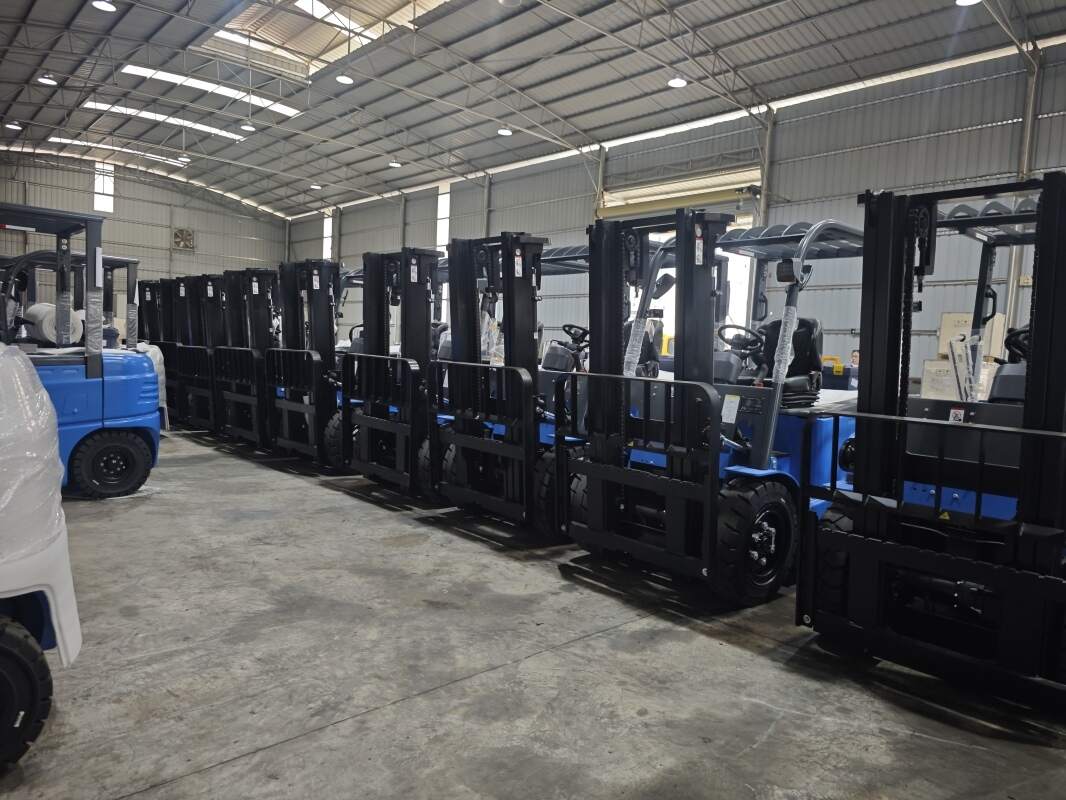
Sixth, it has longer battery service cycle. Under normal standard operation and proper maintenance, the core lithium battery of this kind of forklift can support more than 2000 charge-discharge cycles, the whole service life can reach 5 to 8 years, which is 2 to 3 times of the average service life of traditional lead-acid forklift batteries.
Seventh, it has low daily maintenance difficulty. Daily routine maintenance for lithium-ion forklift only includes checking the tire wear condition, confirming the normal operation of brake and lifting system, cleaning the surface of power interface, no need to add electrolyte or regularly adjust the specific gravity of battery liquid as required by old lead-acid models.
Eighth, it adapts to various working temperature scenarios. Qualified lithium-ion forklift can work stably within the common temperature range of minus 20 degrees Celsius to 50 degrees Celsius, it can meet the operation demands of cold storage, normal temperature warehouse and outdoor open-air logistics yard under proper protection measures.
Ninth, it is equipped with intelligent operation monitoring function. Most modern lithium-ion forklifts are built with intelligent monitoring system, which can display remaining battery power, real-time operation status, fault prompt information on the on-board screen clearly, operators can grasp the running condition of the whole device in real time.
Tenth, it fits the low-carbon industrial development trend. Using lithium-ion forklift can help logistics, manufacturing and other related enterprises meet local environmental protection assessment requirements, reduce the carbon emission of the material handling link, and support the sustainable development of the whole enterprise.
As a professional new energy forklift service provider, 尖树新能源 focuses on high-quality BYD electric forklift related products and supporting services, if you have any demand for product consultation, customized solution matching, you can contact us via email at [email protected] at any time.