
 English
 Русский
 Français
 Português
 Español
 لالعربية

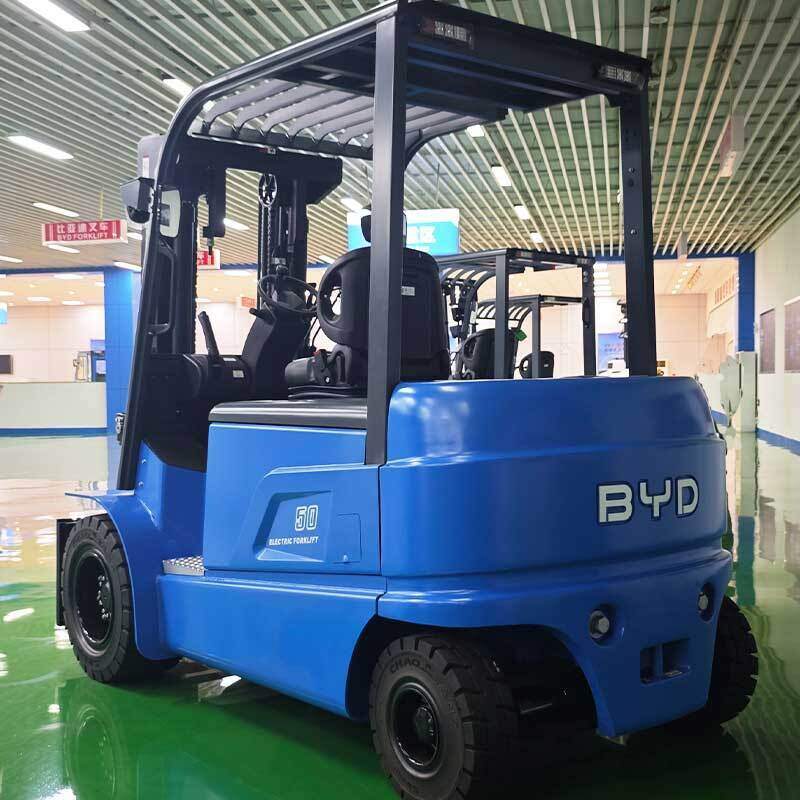
When performing non-standard handling tasks such as narrow aisle stacking, irregular cargo transporting and limited space cargo accessing, most electric forklift operators tend to focus on load weight limit and mast lifting height, while ignoring the important influence of fork-carriage offset parameter on operation stability and efficiency. A proper mastery of this parameter can effectively reduce unnecessary vehicle position adjustment, lower the risk of cargo collision, and bring more stable performance for daily specialized operation.
The fork-carriage offset parameter refers to the allowable adjustment range of the fork carriage moving horizontally relative to the longitudinal central axis of the electric forklift body. Different from the fixed fork carriage structure of standard electric forklift models, the adjustable offset design of special forklift models is developed to meet the flexible handling demands in complex working conditions. The parameter value is marked clearly on the forklift nameplate of corresponding model, and all adjustment actions should be kept within the specified range in actual operation.
For different specialized handling scenarios, the matching adjustment rule of this parameter also varies. When working inside the narrow container or enclosed cargo hold, appropriate offset adjustment can align the fork position with the cargo placement point without extra steering of the whole vehicle, which greatly saves the operation space. When transporting special-shaped cargos with unbalanced barycenter, adjusting the fork carriage offset to make the cargo barycenter as close as possible to the vehicle load center can effectively keep the whole vehicle running in stable state. When stacking high-position cargos in narrow aisle, the reasonable offset value can also reduce the extra swing amplitude of the mast structure, making the cargo placing process more accurate.
During actual operation, all adjustment actions of fork-carriage offset should follow relevant safety specifications strictly. Operators should not adjust the offset parameter beyond the specified range under any overweight load condition. Before starting handling tasks, operators should confirm that the locking structure of fork carriage is fully engaged to avoid unexpected position shift during operation. It is not allowed to adjust the offset state of fork carriage when the forklift is moving at a normal traveling speed. Regular routine inspection on the offset adjustment mechanism is also required to eliminate hidden dangers caused by component wear, so as to keep the parameter accuracy within normal range.
Mastering the usage rule of fork-carriage offset parameter correctly can bring multiple benefits for specialized electric forklift handling work. It not only helps to improve the overall operation efficiency of on-site material handling, but also reduces the occurrence probability of cargo damage and operation accident, providing solid support for standardized, safe and orderly industrial storage work.


