
 English
 Русский
 Français
 Português
 Español
 لالعربية

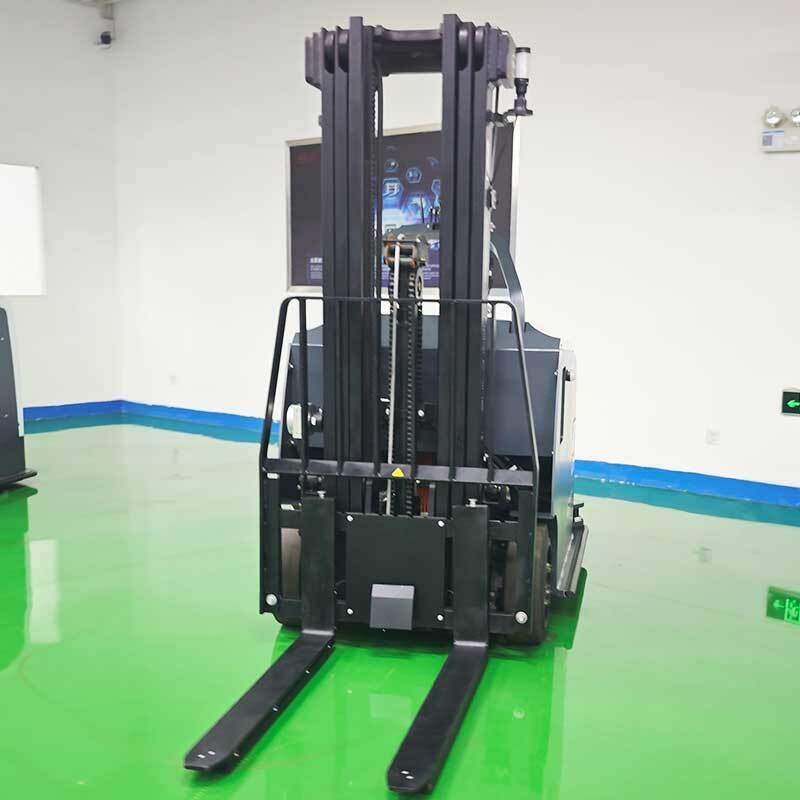
For compactly arranged manufacturing plants, old workshop renovation areas and intensive storage zones, narrow doorways between functional areas are very common in daily operation. Improper dimension matching between electric pallet trucks and these narrow doorways often leads to frequent vehicle stalling, frame scraping, cargo tipping and doorway structure damage, which not only interrupts the continuity of material handling, but also brings extra maintenance cost and hidden safety risks for on-site workers. Reasonable dimension limit analysis can effectively eliminate these hidden troubles through standardized measurement and dynamic parameter calculation.
The first core part of the analysis is to clarify all relevant dimension parameters involved in the whole passing process, rather than only referring to the nominal outer width of the electric pallet truck statically. The first category of parameters covers the vehicle body itself, including the maximum outer width of the vehicle body side, the maximum height of the vehicle body without load, the minimum ground clearance, and the dynamic swept width when the vehicle moves slowly with steering adjustment. The second category of parameters covers the cargo to be transported, including the lateral extension distance of the cargo outside the pallet, the total height of the loaded cargo, and the possible offset distance if the cargo is placed slightly unevenly. The third category of parameters covers the doorway itself, including the actual clear width after deducting the protruding parts of door frames, anti-collision strips and line pipelines on both sides, the actual clear height below the top beam, and the minimum gap between the doorway bottom and the ground.
For the straight passing scenario which is the most common daily operation, the minimum allowable clear width of the narrow doorway should be at least equal to the maximum outer width of the loaded electric pallet truck plus 50 mm safety margin on each side, so as to reserve enough space for slight direction adjustment of operators during slow moving. For the scenario that drivers need to complete small steering adjustment near the doorway to align the driving direction, the minimum clear width requirement should be increased by no less than 15% based on the straight passing threshold, to adapt to the extra dynamic swept space of the vehicle body in steering state. For the height dimension, the total height of the loaded electric pallet truck should leave no less than 100 mm safety gap with the lowest point of the doorway top beam, to avoid collision caused by uneven ground on both sides of the doorway.
During actual on-site implementation, operation teams are suggested to make regular re-measurement for all narrow doorways, update the dimension data in time after the doorway structure is adjusted, and paste obvious dimension warning marks at 2 meters in front of each narrow doorway to remind operators of the allowable maximum cargo size. For doorways that cannot meet the basic passing dimension requirement after calculation, relevant teams can adjust the material distribution route to avoid unnecessary passing, or arrange a special guiding staff to assist when heavy and over-sized cargo needs to pass through. These simple and operable measures can effectively reduce the occurrence of collision accidents, and improve the overall smoothness of indoor logistics operation.


