
 English
 Русский
 Français
 Português
 Español
 لالعربية

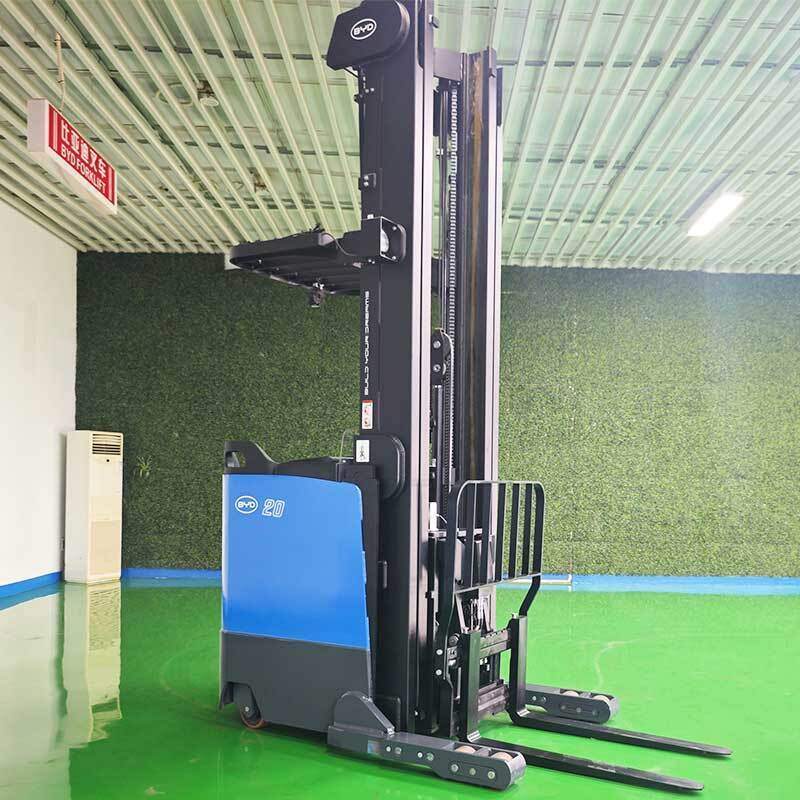
With the widespread application of lithium-ion batteries in the industrial material handling field, the safety performance of battery packs has become a core concern for fleet operators and equipment managers. The battery management system (BMS) built inside lithium-ion forklift batteries integrates multiple protection mechanisms, among which short-circuit protection acts as the last critical safety line to avoid accidental damage caused by abnormal current surges. Unlike basic overcharge or over-discharge protection that focuses on voltage monitoring, short-circuit protection relies on reasonable preset parameter thresholds to balance operation stability and safety performance effectively.
The first core design logic for internal short-circuit protection thresholds is to distinguish between normal transient high current and harmful fault current. In actual working scenarios, electric forklifts will generate instantaneous high current when starting with full load, lifting heavy goods to a high position or moving on sloped roads. If the protection threshold is set too sensitive, the BMS will trigger misoperation to cut off the power output, leading to unexpected work interruptions that may cause safety hazards in the operation area. For most conventional lithium-ion forklift batteries, the first-stage transient short-circuit threshold is usually set at 8 to 12 times of the rated discharge current, with a response delay window ranging from several microseconds to tens of milliseconds. This design can filter out most of the normal working condition current peaks, and will not respond to the instantaneous current surge generated by normal operations.
The second-stage continuous short-circuit protection threshold is set to target real fault scenarios. When the output loop of the battery pack has accidental lap joint, cable insulation damage or other fault conditions, the high current far exceeding the rated value will continue to exist. Once the detected current remains above the preset threshold for more than 100 milliseconds, the BMS will start the hardware-level power-off action immediately, and synchronously upload the corresponding fault code to the display terminal of the forklift, so as to remind the on-site operators to stop the equipment for inspection in time. This setting can effectively prevent the continuous high current from generating excessive heat accumulation, which may cause irreversible damage to the internal electrode sheets and isolation diaphragms of the battery pack.
During daily operation and maintenance, relevant practitioners are not recommended to modify the factory preset short-circuit protection parameter thresholds without professional guidance. Different rated capacity and different tonnage matching lithium-ion forklift batteries have corresponding threshold calibration standards, and arbitrary adjustment may break the original balance between operation stability and safety. It is also suggested to check the BMS operation log regularly, count the historical trigger records of protection mechanisms, and eliminate hidden dangers such as cable aging and joint looseness in advance, so as to form a mutual guarantee with the built-in short-circuit protection thresholds, and extend the service life of the forklift battery pack stably.


