
 English
 Русский
 Français
 Português
 Español
 لالعربية

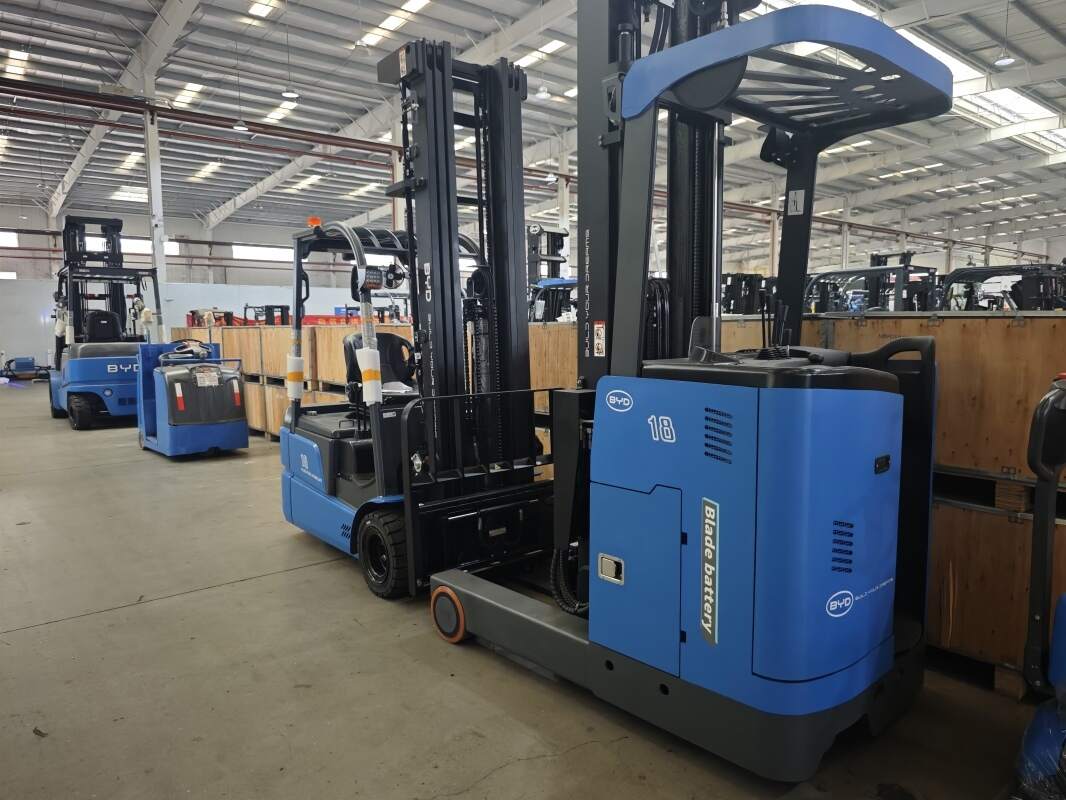
With the continuous popularization of low-carbon material handling solutions in modern logistics and manufacturing scenarios, electric forklifts have gradually become the core load-bearing equipment for most warehouse and factory operation areas. As a professional in the electric forklift industry with years of front-line research and popularization experience, we sort out systematic practical guidelines for operators and equipment managers to improve the comprehensive utilization value of electric forklifts.
Core Pre-operation Inspection Protocols
Before starting each shift of operation, operators need to complete a series of standardized inspection steps to eliminate hidden risks in advance. First, check the remaining power level of the power system, confirm that the power output is stable enough to support the expected operation tasks of the shift, and avoid sudden power failure in the middle of high-altitude loading and unloading operations. Then, check the wear condition of the tires, the flexibility of the steering system, the sensitivity of the braking mechanism, and the integrity of the lifting hydraulic parts, to ensure that no abnormal noise or loose components exist in each key transmission component. The last step of pre-inspection is to test the normal operation status of all safety warning lights and sound prompts, to guarantee that the equipment can send out effective reminder signals when encountering pedestrians or obstacles in narrow operation channels.
Efficient Operation Norms to Reduce Wear and Tear
Standardized operation habits can effectively delay the aging rate of equipment components, and reduce unnecessary maintenance cost in the full life cycle of electric forklifts. Operators should avoid sudden acceleration or sudden braking during the driving process, keep the vehicle body stable when turning, and do not turn sharply when the goods are lifted to a high position. When picking up and placing goods, operators should adjust the distance between the fork arms to match the bottom specification of the goods, to prevent the goods from tilting and falling, and avoid the extra impact load caused by unbalanced load on the forklift body. For operation scenes with steep slopes, operators should keep the load facing the upward direction of the slope, and do not carry out steering or lifting operations on the slope, to prevent the equipment from sideslip.
Scientific Daily Maintenance Strategies
Regular daily maintenance work does not require complex professional skills, but can play a very obvious role in prolonging the service life of electric forklifts. After each shift is completed, operators should wipe the dust and sundries attached to the surface of the vehicle body and the heat dissipation gaps, especially to clean up the debris stuck in the gaps of the power system heat dissipation structure, to ensure that the heat dissipation efficiency of the equipment will not be affected by accumulated dirt. The power pack should be charged in a dry, ventilated, constant temperature special area after the power consumption reaches the set threshold, and no over-discharge or over-charging behavior is allowed, to avoid irreversible damage to the internal chemical structure of the power unit. Regularly check the lubrication status of each transmission and rotating part, replenish the professional lubricant in time according to the operation manual requirements, to reduce the friction loss of metal components in the operation process.
Energy Efficiency Optimization Methods
In the long run, reasonable scheduling of electric forklift operation paths can effectively reduce the invalid driving mileage, thus reducing the overall energy consumption and the operation loss of the vehicle. Equipment managers can plan the operation routes reasonably according to the warehouse layout, reduce the cross operation of multiple equipment in the same narrow channel, to avoid unnecessary waiting and repeated driving. Through the combination of standardized operation and scientific maintenance, the comprehensive operation efficiency of electric forklifts can be improved steadily, creating more stable value for the daily material handling work of the site.


