
 English
 Русский
 Français
 Português
 Español
 لالعربية

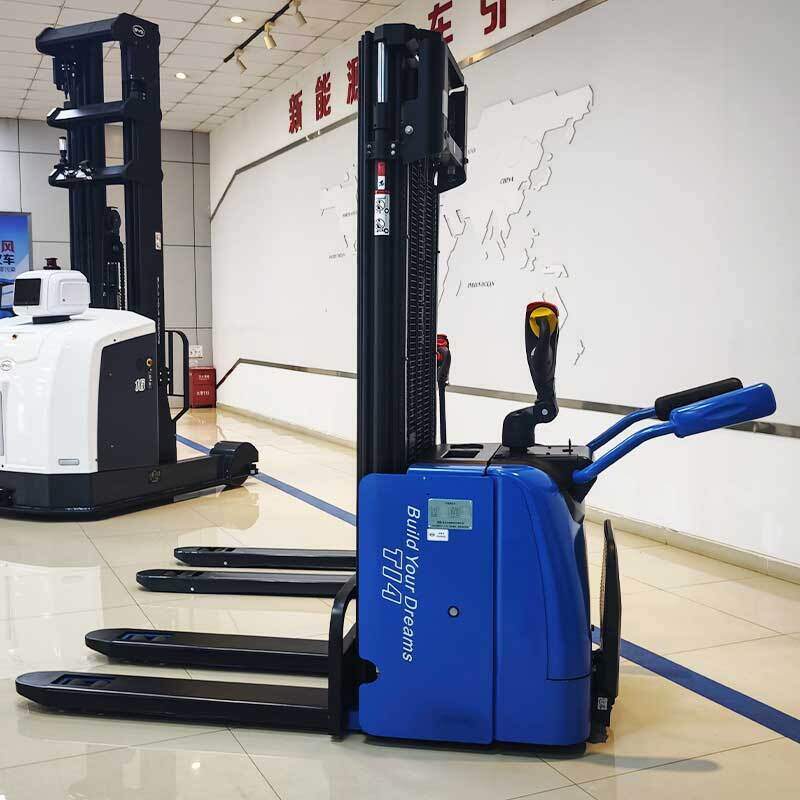
Against the background of continuous development of modern logistics and intelligent warehousing, electric forklifts have gradually become one of the most widely used material handling equipment in various industrial scenarios, with advantages of low noise, zero local emission and flexible operation. Mastering correct use and management methods can give full play to the use value of such equipment in daily operations.
Core Operational Specifications for Electric Forklifts
Before each startup, operators need to complete a full range of pre-inspection work, including checking the remaining battery level, the flexibility of braking and steering system, the deformation and wear condition of forks, and the clarity of surrounding sight lines, to eliminate hidden risks before formal operation. During the operation process, personnel should strictly follow the load limit requirements specified by the equipment, avoid over-lifting goods beyond the rated load, keep a safe distance with surrounding staff and obstacles, and avoid sharp turning or sudden braking in narrow channels to prevent cargo slipping or equipment tipping. When the equipment gives a low battery alarm, operators should arrange to return to the designated charging area in time, rather than forcing continuous operation which may cause damage to the battery pack.
Regular Maintenance Tips to Extend Equipment Service Life
Daily maintenance work is an important link to keep electric forklifts in good working condition for a long time. Operators can wipe the dust and accumulated sundries on the surface of the equipment after each shift, regularly check the tightness of the connecting parts of the battery, and keep the contact points clean to avoid poor conductivity caused by dust accumulation. For the hydraulic lifting system, staff should regularly check the liquid level of hydraulic oil and the sealing condition of the pipeline, add or replace the oil according to the specified cycle to avoid unsmooth lifting or oil leakage. For equipment that needs to be parked for a long time, personnel should keep the battery power at a medium level, turn off the main power switch, and place the equipment in a dry and ventilated area to avoid damp corrosion of internal electronic components.
Scenario Adaptation Optimization Suggestions
For different industrial operation scenarios, users can adjust the use mode of electric forklifts appropriately to get better use effect. For narrow aisle warehousing scenarios, operators can adjust the running speed to a lower level to ensure the accuracy of cargo access, while for short-distance heavy load transfer scenarios in open yards, personnel can reasonably arrange the operation route to reduce unnecessary detours. Users are not recommended to modify the original control parameters or load structure of the equipment without professional guidance, to avoid potential safety hazards caused by improper modification.


