
 English
 Русский
 Français
 Português
 Español
 لالعربية


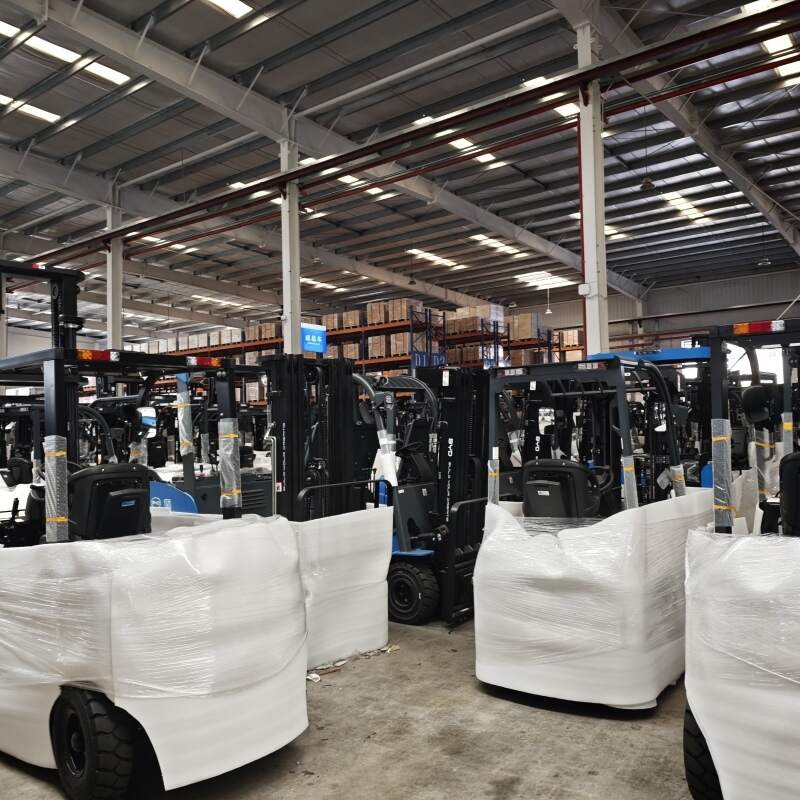
Against the backdrop of growing demand for low-carbon and high-efficiency logistics operations, electric forklifts have become one of the most widely applied core equipment in indoor warehouses, distribution centers and light industrial storage areas. Many frontline operators and facility management staff are eager to grasp systematic, practical professional knowledge to give full play to the performance of the equipment under the premise of ensuring operation safety.
Basic Standardized Operation Requirements
Before starting each shift, operators need to complete necessary pre-operation check work, including confirming the remaining battery level, testing the flexibility of the braking system and steering structure, checking the normal operation of the warning light and horn, and observing whether there is obvious damage or abnormal wear on the fork surface. During the operation process, it is necessary to avoid overloading beyond the rated load range, control the driving speed at a reasonable level according to the smoothness of the site and the pedestrian density around, and avoid sudden steering or sudden braking when carrying elevated goods to prevent the goods from slipping and falling. Operators should not leave their posts without permission when the equipment is in running state, and lock the operation handle and pull up the handbrake before leaving the forklift for a long time.
Practical Routine Maintenance Guidelines
Routine maintenance work that is completed every fixed cycle can effectively reduce the failure rate of electric forklifts and delay the aging speed of core components. For the power battery part, operators should avoid deep over-discharge and prolonged overcharge, arrange the charging work in a dry and ventilated environment that meets safety specifications, and regularly wipe the dust and impurities on the surface of the battery electrode to avoid poor contact. It is also necessary to regularly check the sealing performance of the hydraulic oil circuit, remove the debris accumulated in the motor heat dissipation duct, and check the wear degree of the tire surface on schedule, so as to replace the accessories in time when the wear value reaches the set warning line.
Scenario Adaptation Skills for Higher Working Efficiency
Different application scenarios have different adaptation requirements for the use of electric forklifts. For low-temperature cold storage operation scenarios, staff can properly adjust the power output strategy according to the actual ambient temperature to reduce the unnecessary energy consumption loss. For high-frequency continuous operation scenes with large daily handling volume, the operation team can reasonably arrange the peak-shifting charging plan according to the operation rhythm, so as to avoid the situation that the sudden power failure in the peak power consumption period affects the normal charging process. For narrow channel operation scenes, operators can adjust the response sensitivity of the steering system properly under the guidance of professional technical personnel, to improve the flexibility of the equipment passing through narrow passages. Standardized operation and reasonable maintenance can effectively balance the operation efficiency and the comprehensive use cost of the equipment, which also conforms to the current general development trend of low-carbon and environment-friendly logistics operation.


