
 English
 Русский
 Français
 Português
 Español
 لالعربية

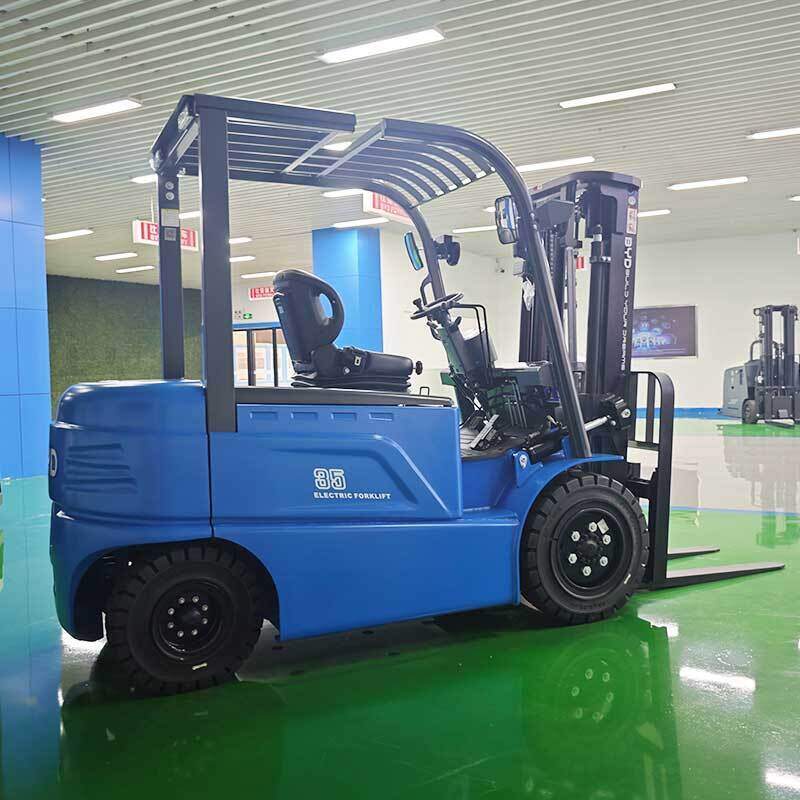
As the core equipment of modern low-carbon logistics systems, electric forklifts have been widely applied in various industrial storage, retail distribution and light manufacturing workshops in recent years. Their zero local emission and low noise operation features meet the increasingly strict environmental protection requirements of most indoor and semi-outdoor industrial sites.
Core Performance Features of Electric Forklifts
Different from fuel-powered material handling equipment, electric forklifts rely on stored electrical energy as the power source, whose power output curve presents smoother performance when lifting and transporting goods at different weight levels. Most current mainstream models are designed with humanized operation control modules, which reduce the physical load of operators during long-time continuous shifts. The overall energy consumption cost per unit working hour is relatively lower than traditional fuel equipment, which fits the conventional cost control target of most logistics operation teams.
Standard Daily Operation Norms
Before starting the equipment each shift, operators need to complete basic pre-inspection work, including checking the remaining power level of the power system, testing the flexibility of lifting and steering components, and confirming the normal working status of safety warning lights and the braking system. During operation, operators need to keep the cargo load within the rated load range, avoid sudden steering or sharp braking actions when driving on slippery or uneven ground, and keep a safe distance with surrounding personnel and stacked goods in the working aisle. After daily operation ends, operators need to park the equipment in the designated charging area, lower the lifting fork to the lowest position, and cut off the main power supply of the whole vehicle.
Routine Maintenance Points
Regular maintenance work can effectively reduce the failure rate of electric forklifts in daily use. The outer surface of the power battery pack needs to be cleaned regularly to avoid dust and accumulated moisture affecting the heat dissipation effect, and the connection terminals should be checked periodically to confirm no loose or corrosion phenomenon. The transmission and walking components need to be lubricated on schedule according to the operation manual requirements, and the wear degree of the tire surface and brake pads should be inspected every certain working cycle. Professional technicians are required to complete internal circuit inspection and component replacement work, to avoid accidental damage caused by improper disassembly.
Scenario Matching Suggestions
When choosing suitable electric forklift models for specific operation scenarios, management teams need to refer to the average cargo weight, aisle width of the site, and the maximum lifting height required in daily work. For closed storage spaces with high requirements for air quality, the emission-free feature of electric forklifts can create a healthier working environment for on-site staff. For outdoor operation scenarios with large temperature variation, extra protective measures for the power system are recommended to keep the equipment running under stable working conditions.


