
 English
 Русский
 Français
 Português
 Español
 لالعربية

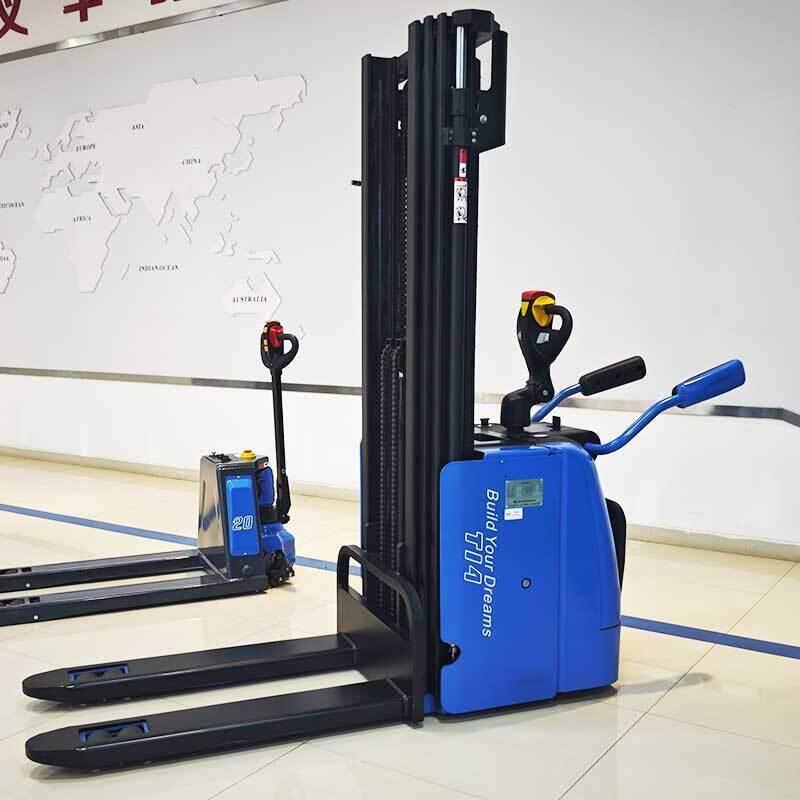
As the logistics and warehousing industry continues to pursue low-carbon and high-efficiency operation modes, electric forklifts have gradually become one of the most widely used handling equipment in indoor and closed working scenarios. Different from internal combustion handling equipment, electric forklifts rely on power battery systems to provide driving and lifting power, which brings different requirements for operation habits, maintenance schemes and scenario adaptation. Mastering correct use and management methods can help enterprises give full play to the value of the equipment, reduce unnecessary operation cost and extend the whole service cycle of the unit.
Core Application Values of Electric Forklifts in Industrial Scenarios
Unlike fuel-powered handling equipment, electric forklifts produce no exhaust emissions during the whole operation process, which makes them suitable for indoor closed spaces such as food storage workshops, pharmaceutical production areas and confined distribution centers. The overall noise level during operation is relatively low, which can reduce the noise interference to surrounding workers and meet the occupational health requirements of long-time continuous operation. The torque output characteristic of the motor is relatively stable, which can provide smooth lifting and moving power when carrying different loads, reducing the shaking risk of fragile goods during handling.
Routine Daily Maintenance Points for Electric Forklifts
The daily maintenance work of electric forklifts focuses on the inspection of power systems, transmission components and safety protection parts. Before each shift, operators need to check the residual power of the battery, confirm whether the connection terminals of the battery are free of looseness or abnormal corrosion, and check whether the tire wear degree is within the safe range. It is also necessary to test the flexibility of the braking system and the normal response of the lifting control lever, to avoid hidden safety risks caused by long-time neglected inspection. After the daily operation is finished, operators should park the equipment in the designated ventilation position, turn off all power switches in order, and charge the battery according to the specified requirements to avoid over-discharge situation that may affect the battery service life.
Operation Skills to Improve Overall Energy Efficiency
To obtain better energy use performance, operators can arrange the handling routes reasonably according to the actual goods distribution situation in the warehouse, reduce unnecessary frequent steering and short-distance idling operation, and avoid sudden acceleration or sudden braking actions in the process of moving. When the equipment is not in working state for a long time, operators can turn off the auxiliary power system such as the lighting and display screen in time to reduce unnecessary power consumption. Carry out regular professional performance calibration for the power system every certain working cycle, so that the equipment can keep running in a relatively efficient state for a long time. Following these standardized operation and management measures, enterprises can make the electric forklift fleet maintain stable working condition for a long time, create more reliable support for daily material handling work, and promote the whole operation system to develop in a more low-carbon direction.


