
 English
 Русский
 Français
 Português
 Español
 لالعربية

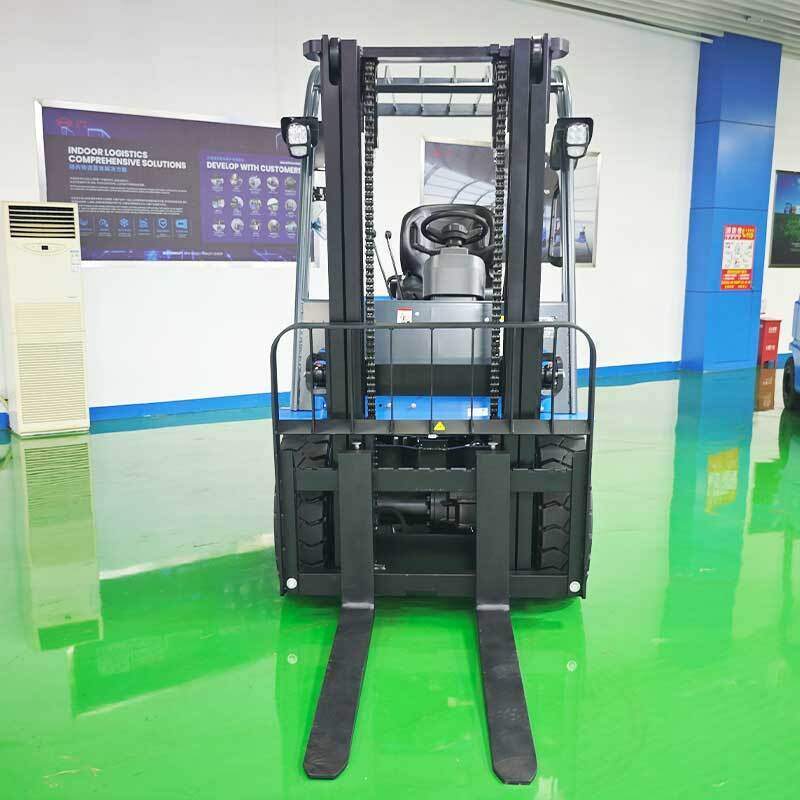
As the low-carbon logistics and warehousing industry develops rapidly, electric forklifts have become one of the most widely used material handling equipment in various industrial scenarios in recent years. Mastering systematic operation and maintenance knowledge can help relevant personnel give full play to the performance of such equipment in daily work.
Core Applicable Scenarios for Electric Forklifts
Different from internal combustion handling equipment, electric forklifts produce no exhaust emission during operation, and the operating noise is kept at a relatively low level, which makes them very suitable for enclosed and semi-enclosed working spaces. Typical applicable scenarios include ordinary civil warehouses, food and pharmaceutical production workshops, retail distribution centers, and factory assembly lines, where high requirements are set for environmental cleanliness and working comfort. For long-term fixed-point material handling work indoors, such equipment can also reduce the additional environmental management cost caused by exhaust and noise pollution to a large extent.
Standardized Operation Essentials for Electric Forklifts
Before each formal operation, operators need to complete necessary pre-check work, including confirming the remaining power level, the flexibility of the braking system, the stability of the lifting mechanism, and the integrity of the warning lights. During the moving process, operators should avoid overloading beyond the rated load range, keep a low driving speed in narrow channel areas, and pay close attention to the surrounding passing personnel and obstacles. When driving on sloped roads, keep the load facing the uphill direction, and do not turn on the slope to avoid side slip risks. It is not allowed to use the fork to carry people for high-altitude operations in daily work.
Scientific Daily Maintenance Specifications
After each use, park the equipment in the designated area, turn off the power supply in time, and complete the supplementary charging according to the battery operation requirements, avoid long-term over-discharge which may affect the overall service life of the power unit. Regularly check the wiring terminals of the power battery to avoid poor contact caused by dust and oxide accumulation, inspect the hydraulic oil pipeline for leakage, and check the wear degree of the walking tires regularly. Clean the dust and debris accumulated on the surface of the equipment and the heat dissipation port every week, to ensure the heat dissipation performance of the power system remains in a normal state. For different types of working scenarios, selecting electric forklifts with matching parameter specifications can further improve the efficiency of material handling, and reduce the comprehensive operating cost in the whole life cycle of the equipment.


