
 English
 Русский
 Français
 Português
 Español
 لالعربية

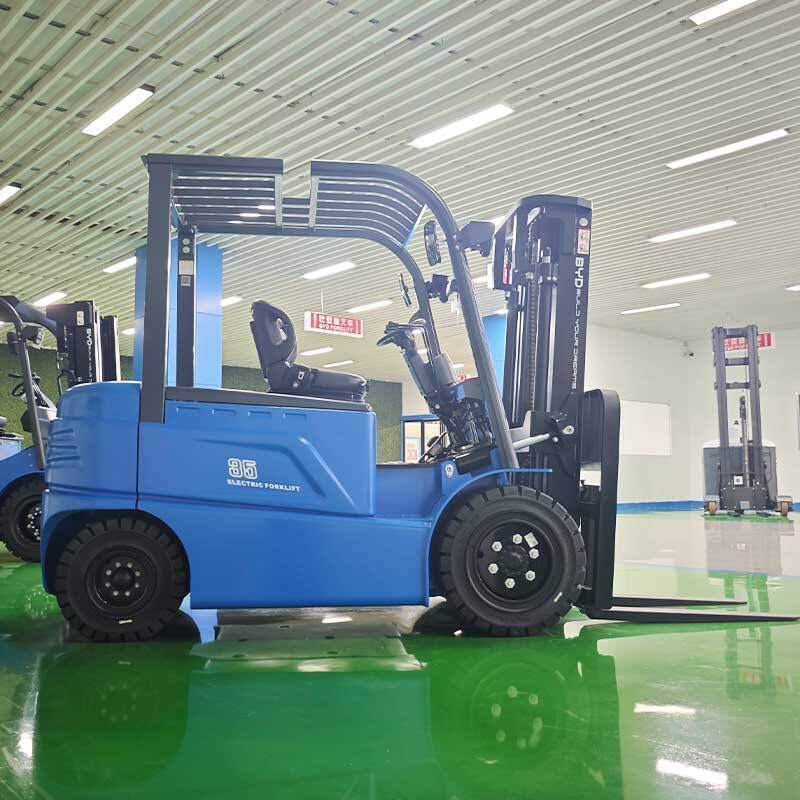
Electric forklifts have become one of the most widely used material handling equipment in modern logistics, manufacturing and warehousing scenarios in recent years, with growing market recognition for their environmentally friendly properties and flexible operation performance. This guide organizes industry common sense and practical skills for new and experienced operators to reference in daily work.
Core Functional Advantages of Electric Forklifts
Different from traditional internal combustion handling equipment, electric forklifts produce no exhaust emission at the working site, and generate far lower operation noise during working process, which can create more comfortable working environment for staff working in closed indoor spaces. Most models are designed with compact body structure, which can adapt to narrow passage operation demands in small and medium-sized warehouses, and the load capacity configuration can match the handling demands of most conventional industrial and commercial scenarios. The power supply system avoids the frequent management work related to fuel storage and transportation, which fits the low-carbon operation trend of current industrial sites.
Standard Daily Operation Specifications
Before starting each shift, operators need to conduct basic inspection on core components, including braking system, remaining power level, operation lever sensitivity and lighting parts, to eliminate hidden risks in advance. During operation, staff should keep the load within the rated range of the equipment, reduce driving speed when passing narrow passages or areas with dense pedestrian flow, and keep the forks at a proper low height when moving on slopes to avoid accidental goods falling. Charging work should be carried out in designated ventilated areas, and operators should follow official guidance to finish charging procedures, to avoid abnormal damage to the power battery system.
Routine Maintenance Tips for Long Term Use
Regular maintenance work can effectively extend the service life of electric forklifts and reduce unexpected downtime. Operators can clean the connection parts of the power battery regularly to avoid dust accumulation affecting the conductive efficiency, check the heat dissipation state of the drive motor and the wear degree of solid tires every week, and inspect the hydraulic system for possible leakage to keep the lifting function stable. When the equipment is left unused for a long time, staff should store it in a dry and cool place, and keep the battery power at a reasonable level to avoid deep power loss that may cause irreversible damage to the battery. Following these standardized operation and maintenance rules can help enterprises give full play to the performance of electric forklifts, improve the overall material handling efficiency of the site, and control the comprehensive operation cost at a reasonable level.


