
 English
 简体中文
 Русский
 Français
 Português
 Español


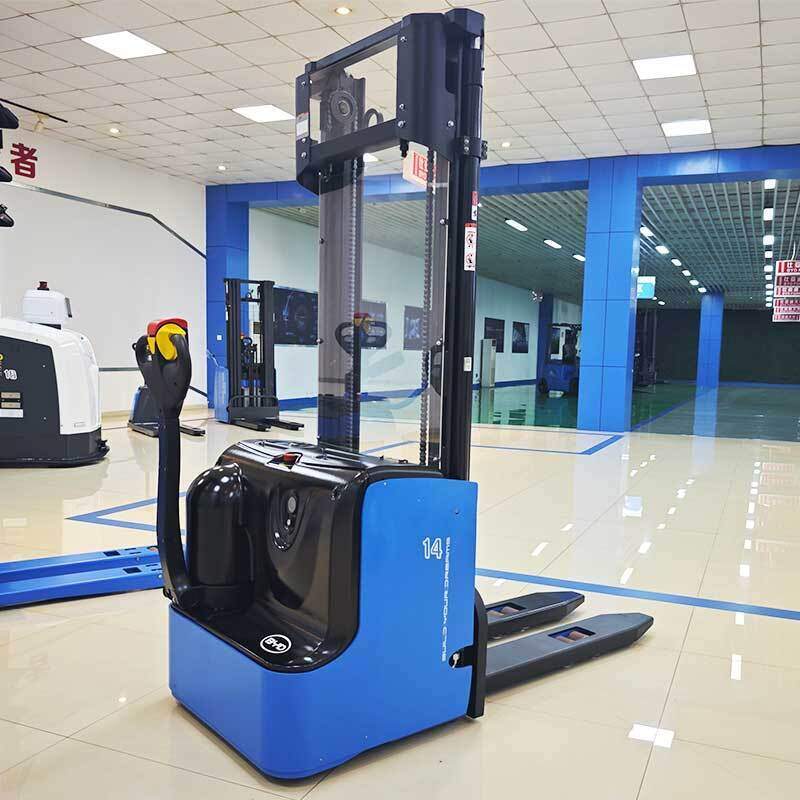
As a widely applied core equipment in modern warehouse, manufacturing and logistics scenarios, electric forklift has gained growing popularity for its low noise, zero local emission and flexible operation features in recent years. Reasonable operation and targeted management can bring more stable performance output and longer service cycle for the equipment, while reducing unnecessary downtime caused by improper usage.
Core Standardized Operation Specifications for Daily Use
Operators should receive full professional training before officially taking post, to get familiar with basic parameter ranges including load limit, lifting height threshold and turning radius of the equipment. Before each shift, staff need to check the remaining power status, brake sensitivity and tire surface condition first, to avoid starting work with hidden risks. When carrying goods, operators should avoid sharp acceleration or emergency steering in narrow passages, and keep the load center within the allowable range of the fork arm, to prevent side slipping of cargo or accidental tilting of the equipment.
Targeted Routine Maintenance Points to Reduce Unexpected Faults
Unlike internal combustion forklift, electric forklift focuses more on the maintenance of power system, electrical control components and transmission structure. Users need to arrange regular dust cleaning for the motor and controller heat dissipation structure according to the frequency of usage, to avoid excessive dust accumulation affecting heat dissipation efficiency. The battery module should be charged following standard specified procedures, avoid over-discharging to extremely low power level or long-term overcharging after the battery is full, which helps maintain the overall health status of the battery pack. Regular inspection of wiring connectors is also necessary, to timely handle loose joints that may cause poor contact.
Performance Optimization Measures Adapted to Different Working Scenarios
For scenarios with high continuous operation intensity, users can arrange reasonable working shift allocation to avoid long-time continuous operation of the equipment under heavy load, which can effectively reduce the wear of core components. For low-temperature working environment in cold seasons, preheating treatment for the power system can be carried out before formal operation, to let the equipment reach the best working state gradually. For narrow aisle scenarios, users can adjust the operation response sensitivity of the equipment within the allowed parameter range, to get more flexible operation experience.
Necessary Safety Protocols for Long-Term Stable Operation
It is not allowed to carry people with the fork arm of electric forklift in any scenario, and operators should wear corresponding anti-collision protective equipment during the whole operation process. After the daily work is finished, staff need to park the equipment at the specified position, lower the fork arm to close to the ground, cut off the main power supply and lock the operation console. Regular safety inspection by professional personnel every fixed cycle can help find hidden risks that are not easy to be found in daily check, to guarantee the stable operation of the equipment for a long time.


