
 English
 简体中文
 Русский
 Français
 Português
 Español


As one of the core motion parameters of electric forklift mast, forklift tilt angle refers to the adjustable forward and backward tilt range of the fork and mast assembly, which is closely related to daily operation safety, load handling stability and equipment service life. Many new operators tend to ignore the standard control of tilt angle in daily work, which may bring unnecessary hidden troubles to on-site operation.
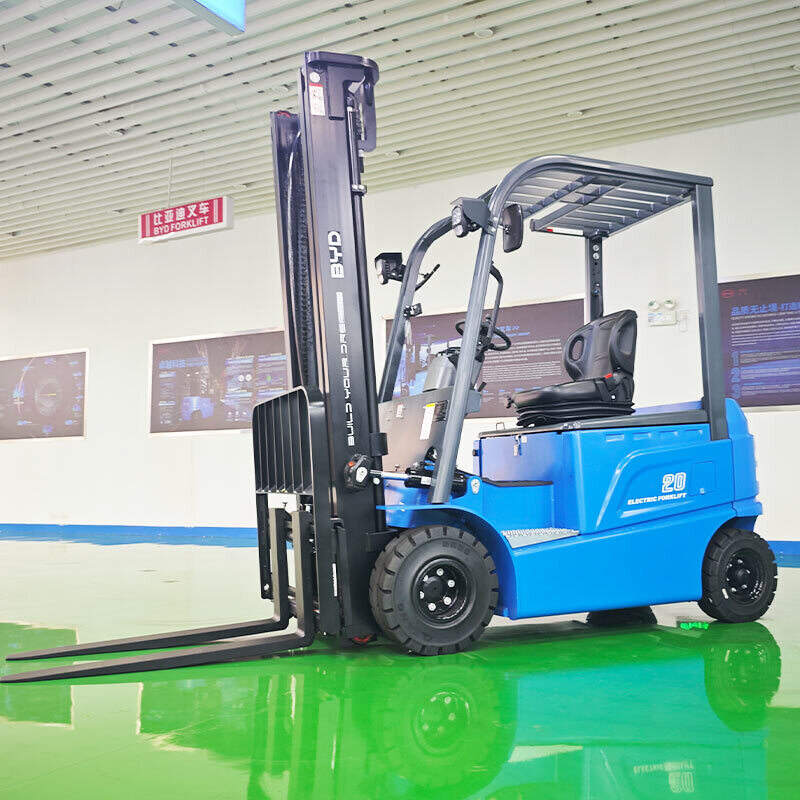
First, basic cognition of forklift tilt angle. For most standard counterbalanced electric forklifts, the factory default design of forward tilt angle is usually between 3 degrees and 6 degrees, while the backward tilt angle ranges from 10 degrees to 12 degrees. Such parameter design fully takes the balance of vehicle body, load center of gravity and actual warehouse operation scenario into consideration, and can meet the use demands of most common pallet handling and high-level stacking scenarios. The tilt adjusting mechanism is driven by hydraulic system, and smooth operation can effectively reduce the impact force on the whole mast structure.
Second, the value of standardizing tilt angle control. First of all, reasonable tilt angle adjustment effectively improves load stability. When the forklift is running with full load, keeping a small backward tilt angle can make the goods lean close to the mast, avoid the goods slipping from the fork due to sudden braking or uneven road surface, and reduce the risk of goods falling and hurting people. Secondly, standard operation of tilt angle can reduce unnecessary wear of components. If the operator keeps a large forward tilt state under full load for a long time, it will bring extra load to the hydraulic cylinder, lifting chain and mast structure, accelerate the loss of vulnerable parts, and increase the later maintenance cost.
Third, practical operation suggestions for tilt angle control. When driving on flat ground with loaded goods, always keep a small backward tilt angle, make sure the goods are firmly attached to the mast, and never drive with forward tilt angle. When carrying out high-position stacking operation, lift the fork to the height slightly higher than the target shelf position first, then adjust the tilt angle slightly forward to align the pallet for placement, and adjust the tilt angle to the backward state after the goods are placed stably before driving away. When the forklift runs on a slope, it is forbidden to adjust the tilt angle at will, keep the goods facing the upward direction of the slope all the time, and maintain a proper backward tilt state to ensure the center of gravity of the whole vehicle is stable.
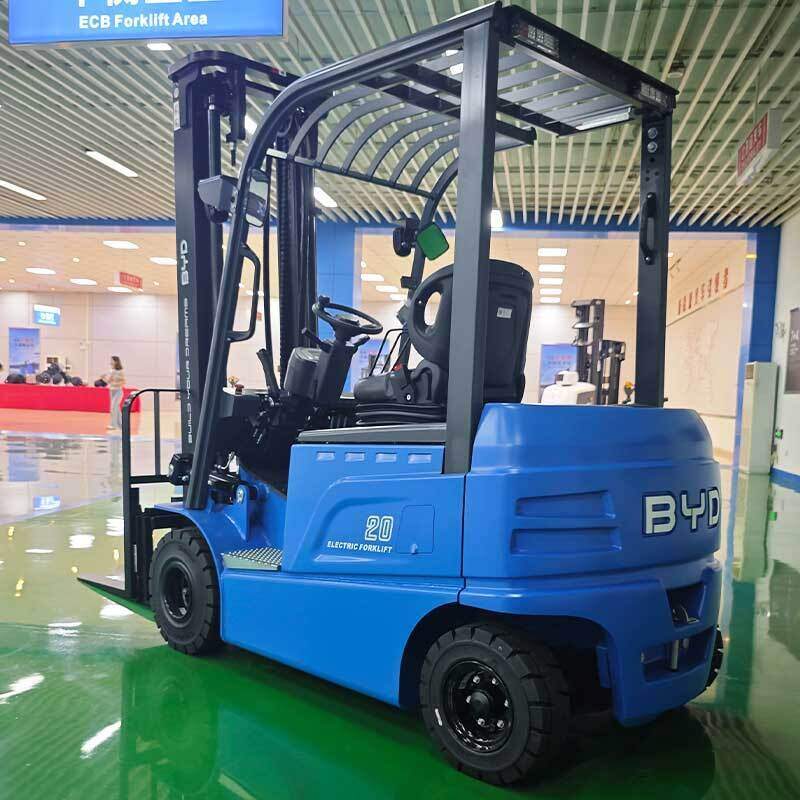
We are Jianshu New Energy, focusing on BYD electric forklifts, and we provide systematic operation training and professional after-sales support for all users. If you have any questions about electric forklift parameter adjustment, standard operation and maintenance, you can send an email to [email protected] for consultation.


