
 English
 简体中文
 Русский
 Français
 Português
 Español


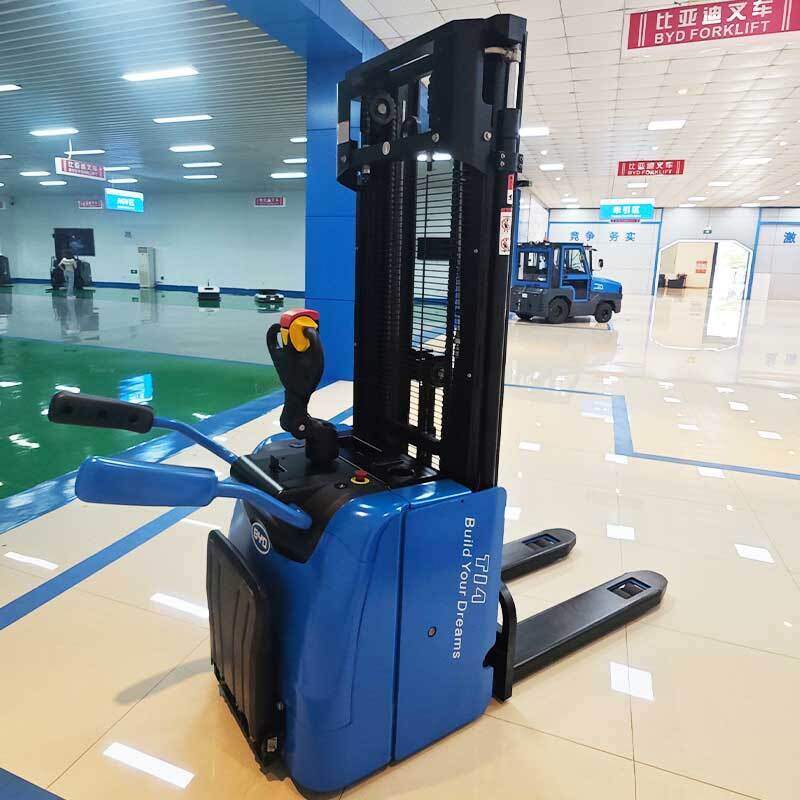
As a senior practitioner with years of in-depth research in the electric forklift sector, this guide sorts out universal practical knowledge fitting most daily usage scenarios of this material handling equipment, to help frontline operators and warehouse managers grasp core operation points without redundant theoretical content.
Basic Standardized Operation Norms
Different from internal combustion forklifts, electric forklifts rely on power battery output to provide driving and lifting power, so operators need to complete pre-use check before each start-up, including checking the remaining power level, the flexibility of the lifting mechanism, the sensitivity of the brake system, and the integrity of the safety warning lights. Operators are required to receive systematic operation training before taking up the post, avoid sharp acceleration, sharp braking and overloading operation during the moving process, and keep the load gantry tilted back properly when carrying goods to prevent the goods from slipping and falling. When operating in narrow warehouse channels, operators need to control the driving speed within the specified range, and pay close attention to the surrounding pedestrian and obstacle conditions to avoid collision risks.
Daily Maintenance and Care Points
Routine maintenance can effectively reduce the failure rate of electric forklifts and extend the overall service cycle of the equipment. After each use, the operator should park the vehicle in the designated charging area, turn off the power switch, clean the dust and sundries accumulated on the surface of the vehicle and the heat dissipation structure, and do not leave the vehicle in a high temperature or humid environment for a long time. For the power battery assembly, regular inspection of the connection terminals, the outer surface of the battery shell, and the charge and discharge cycle state is needed, avoid over-discharging or long-term under-charging of the battery, to maintain the stable performance of the power system. The transmission part and the oil circuit of the hydraulic lifting system also need to be checked regularly, add the specified lubricating oil and hydraulic oil according to the usage frequency, to ensure the smooth operation of each component.
Scenario-based Usage Optimization Suggestions
Enterprises that use electric forklifts for material handling can adjust corresponding operation strategies according to actual working scenarios. For cold storage working conditions, operators can add corresponding anti-low temperature protection measures for core components to reduce the performance loss caused by long-term low temperature operation. For frequent loading and unloading scenarios at the port or platform, reasonably arrange the charge and shift schedule to avoid long-term continuous high-load operation of the equipment, so as to further improve the operation efficiency and reduce unnecessary component wear.


