
 English
 简体中文
简体中文 Русский
 Français
 Português
 Español

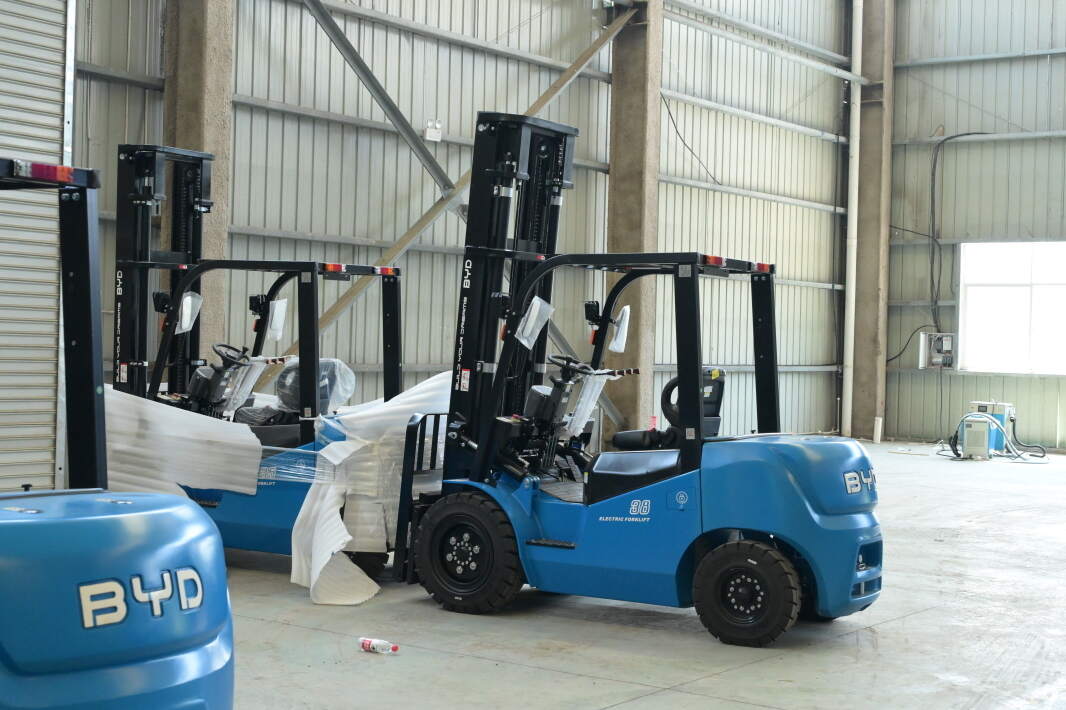
As one of the most widely used new energy material handling equipment in modern logistics and warehousing industries, electric forklifts have gained growing popularity among operation teams of different scales in recent years. Proper understanding of its features, operation specifications and maintenance rules can help operators give full play to the equipment value, reduce unnecessary wear and guarantee long-term stable performance.
Core Functional Advantages of Electric Forklifts
Different from internal combustion powered counterparts, electric forklifts produce no exhaust emission at the operation site, and generate much lower running noise which meets the environmental protection requirements of enclosed space such as cold storage, food processing warehouse and indoor production workshop. Its energy consumption per unit working hour is at a relatively low level, which helps cut the long-term operating expenditure for logistics teams. The overall mechanical structure has fewer vulnerable moving parts compared with fuel driven models, which reduces the frequency of component replacement in daily use.
Standard Operation Specifications for Daily Work
Before starting each shift, operators need to complete a round of basic inspection, including checking remaining battery level, brake sensitivity, steering flexibility, fork surface wear condition and surrounding working environment, to eliminate hidden risks in advance. During operation, users need to strictly follow the rated load limit, keep the load center within the specified range, and avoid sharp turning or sudden braking at high traveling speed. When passing through narrow aisles, pedestrian crossing and ramp areas, operators should properly reduce the traveling speed, and take corresponding protective measures to prevent goods from slipping off the forks.
Key Daily Maintenance Notes
Routine scientific maintenance can effectively extend the whole service life of electric forklifts. For the power battery part, operators should avoid over charging and over discharging behavior, place the equipment in a well ventilated and dry area during charging, and regularly check if the wiring terminals have oxidation or looseness phenomenon. For the hydraulic lifting system, users need to periodically check the hydraulic oil level and seal status, to prevent oil leakage that may affect the lifting stability. The heat dissipation vents of driving and lifting motors should be cleaned of accumulated dust at fixed intervals, to avoid overheating caused by blocked heat dissipation. If the equipment will be idle for more than two weeks, it is recommended to supplement the battery power once every month to keep the battery activity.
Scenario Matching Suggestions for Optimal Efficiency
Different operation scenarios can match corresponding parameter configuration of electric forklifts to get better using effect. For high level shelf storage scenarios, operators can choose models with suitable lifting height to meet the access demand of high position goods. For narrow aisle working environment, models with small turning radius can effectively improve the space utilization rate of the warehouse. For low temperature cold storage scenarios, the specially adapted configuration can reduce the impact of low temperature on the power system and hydraulic parts.


