
 English
 简体中文
简体中文 Русский
 Français
 Português
 Español

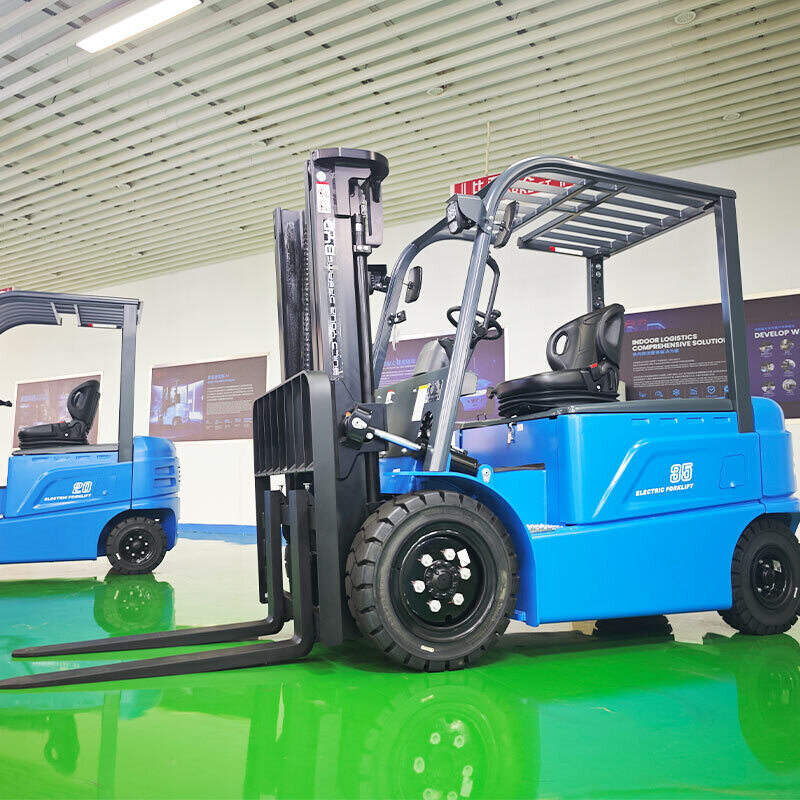
As the logistics and warehousing industry accelerates its shift to low-carbon and efficient operation modes, electric forklifts have gradually become one of the most widely used handling equipment in indoor and enclosed operation scenarios. Many on-site operation teams still lack systematic and practical guidance for daily use, which may lead to reduced operation efficiency and extra equipment consumption in long-term usage.
Core Application Advantages of Electric Forklifts
Compared with fuel-powered counterparts, electric forklifts produce no exhaust emission during operation, which is more suitable for closed warehouse spaces, food processing workshops and other scenarios with high air quality requirements. The overall noise level during operation is also significantly lower, which helps create a more comfortable working environment for frontline operators, and reduces noise interference to surrounding office areas or resident zones near the operation site. Most of the current mainstream models adopt modular power systems, which can lower the long-term energy consumption cost for the operation team compared with conventional fuel supply expenses.
Standard Operation Specifications to Avoid Unnecessary Loss
Before starting each shift, operators need to conduct a simple check on the braking system, steering sensitivity and remaining power status, instead of putting the equipment into high-intensity operation directly. During the handling process, the load weight should be kept within the rated load range of the equipment, and the center of the goods should be placed in the middle of the fork board as much as possible, to avoid side tipping risk caused by unbalanced load. When turning in narrow warehouse aisles, operators need to slow down in advance and pay attention to the surrounding pedestrians and stacked goods, to reduce the occurrence of scratch and collision incidents.
Daily Maintenance Practices to Optimize Equipment Performance
After each daily operation, the surface of the equipment and the fork parts should be cleaned of residual sundries, especially the dust and debris accumulated near the power heat dissipation module, to prevent the heat dissipation efficiency from being affected. The power battery pack should be charged in a designated dry and ventilated area, and the charging process should not be interrupted frequently when the battery is not fully charged, so as to maintain the overall health status of the battery unit. Teams can check the lubrication status of the transmission parts regularly, and add appropriate amount of professional lubricating oil according to the use frequency, to reduce the friction loss of mechanical parts.
Key Safety Points for Long-term Stable Operation
Operation teams should arrange regular professional skill training for frontline operators, to ensure every personnel who uses the equipment can master the basic operation logic and conventional emergency response methods. For long-term idle electric forklifts, the battery power should be kept at a reasonable level, and the equipment can be started and run for a short period every two weeks, to avoid performance degradation caused by long-term static placement. Reasonable use and maintenance habits can help the enterprise give full play to the value of electric forklifts in daily material handling work, and bring stable support for the smooth operation of the whole warehousing link.


