
 English
 简体中文
简体中文 Русский
 Français
 Português
 Español

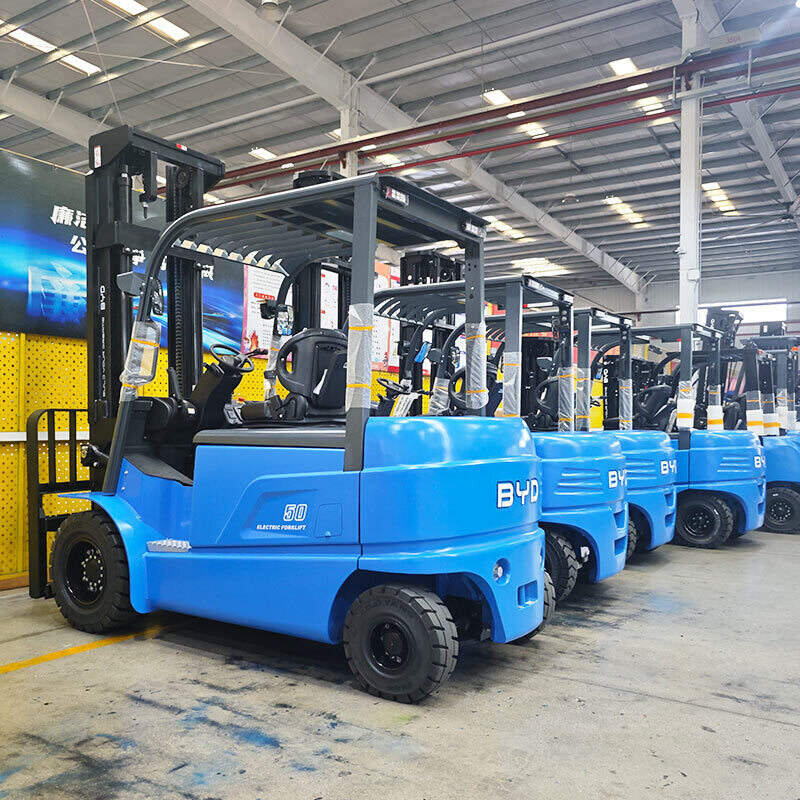
For most throughput-driven facilities including large distribution warehouses, e-commerce fulfillment centers and high-volume manufacturing workshops, material handling capacity directly ties to overall operational performance. When choosing electric forklifts to match daily operation demands, many facility managers face the choice between standard-speed models and high-speed variants, and a clear understanding of their respective attributes can help avoid unnecessary cost waste or insufficient capacity support.
The standard-speed electric forklift is designed with balanced performance as the core orientation. Its default driving and lifting speed settings match the general requirement of regular material handling scenarios, with stable power output and relatively low energy consumption per unit of operation. This type of forklift is suitable for facilities with narrow working aisles, mixed operation of new and experienced operators, or medium throughput demands, whose single operation cycle distance is no more than 50 meters on average. Under continuous multi-shift working conditions, the standard-speed electric forklift can deliver consistent battery duration, and its regular components do not require extra professional maintenance work compared with high-power variants. The total ownership cost in the full service cycle is relatively controllable for small and medium throughput facilities.
The high-speed electric forklift variant is optimized for faster response of power system, with adjusted maximum driving speed and lifting speed to cut down the time consumption of each operation cycle. For large facilities with long straight moving aisles, high daily cargo throughput demand and full-time skilled forklift operators, this type of product can effectively improve the total cargo volume handled per unit time. For scenarios that require frequent loading and unloading for large batches of goods, the high-speed variant can reduce the waiting time of connection with other upstream and downstream material handling equipment, so as to keep the whole operation pipeline running smoothly. It is worth noting that this type of forklift needs supporting safety management rules to match its faster moving speed, to avoid unnecessary safety risks in busy working zones.
In actual selection processes, facility managers need to conduct targeted calculation based on their own daily throughput data, site layout condition, operator skill level and long-term operation budget. There is no one-size-fits-all solution for all facilities. Making the choice that matches actual operation demands can help balance operation cost and throughput capacity, and create stable support for the daily efficient running of the whole facility.


