
 English
 简体中文
简体中文 Русский
 Français
 Português
 Español

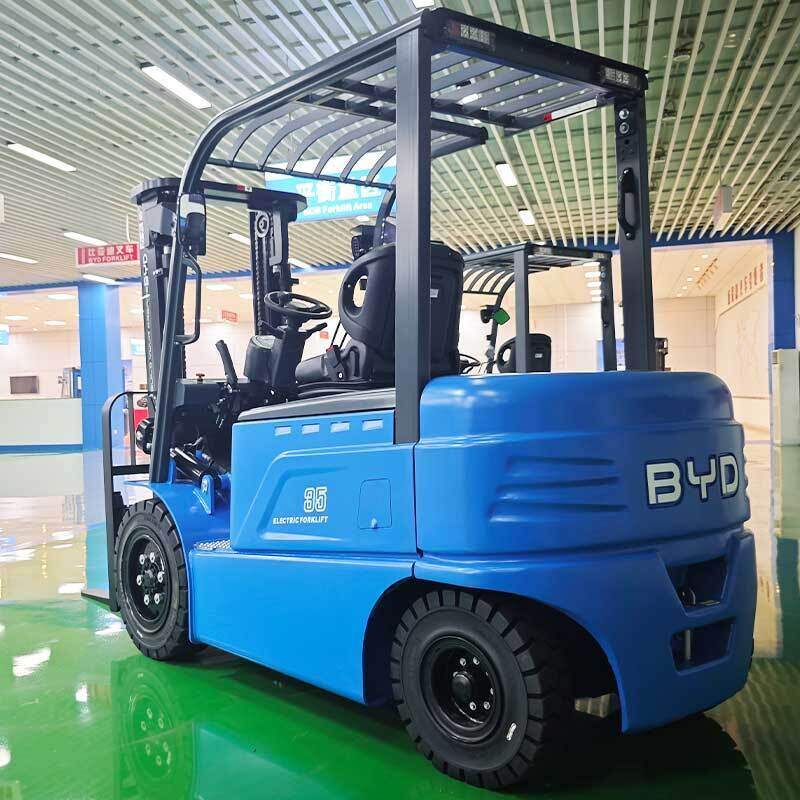
Industrial material handling scenarios have put forward increasingly diversified requirements for electric forklifts in recent years, especially for facilities that run multi-shift production schedules, where matching suitable forklift models to actual operation demands directly influences daily operation efficiency and long-term comprehensive cost. Many operation managers often face the confusion of distinguishing the applicability between standard-duty electric forklifts and reinforced heavy-duty variants, especially when arranging equipment for continuous industrial shifts.
The standard-duty electric forklift is designed for general daily material handling demands. Its frame, power system and energy storage configuration are calibrated to adapt to medium-low load intensity work scenarios, with typical applicable scenarios including small and medium-sized e-commerce warehouses, retail distribution centers that run single 4-6 hour shifts per day, and light manufacturing workshops with low operation cycle frequency. Under regular working conditions, this type of forklift can complete stable material transportation work, with relatively low energy consumption per unit operation, convenient daily maintenance, and friendly upfront procurement cost. For operation teams whose daily total working duration of forklifts does not exceed 6 hours, the load of each handling operation is kept below 70% of the rated load, and the daily working cycle is less than 50 times, the standard-duty electric forklift can fully meet the work demands, and will not cause extra waste of equipment performance.
The reinforced heavy-duty electric forklift variant is optimized and upgraded for high-intensity continuous operation scenarios. Its main bearing structure is reinforced, the heat dissipation system of the power component is adjusted to adapt to long-time high-load operation state, the overall energy storage capacity is properly increased, and the wear resistance of core moving parts is improved accordingly. This type of forklift is suitable for scenarios that need 8 hours or even longer continuous operation, as well as two-shift or three-shift non-stop work schedules. In large-scale manufacturing workshops that need to supply materials for assembly lines for whole day, industrial stock yards with frequent high-load handling demands, and other similar scenarios, the reinforced heavy-duty electric forklift can maintain stable running state for a long time, effectively reducing unexpected shutdown probability caused by overheating of components after long hours of high-intensity work.
When selecting between these two types of electric forklifts, operation teams can make judgment according to their actual operation data, rather than blindly pursuing higher configuration or choosing insufficiently matched low-configuration products. Counting the actual daily total operation duration of forklifts, average handling load, daily working cycle times and on-site road condition characteristics first can help make more scientific decisions. For scenarios that need continuous industrial shifts for a long time, the reinforced heavy-duty electric forklift often shows lower full life cycle cost, as its lower component wear rate can reduce maintenance downtime and related loss in the long run.


