
 English
 简体中文
简体中文 Русский
 Français
 Português
 Español

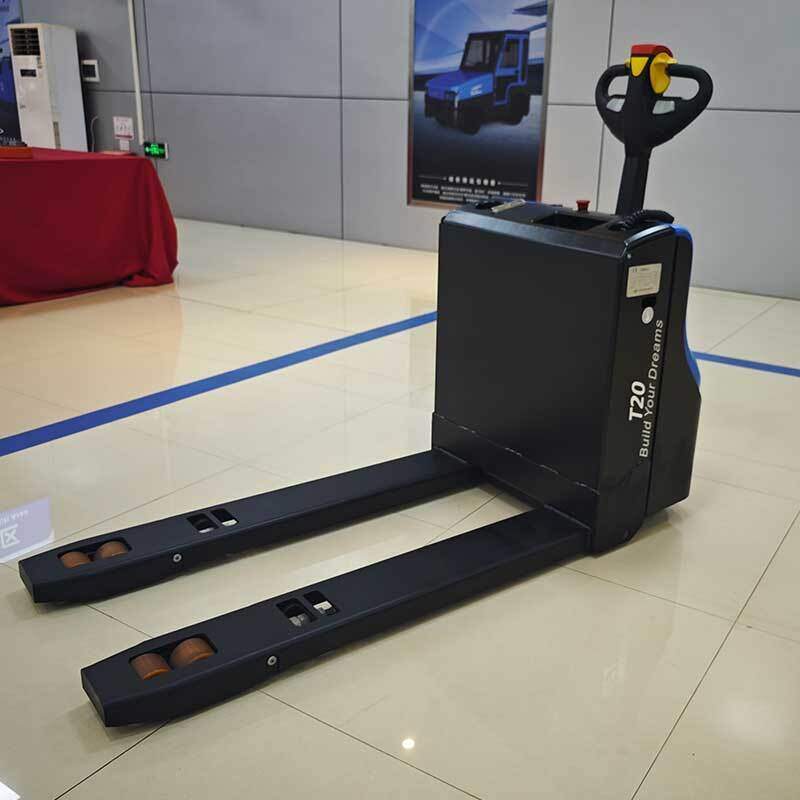
In modern daily warehouse operations, bulk and short-haul goods movements account for nearly 40% of total material handling workload, and selecting the right transport equipment directly affects overall operation fluency. Many frontline operation managers often confuse the applicable boundaries between compact forklift and warehouse tractor, two widely used devices for such scenarios, which easily leads to mismatched equipment allocation and lower work efficiency.
The compact forklift is designed with a highly narrowed body size and minimized turning radius, and it comes with a built-in lifting fork mechanism that supports stable insertion, lifting and placing of standard pallets. For short-haul bulk movement tasks that require vertical operation links, such as transferring stacked palletized goods from the low-level storage zone to the adjacent picking table, or moving entire pallets of incoming goods across narrow aisles to the temporary waiting area for loading, the compact forklift can finish the full workflow without auxiliary tools. A standard compact forklift can carry 1 to 2 full pallets in one single trip, which fits scenarios where operation paths have narrow space limits and each transport unit needs independent lifting access.
Different from the compact forklift, the warehouse tractor focuses on horizontal traction performance, with optimized body weight distribution to ensure stable pulling force even on flat warehouse grounds. It can connect multiple customized rear trailers at one time, so that operators can transfer 4 to 6 sets of bulk materials in a single trip. This type of equipment is more suitable for short-haul bulk movement tasks that do not involve any lifting links, such as transporting multiple groups of sorted goods from the centralized picking zone to the packaging area hundreds of meters away, or moving batches of empty pallets from the unloading port to the storage area in one continuous route. It effectively reduces unnecessary back-and-forth trips for repeated short-distance runs.
There is no absolute superiority between these two types of equipment, and they can form a complementary combination in most medium and large warehouse sites. Operation teams can judge the matching rate according to their actual task composition: if more than 30% of the local short-haul movement links need pallet insertion and lifting operation, arrange compact forklifts at corresponding working zones; if the main task of a fixed route is to pull batches of pre-loaded trailers for round trips, allocate warehouse tractors to maximize the output of per equipment unit. Proper matching of the two devices can help the whole warehouse operation achieve smoother material flow without extra idle equipment cost.


