
 English
 简体中文
简体中文 Русский
 Français
 Português
 Español

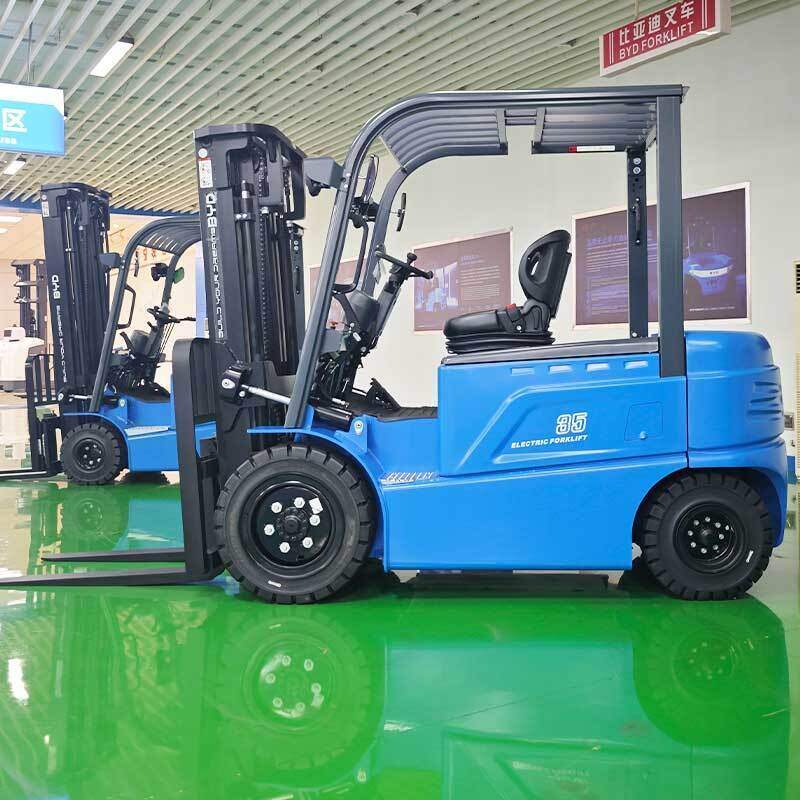
With the continuous popularization of new energy material handling solutions, electric forklifts have become one of the most widely used logistics equipment in manufacturing, warehousing, retail distribution and other sectors. Mastering standardized operation and maintenance knowledge can help relevant personnel give full play to the equipment’s performance and reduce unnecessary operating costs.
Core Pre-operation Inspection Norms for Electric Forklifts
Before starting each shift of operation, operators need to complete a series of basic inspection work to eliminate hidden safety risks in advance. The first step is to check the remaining battery level to confirm it can support the planned operation tasks of the whole shift, and observe whether there is abnormal bulge or leakage on the battery shell. Next, operators need to test the sensitivity of the brake system, steering control and each lifting joystick, to make sure there is no stuck or unresponsive condition. It is also necessary to check the wear degree of the walking tires, the tightness of the fork fixing parts, and the smoothness of the hydraulic oil pipeline, to avoid parts falling off or oil leakage during subsequent operation. Operators should also confirm that the load weight does not exceed the rated load of the equipment before picking up goods, to prevent tipping risks caused by overloading.
Daily Maintenance Strategies to Extend Equipment Service Life
Scientific daily maintenance can effectively reduce the failure rate of electric forklifts and extend the overall service cycle of the equipment. For the power battery component, operators should avoid full discharge before charging, and do not pull out the power plug forcibly during the charging process. If the equipment needs to be idle for more than two weeks, personnel should arrange regular supplementary charging to keep the battery activity within a reasonable range. For the driving and lifting components, the dust and debris accumulated at the heat dissipation outlet of the motor should be cleaned regularly, and the rotating connecting parts should be lubricated according to the specified cycle to reduce friction loss. In daily use, operators should avoid driving the equipment in the section where the water depth exceeds the allowable warning line, to prevent the internal circuit from being affected by moisture and causing short circuit failure.
Scenario-based Operation Optimization Tips
In different application scenarios, adjusting the operation mode of electric forklift can further improve work efficiency. In narrow warehouse aisles, operators should keep the driving speed below the safe limit, and slow down sufficiently before turning to avoid collision with shelf structures or passing personnel. When lifting goods at high positions, keep the lifting movement at a uniform and stable speed, and avoid sudden acceleration or deceleration to prevent the goods from slipping off the forks. For special scenarios such as low-temperature cold storage and high-dust factory workshops, personnel can carry out targeted protection for the easily worn parts of the equipment according to the actual use frequency, so as to reduce the additional loss caused by extreme environmental conditions. Reasonable planning of the equipment’s travel route can also reduce unnecessary energy consumption, and help the whole material handling process run more smoothly.


