
 English
 简体中文
简体中文 Русский
 Français
 Português
 Español

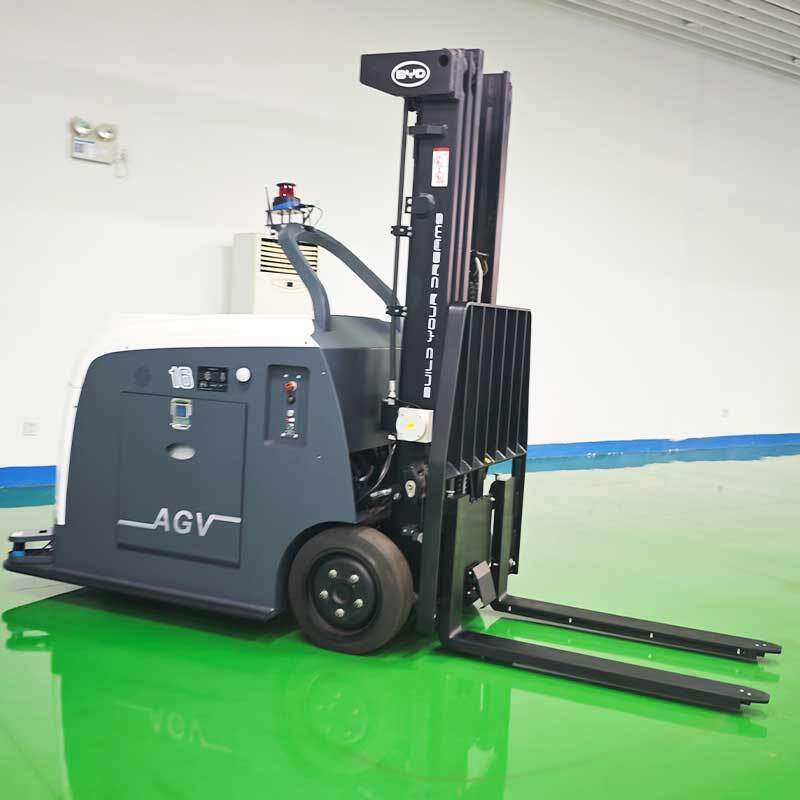
As core material handling equipment for indoor and semi-outdoor scenarios, electric counterbalance forklifts have been widely adopted across logistics, manufacturing and retail storage sectors for their zero local emission, low noise and easy operation features. The selection between three-wheel and four-wheel configurations often becomes a key decision point for warehouse managers who pursue balanced operation efficiency and safety.
From the perspective of structural design, four-wheel electric counterbalance forklifts are supported by four independent tire contact points that distribute the total vehicle weight and load force evenly across the whole chassis. This layout effectively reduces the lateral shift of the center of gravity when the vehicle turns or travels on slightly uneven grounds, bringing more steady operation status under full load condition. For working scenarios that require lifting goods to more than 6 meters height, the four-wheel structure can maintain reliable anti-tipping performance when the center of gravity moves upward with the lifting of forks. It also shows better adaptability for semi-outdoor yards with small pits or uneven pavement. By contrast, three-wheel electric counterbalance forklifts usually adopt two front load-bearing wheels and one integrated rear steering driving wheel, whose single rear contact point will lead to relatively larger lateral sway when making sharp turns under maximum load at high lifting height. Operators need to slow down properly to guarantee operation safety in this condition.
In terms of space utilization, three-wheel electric counterbalance forklifts have prominent advantages. The special three-point steering structure cuts the minimum turning radius greatly, allowing the vehicle to complete full stack and take goods operation in a much narrower right-angle aisle. This feature makes it a preferred option for high-density storage warehouses that aim to increase the number of storage racks per unit area, no extra large aisle space needs to be reserved for vehicle turning. Four-wheel electric counterbalance forklifts need larger turning space due to the wheelbase and tire arrangement, which is more suitable for warehouses with wider reserved aisles or scenarios that require frequent cross-regional material transportation in large open spaces.
There is no absolute better option between these two configurations, the final selection should be made based on actual operation parameters including average load weight, maximum lifting height, aisle reserved width, and ground flatness. Many operation teams also deploy two types of equipment for different functional zones in the same warehouse to get optimized overall operation efficiency.


