English
 简体中文
 Русский
 Français
 Português
 Español


Many warehouse operation managers and manufacturing site administrators are evaluating the feasibility of replacing traditional internal combustion forklifts with electric models in recent years, as stricter environmental management requirements and growing focus on on-site operator health bring new demands to material handling scenarios. This practical overview sorts out core practical points for the transition, without exaggerated data or unproven claims, to help stakeholders make decisions that fit their actual operation conditions.
The first core point is scenario suitability judgment. Electric forklifts produce no exhaust emissions during operation, and generate much lower operating noise than internal combustion counterparts, which makes them fully suitable for indoor closed storage scenarios, cold chain storage, pharmaceutical and food production workshops that have strict requirements for air quality. No additional exhaust ventilation renovation is needed for these scenarios after switching, which avoids extra hidden renovation costs. The optimized damping and operation control structure also effectively reduce operator fatigue during long-hour continuous shifts.
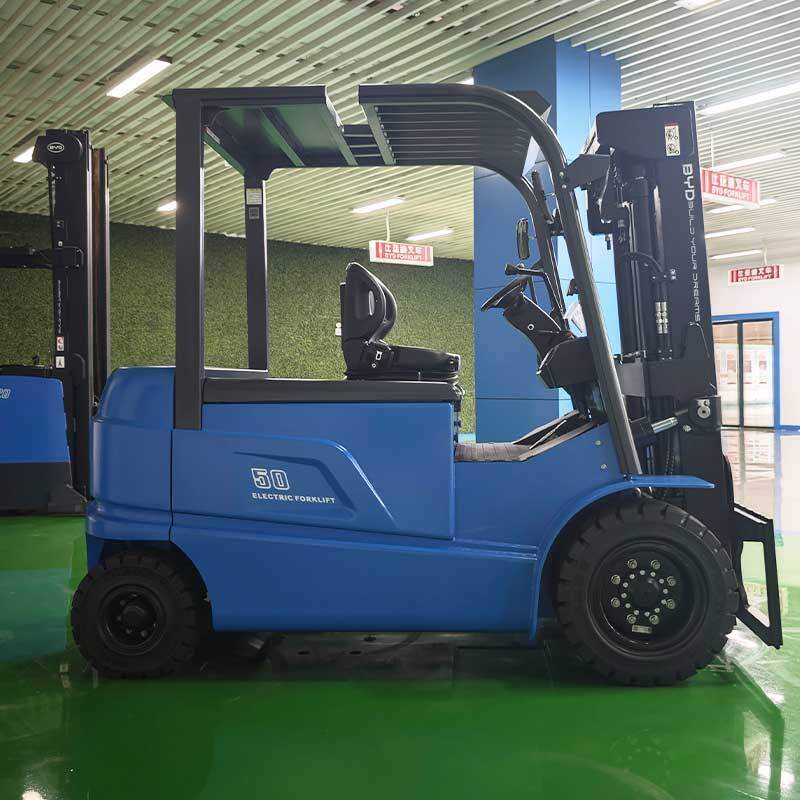
The second key point is full life cycle cost accounting. Many operation teams have concerns about the initial purchase input of electric forklifts. In actual long-term operation practice, the cost of electric energy per unit operation hour is far lower than that of fossil fuel for internal combustion forklifts. Routine maintenance of electric forklifts does not require replacement of engine oil, fuel filter, exhaust system related wearing parts, so the annual maintenance expenditure can be controlled at a relatively low level. When calculating the cost throughout the full service life, the unit operation cost of electric forklifts shows obvious competitiveness for most scenarios with stable daily operation volume.
The third point is compliance matching advantage. As low-carbon and carbon reduction management requirements are gradually implemented in industrial operation scenarios across the country, zero-emission electric forklifts can easily pass relevant environmental assessment checks, avoiding unnecessary penalties caused by non-compliant emission of internal combustion equipment. Many regions also have targeted support policies for new energy logistics handling equipment, operation teams can consult local competent departments for relevant details to get applicable policy support.
As a professional service provider focusing on BYD electric forklifts, Jian Shu New Energy can provide targeted type selection suggestions and operation optimization plans for customers with different operation scale and scenario characteristics. If you have relevant consultation demands, you are welcome to send emails to [email protected] for further communication.