
 English
 简体中文
简体中文 Русский
 Français
 Português
 Español

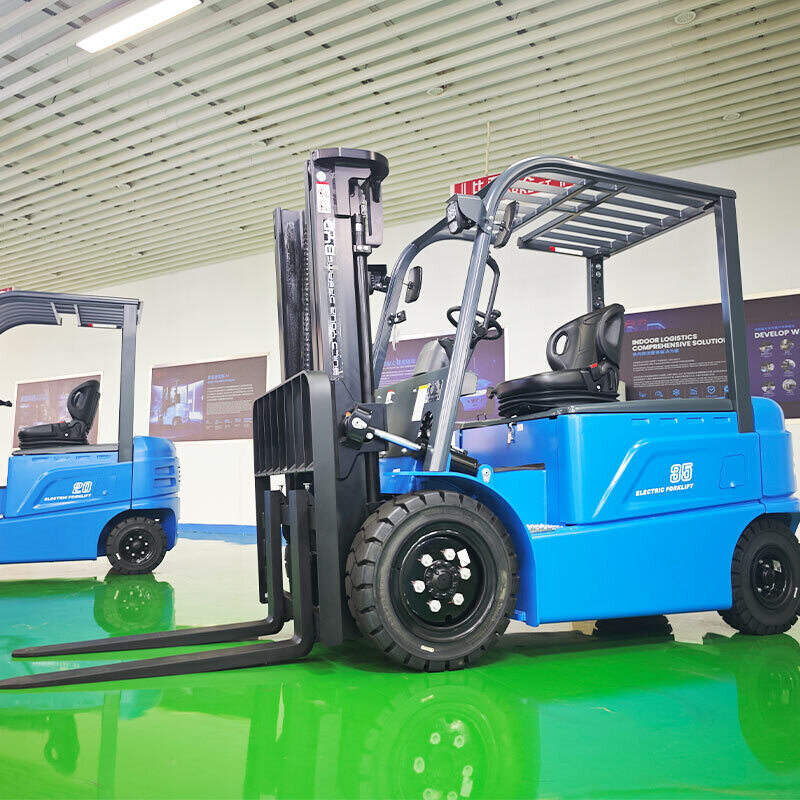
Against the background of rapid development of modern logistics industry, electric forklifts have become one of the most widely used material handling equipment in indoor warehouses, distribution centers and manufacturing workshops due to their low noise, zero local emission and flexible operation characteristics. Mastering correct use and management methods can give full play to the inherent advantages of such equipment, and create more stable value for daily production and operation activities.
Core Daily Operation Specifications for Electric Forklifts
Before starting each shift, operators need to complete a series of basic inspections, including checking the remaining battery power, the sensitivity of the braking and steering system, the wear condition of the forks and the integrity of the safety warning lights. During the operation process, users should arrange the load weight within the rated load range of the equipment, avoid frequent sudden acceleration and sudden braking, and keep a safe distance from surrounding personnel and stacked goods. When driving on slopes, keep the load facing the uphill direction to avoid accidental slippage, and do not turn on the slope to reduce the risk of rollover.
Routine Maintenance Points to Extend Equipment Service Life
The power battery module is the core component of electric forklifts, and daily maintenance should avoid over-discharging to less than 20% of the total power before charging. The charging operation needs to be carried out in a dry, ventilated and cool environment, and the connection port should be cleaned regularly to avoid dust and sediment accumulated to cause poor contact. In addition, the heat dissipation structure of the drive motor and the sealing performance of the hydraulic lifting system should be checked regularly, and the sundries entangled in the wheel hub and the chassis should be cleaned in time to ensure the stable operation of all components.
Scenario-based Optimization to Improve Comprehensive Operational Efficiency
For different working scenarios, users can adjust the relevant operation parameters of electric forklifts appropriately according to the actual needs. For narrow aisle warehouse scenarios, operators can match the corresponding low-speed steering mode to improve the accuracy of cargo access, and for low-temperature cold storage scenarios, they can pre-adjust the battery working temperature to reduce the attenuation of power performance. For scenarios requiring continuous multi-shift operation, reasonable battery replacement and scheduling plans can be formulated to reduce the waiting time caused by charging, so as to improve the continuous operation capacity of the whole team. Scientific and standardized use and maintenance mechanism can effectively reduce the failure rate of electric forklifts, prolong the average service life of the equipment, and help enterprises control the long-term operation cost of material handling links.


